


The Defensive Alliance to Deter Chinese Maritime Expansion is Strengthening
An overview of a series of separate developments suggests that a string of Asian nations facing pressure from China across maritime borders are cooperating more fully as a means of countering the threat.
Exercise Keen Sword has commenced and is running until October 29. The exercise principally involves 45,000 Japanese and 12,000 US troops. But the exercise also involves seven other Asian and European nations, with participation for the first time in this recurring exercise by France, Germany, the Netherlands, New Zealand and the Philippines. South Korea is participating as an observer, having trained with Japan and the United States on Exercise Freedom Edge last month. Keen Sword is focused on two geographical areas: Japan’s southwestern islands, where there is competition with China, and the Kuril Islands, ownership of which is disputed with Russia.
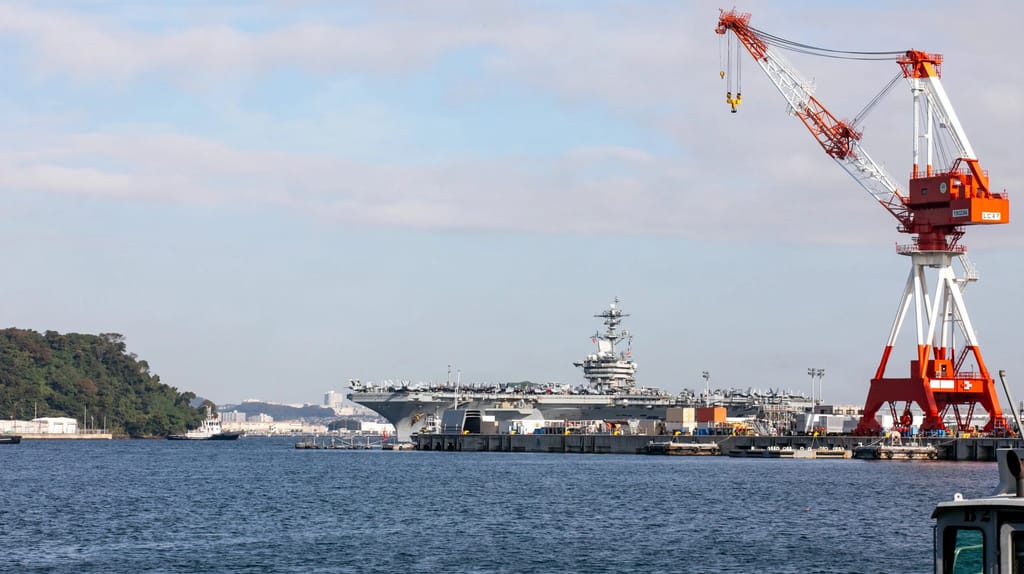
With Japan-based carrier USS George Washington otherwise engaged in the Central Command area, the USS Theodore Roosevelt (CVN-71), the Ticonderoga Class guided-missile cruiser USS Chosin (CG 65) and the Arleigh Burke Class destroyer USS Decatur (DDG 73) have arrived at the US naval base in Yokusuka to join in the exercise. USS Theodore Roosevelt is the first non-forward-deployed carrier in four years to dock in Yokosuka.
During the exercise, Japanese forces and US Marines will deploy (respectively) Type-25 land-to-ship missiles and the NMESIS ground-based missile system on the island of Yonaguni. With ranges of over 500 nautical miles, these missiles can reach large swathes of the Chinese mainland coastline, as well as the eastern and southern flanks of Taiwan.
Japanese ownership of Yonaguni is disputed by China, which frequently intrudes into Japanese territorial waters around the island, and the island is also claimed by Taiwan. However, Taiwanese Defense Minister Wellington Koo has praised the Japanese and American exercise deployments on Yonaguni, regarding it not as an infringement of claimed sovereignty, but as support for Taiwan’s own defense.

that matters most
Get the latest maritime news delivered to your inbox daily.
The Philippines is also deepening its ties with Taiwan, despite competing claims over certain islands in the South China Sea. Manila and Taipei have elected to make common cause against the claims made to these same islands by China. Taiwan’s Coast Guard Administration is planning for a training ship with cadets aboard to make a port call in the Philippines in October next year, the first such visit since 1974. What the Taiwanese call Dunmu or Friendship Cruises normally consist of three vessels, and the cruise to the Philippines is likely to be led by the fast combat support ship Panshi (AOE-532).
Taiwan is also intending to copy the Philippines’ "assertive transparency" strategy—publicly documenting and exposing the Chinese bullying tactics employed both in the South China Sea and the Taiwan Strait. Taiwan and the Philippines have a common sea border running through the Bashi Channel, and the two nations are intending to improve joint surveillance in the area, particularly since the Chinese have stepped up circumnavigations of Taiwan.
