

Tankers with Russian Diesel Reach Brazil After Bypassing the U.S.
Two tankers laden with Russian diesel arrived in Brazil as analysts continue to point out that none of the promised Russian product has reached the U.S. Speculation had centered on these and other tankers that departed Russia in mid-October as part of the agreement reached between Washington and Moscow for the supply of diesel.
Six weeks ago, the Trump administration had announced a deal promising that Russian diesel would be coming to the United States and returning to the international market to compensate for the shortages from the Persian Gulf. Russia had said it was ramping up production and shipments after temporarily suspending international shipments of diesel and gasoline in response to the continuing strikes by Ukraine on Russian refineries and oil terminals.
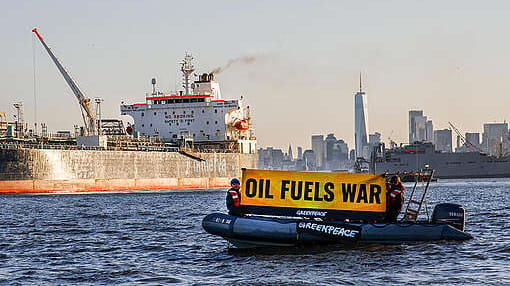
Russian officials highlighted the first shipment to the U.S. while speculation grew over the amount of diesel being exported. Trump administration officials promised up to 300,000 metric tons. Multiple tankers were identified, with the watchdog group Greenpeace tracking as many as 11 vessels at one point. Several turned out not to be loaded with diesel, while others fell off the tracking one by one as it became clear they were not sailing to the United States.
The Sierra Leone-flagged tanker Leruo (IMO 9385831) appears to be the first to reach its destination, the Itacoatiara anchorage in Brazil, where it arrived earlier this week. The 46,000-dwt product tanker had loaded at Primorsk. Its AIS signal shows it is back underway, traveling along the Amazon to Manus. Close behind is the Russian-flagged product tanker Primorye (IMO 9236743), which has also reached the same anchorage. A third product tanker, the Sierra Leone-flagged Beast (IMO 9290921), is also sailing along the South American coast with its AIS signal reporting “Brazil For Orders.”
The Leruo is believed to have approximately 40,000 metric tons of diesel aboard. The other two product tankers have similar loads of diesel.
Speculation had been that all three of these tankers might have been bound for the U.S. before opposition grew over the shipments. While the administration issued a waiver, members of the U.S. Congress continued to voice opposition and cited the potential for legal issues, as all the tankers are operating under international sanctions. Governor Mikie Sherrill of New Jersey also published a letter warning terminal operators and fuel companies not to receive the cargo due to the potential for legal challenges. Even without the potential legal issues, anyone dealing in the Russian diesel faced bad publicity and harm to their reputation.
Ukraine highlighted the track record of the Leruo. It asserts the tanker has frequently turned off its AIS transmissions and conducted ship-to-ship transfers. They tracked the vessel making deliveries to Tripoli, Lebanon, in the past. The European Union sanctioned the product tanker in July 2025, followed by the UK in October and other countries.
Brazil, however, has been happy to receive the cargo. The Brazilian newspaper Gazeta do Povo cites data showing that Brazil has maintained a multibillion-dollar trade with Russia. It reports the value of Russian energy imports into Brazil at R$5 billion (US$840 million) so far in 2026. Citing data from the Centre for Research on Energy and Clean Air, it reports Brazil has received 28 vessels from the Russian shadow fleet this year, with a total of 34 deliveries of Russian diesel. They estimate the imports have totalled 1.11 million metric tons as part of a total import volume of 4.3 million metric tons coming from Russia this year.
Other tankers that reports had speculated were bound for the United States have instead gone to destinations in the Mediterranean. The Russian-flagged product tanker Talisman (IMO 9292060), which, for example, had been another one identified in the reports as bound for the United States, has instead been spotted off Egypt.

that matters most
Get the latest maritime news delivered to your inbox daily.
Only the Malta-flagged product tanker Agioi Fanendes (IMO 9798375) remains a mystery. Reports highlighted that the Greek-owned tanker, which is not under sanctions, had stopped short of the United States more than a week ago. It continues to sail back and forth several hundred miles out in the Atlantic with its AIS transmission as “For Orders.” The 50,000-dwt product tanker had been identified as the first to sail with Russian diesel bound for the United States, but continues to hold short of its destination.
It is unclear what will happen to the agreement the Trump administration had promoted just weeks ago. Reuters is reporting that since late October, Ukraine has “slashed Russian oil refineries' combined crude processing volumes by 45 percent.” The attacks Reuters reports have now disrupted or halted operations at 15 of Russia's 35 major refineries.