

Syrians Outline Future Russian Port Presence in Tartus
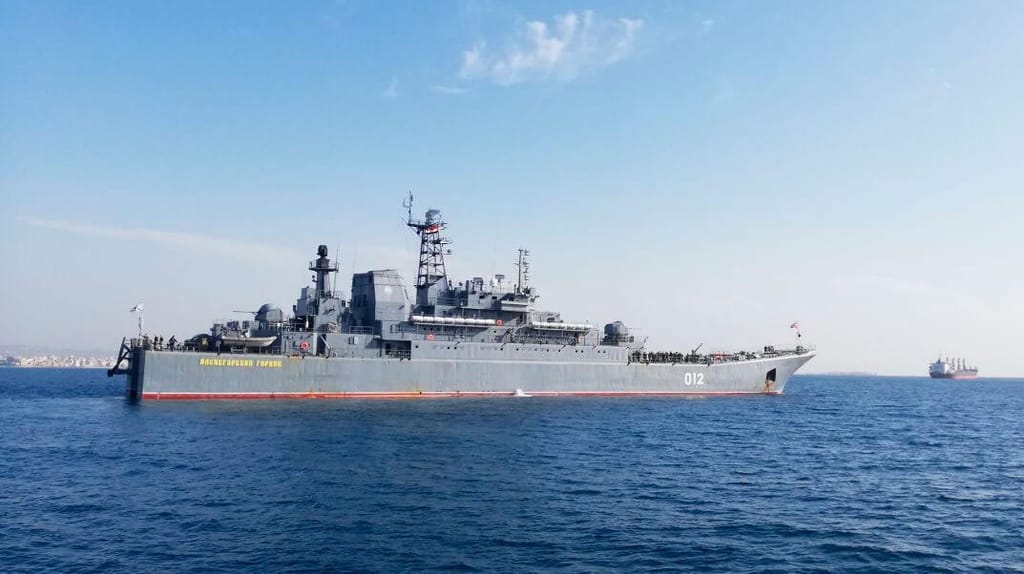
After months of struggling to maintain a naval presence in the Mediterranean, and speculation surrounding the future of Russia's tenancy of its long-standing Station 720 naval base in Tartus, Syrian commercial sources have outlined the prospective shape of Russia's presence in the port.
Executives from the Syrian company Rus Line have said that of the two pierheads which made up the old Russian naval base, one will be retained by the Russian navy and the other – Pier 4 – will be devoted to handling Russian commercial cargo traffic. The remainder of the port, which used to be operated commercially by Stroytransgaz, remains covered by the $800 million, 30-year DP World concession which edged out the Russian company.
Rus Line is targeting initial cargo volumes of 250,000 tons per month through the new facility, handling Russian wheat, grains, animal feed, vegetable oils, timber, steel, clinker, coal, rice, sugar and mineral oils, all within the curtilage of the Russian naval base. This dockside would also host light manufacturing and finishing, and act as a distribution center for Russian goods.
The first shipment of 30,000 tons of grain is planned for mid-July. If the grain is sourced from occupied Donetsk and Luhansk, then it will attract the attention of the Ukrainian authorities, as will sea traffic on the intended route from the Black Sea port of Novorossiysk.
Most of the discussion of the plans has come from Russian sources, in particular the Russian-Syrian Business Council. Syrian officials from the General Authority for Ports and Customs denied that Russia would operate a commercial logistics hub. But an agreement in principle is said to have been reached between Syria's President Ahmed Al Shara'a and President Vladimir Putin at a meeting in Moscow in late January.
Both Russia and Syria will be seeking to capitalize on the need to expand overland trade routes from the Mediterranean to Iraq, Jordan and the Gulf countries, in light of the disruption to shipping traffic through the Strait of Hormuz. This ambition was also heralded by President Trump, who in an opening gambit during the Saudi–United States Investment Forum in Riyadh on May 13 announced that sanctions against Syria would be lifted.

that matters most
Get the latest maritime news delivered to your inbox daily.
Indications of the Russian intent to maintain its Syrian presence were apparent in early June, when three Russian specialist port security vessels were seen in the Tartus harbor basin, protecting two visiting Russian warships — the Gorshkov Class frigate RFS Admiral Kasatonov (F461) and the oiler Akademik Pashin. These port security vessels would not have been deployed unless there were a long-term requirement for them. Since the two warships left Tartus en route to Algiers, no further Russian warships have been spotted at the Station 720 berths.
The Russian plan is nevertheless fraught with obstacles. The Russian presence will attract a naval response from the Ukrainians — not only on the dockside at both ends but also on the shipping route from Novorossiysk. While sanctions may have been lifted on Syria, they have not been lifted on Russian entities likely to be using or engaged on the trade route. There will be commercial advantage for many if the US Treasury were tipped to pay close attention to any entities — whether financial, logistics or port-service firms— that might contemplate dealing with OFAC-listed entities.