


Sulfur-Laden Bulkers Face Corrosion Threat After Hormuz Delays
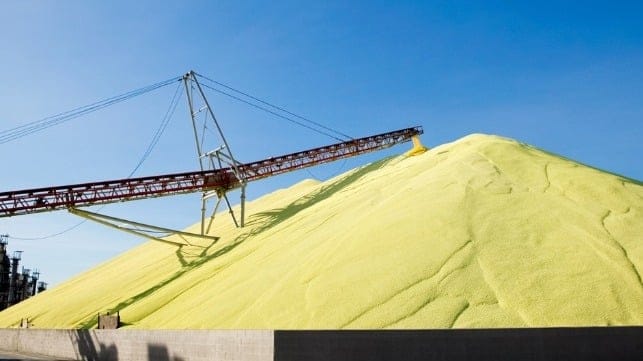
The Gulf states are some of the world's most prolific exporters of raw sulfur, the core ingredient for sulfuric acid, the world's most-produced industrial chemical. The region's energy industry enables the trade by putting out an abundance of raw sulfur: when sulfurous Mideast gas and oil are processed, large quantities of the substance are dumped out as a byproduct, then loaded onto bulkers and shipped to industrial end-users. But there is a hitch, according to maritime consultancy Brookes Bell - the Hormuz crisis has delayed many of those bulkers well past the safe time limit for storing sulfur in a steel hold, exposing ships to risk of severe and rapid corrosion.
The consultancy's head of non-destructive testing, Arron Jackaman, is encouraging shipowners and insurers to begin looking closely at any bulkers that have been stuck in the hot, humid Gulf with a load of sulfur for the past two months. The sooner the inspection process begins, he says, the lower the likelihood of damage and high costs for repairs - which often require cropping and replacement of the hold's plating.
The process of safely shipping sulfur usually begins with a limewash coating. The hold is cleaned of any prior cargo's residues, then a fresh barrier coating of lime wash is applied to the hold's surfaces. The lime counteracts the natural formation of sulfuric acid from raw sulfur, slowing down - but not stopping - the process of corrosion. But the wash isn't effective forever: it is generally considered acceptable for up to 20 days, after which accelerated corrosion begins. Moisture and sulfur mixed together lead to the inevitable formation of an acidic environment, turning steel into iron sulfide in rapid progression - swiftly causing heavy pitting in local areas. The rate of attack is far faster than ordinary saltwater corrosion, and far more aggressive; entire ships have been declared a total loss due to sulfur-driven corrosion in the past, according to vendor RBM.
Some of the vessels stuck in the Gulf because of the Hormuz crisis have been there for three times as long as the rated protective time of a limewash application. "That protection has long since been exhausted," says Jackaman. His firm has found pitting of up to a quarter of an inch deep in as little as 50 days - enough wastage to blow through the sacrificial corrosion allowance for tank top plating, bulkhead stools and sloping hopper plating under IACS' Common Structural Rules.

that matters most
Get the latest maritime news delivered to your inbox daily.
But the appearance of sulfur-driven pitting is often worse than the actual impact on the steel, Jackaman says, and visual assessment can be inaccurate.
"Localized pitting tends to concentrate at points where grab discharge equipment has broken the coating barrier, and on cargo hold tank top plating, which is left uncoated by design. Without correct measurements and quantitative assessment, there is a significant risk that steel within class limits is condemned unnecessarily," he says.
