

Wreck of British Warship Cut in Two by Cruiser Found 118 Years Later
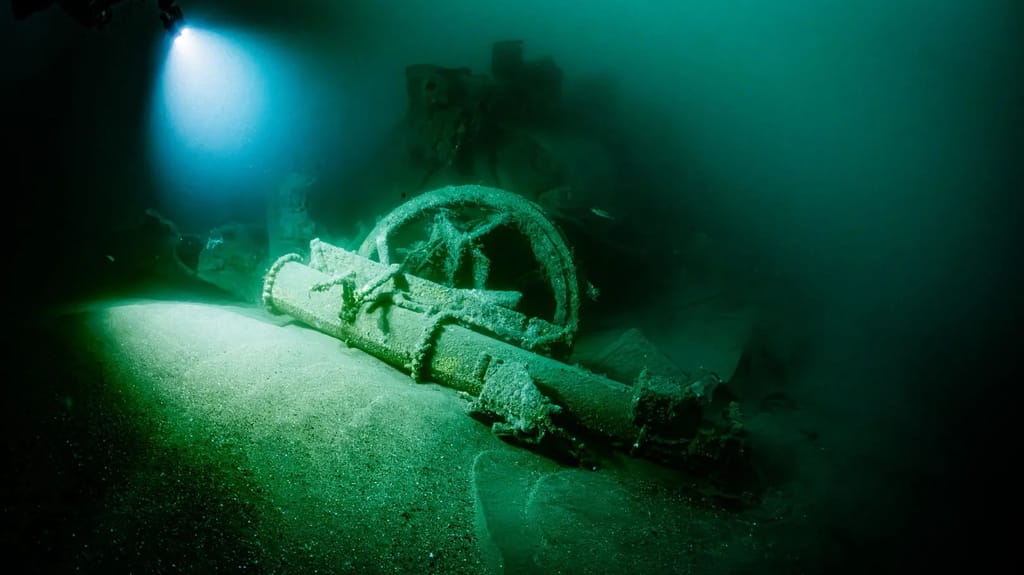
The wreck of a Royal Navy destroyer that sank after being cut in two by another warship during an exercise, killing 35 men, has been discovered some 118 years after the collision.
HMS Tiger sank in the English Channel in 1908, and her wreck has now been found at a depth of 60 meters, not far from the Isle of Wight.
Divers with ProjectXplore spent five years working through archival material in search of Tiger, the last missing British 30-knot torpedo boat destroyer. Having first identified the wreck site in 2025, the team was able to confirm it as the British warship in July after surveying it with sidescan sonar.
Tiger was a three-funnel, 30-knot torpedo boat destroyer (TBD) built at the Clydebank yard of J & G Thomson in 1901. The British built a fleet of TBDs to counter small, fast torpedo boats, which posed a serious threat. At 220 feet in length and 400 tonnes full load displacement, the TBDs were light by modern "destroyer" standards, but they served a similar escort mission for the fleet.
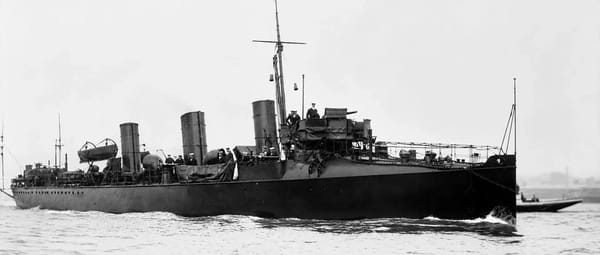
HMS Tiger (Royal Navy)
Through her years in service, Tiger endured repeated collisions and mechanical failures, returning to service each time. On the day of her loss, 12 destroyers including Tiger left Portsmouth Harbor to take part in exercises in the English Channel, south of the Isle of Wight. The destroyers were to practice night attacks against six battleships and cruisers.
During the evening, the destroyers were in position south of St. Catherine’s Point, proceeding without lights and attempting to close on the battleships and cruisers without being seen. The objective was to maneuver within striking distance for their attacks after dark.
A few minutes past eight, on a dark night with no moon, Tiger strayed into the path of the cruiser HMS Berwick while steaming at 20 to 21 knots. Though Berwick's captain gave orders to try to avoid a collision, there was no time for either ship to take evasive action. The 10,000-tonne cruiser struck the 400-tonne destroyer amidships, slicing her in two. The bow sank almost immediately, taking the captain and much of the crew with it; the stern stayed afloat only a few minutes longer. Of Tiger's 57-strong crew, only 22 survived.
“It has been the privilege of a lifetime to research, discover and document the wreck of HMS Tiger. We sincerely hope that our work will ensure that HMS Tiger, her story and the memory of those connected with her endure for future generations,” said Leo Fielding and Dan McMullen, co-organizers of ProjectXplore.
The find is significant because Tiger was the last missing 30-knot TBD sunk in the English Channel. The three others — Flirt, Myrmidon, and Bittern — had previously been located.

that matters most
Get the latest maritime news delivered to your inbox daily.
The discovery also comes as the UK government moves to strengthen protections for shipwrecks. The Armed Forces Bill, now before Parliament, would give newly found military wrecks “protected place” status from the moment of discovery, making it an offense to disturb or remove items from the site without permission. Current law does not provide such protection for ships lost before World Wr I.
“Protecting military wrecks helps to ensure they are preserved for future generations. This is beneficial for our rich maritime heritage and the diving community who keep the stories of our lost shipwrecks alive,” said Lieutenant Commander Jen Smith, the Royal Navy’s Deputy Fleet Wreck Officer.