


Stricken Tanker Caroline Bezengi Continues to Leak Oil off Oman
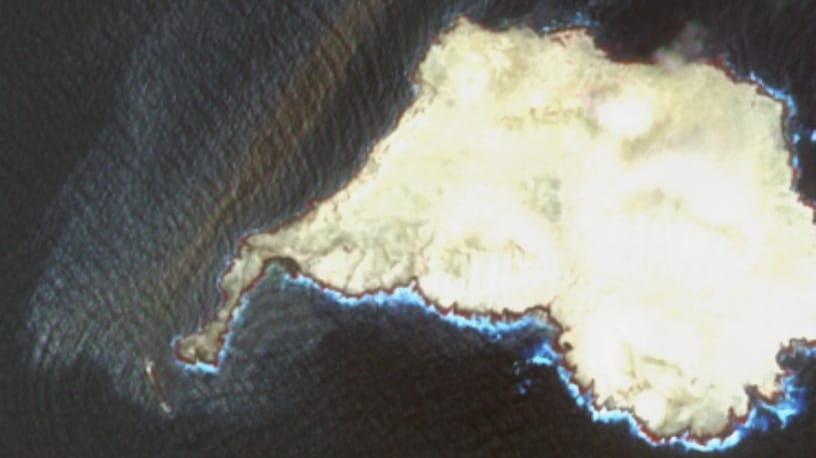
There have been no updated press releases or responses to requests for information from maritime security consultancy Ambrey, which has been mandated to oversee the salvage of the Russian shadow fleet tanker Caroline Bezengi (IMO 9224439). The Caroline Bezengi has been beached on rocks off the southwest tip of Jazirat Al Qibliyyah, one of the Hallaniyat Islands off the coast of Dhofar in the south-west of Oman, since about June 23.
The Caroline Bezengi was hit by an explosion on June 8 while off the coast of Oman. The tanker had completed a transit of the Suez Canal on May 30 and had left the Maritime Security Transit Corridor when the explosion occurred. The crew was taken off without injury some four days later. The tanker was laden with oil taken on board at Novorossiysk and was destined for Gujarat. The tanker is sanctioned by the EU, UK and US (OFAC), and has a past association with Russian state ship-owner Sovcomflot.
Ambrey have been called in to coordinate the salvage operation, to lighter off the cargo if feasible, and also to refloat and recover the tanker if its condition allows. Ambrey is also setting up an oil cleanup operation, to activate if it becomes necessary in the event of the tanker breaking up.
Although Ambrey has formally been certified as a full member of the International Salvage Union only since May this year, it was responsible for the hugely challenging recovery of the Greek-registered tanker Sounion (IMO 9312145), which was the subject of a sustained attack in the Red Sea by the Houthis in August 2024. After the crew of the Sounion had been evacuated by units from the EU’s Operation Aspides, the Houthis subsequently raided the tanker and set off fires using explosive charges. The Ambrey-coordinated operation landed a salvage crew back on the Sounion while it was still on fire and under Houthi threat, took the tanker under tow northwards, and managed to recover most of the cargo, thereby saving not only its value for the insurers but also averting an environmental catastrophe in the Red Sea.
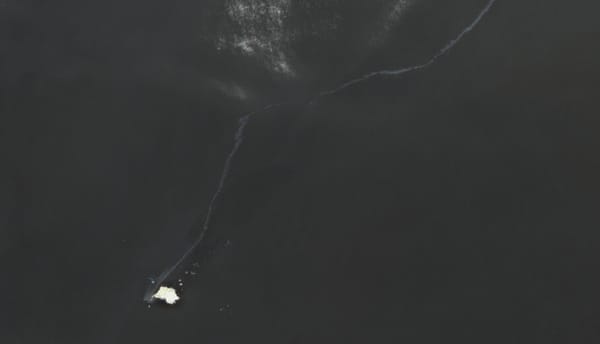
In the absence of an update from sources on the ground, satellite imagery from August 22 appears to suggest that the tanker has settled further in the water, possibly with some deformation of the hull, but the volume of oil escaping does not appear to have increased significantly. On the day of the satellite overflight, the escaping oil plume was tracking further to the east and into the North Arabian Sea, consistent with a prevailing wind from the southwest, reducing the amount coming ashore in the Ras Madrakah area. With current weather conditions likely to last for at least another week, wind speeds are averaging about 16m/s, gusting to 26m/s, with wave height over 10 feet. These conditions would make lightering or rebalancing the cargo hazardous. No salvage-associated vessels can be seen in the imagery, either off the wreck or in the harbor at Halliniyat, which Ambrey had been intending to use as its base camp.

that matters most
Get the latest maritime news delivered to your inbox daily.
The oil slick from the Caroline Bezengi, lower left, August 22 (false color, Copernicus)
For now, the salvors must be hoping that the Caroline Bezengi remains intact without too much increase in oil leakage from the wreck, with the hope that an easing of the weather towards the end of the Khareef monsoon season will come soon enough for the salvage operation to be able to begin in earnest. However, a change in the prevailing weather and associated sea states is not yet apparent in the medium-term forecasting.
