


Monsoon Weather Abates, but the Caroline Bezengi is Still Leaking Crude
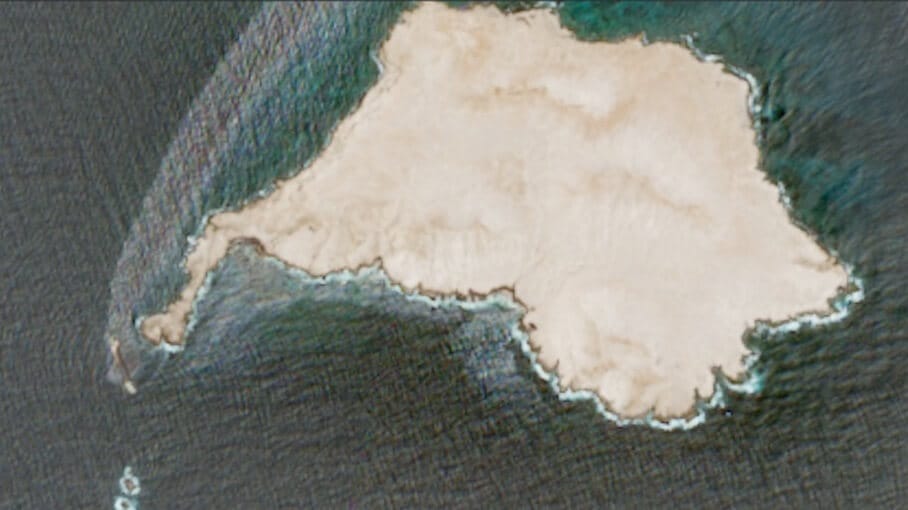
Weather conditions in the sea area around the beached Aframax tanker Caroline Bezengi have eased in recent days. The vessel has been aground on the rocks off Jazirat Al Qibliyyah - one of the Hallaniyat Islands off southwest Oman - since June. Seasonal rough conditions, with wave heights up to 13 feet and southwesterly wind speeds of nearly 50 knots, have abated in recent days. But the improvement looks to be only temporary, with the weather forecast to revert to the stormy seasonal norms by the end of the week. Khareef conditions normally last until the end of September.
The Caroline Bezengi had taken on an oil cargo at Novorossiysk, Russia and was destined for Gujarat. The tanker had been sanctioned by the EU, UK and US (OFAC), and has a past association with Russian state shipowner Sovcomflot.
From imagery available on September 11, the tanker is still leaking oil at what appeared to be a heavier rate than seen previously. The oil plume is still flowing towards the north-east, parallel to the Omani coast. There will be some oil being washed ashore on the Omani mainland, but once past Ras Madrakah, the plume seems to heading in a more easterly direction into the Northern Arabian Sea, unfortunately threatening the Iranian and Pakistani coastlines. There is no evidence in imagery of any salvage action or oil clearance operations in the area of Jazirat Al Qibliyyah, which is not surprising given the prevailing Khareef conditions.
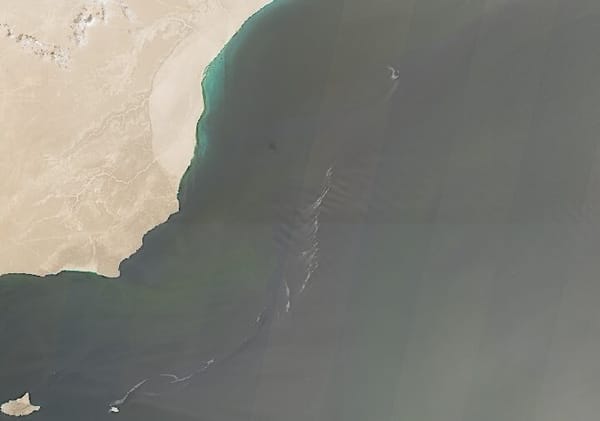
Drifting oil plume from the Caroline Bezengi (lower left)wends its way north off Khalif (Copernicus / Sentinel-2)
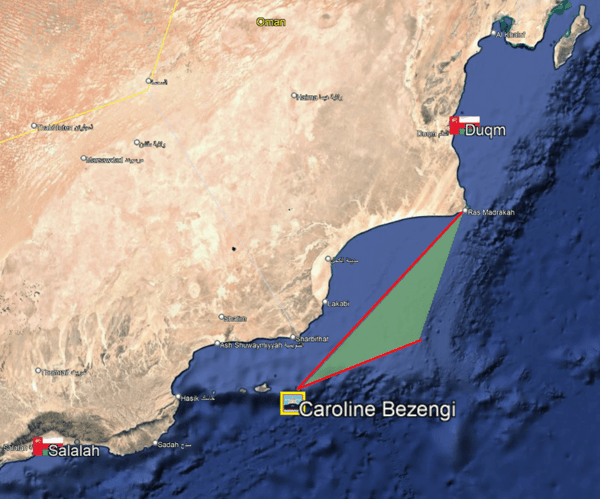
The oil plume from the Caroline Bezengi, September 11 (Copernicus / Google / CJRC)
Ambrey, the appointed salvor, has not issued any update since their original press release, and appears to be generally observing a non-disclosure contractual obligation. The Omani authorities have also been reticent to comment publicly.
Some background details about the shipwreck are now however emerging.The Caroline Bezengi was adrift for some time after suffering a blast on June 6 from limpet mines, presumably planted by a Ukrainian intelligence organization while the ship was in the Sokhna Anchorage after transiting the Suez Canal. She washed up on the rocks off Jazirat Al Qibliyyah some weeks after the blast, between June 23 and 30. While she was adrift, the Caroline Bezengi was shadowed by another sanctioned Russian dark fleet tanker, the Aruba-flagged Noble Walker (IMO 9292981), which rescued the crew.
During the intervening period according to Tradewinds, salvors apparently made offers to secure the ship, which would have enabled a relatively easy recovery of the 800,000 barrels of Russian oil on board. Why the Caroline Bezengi was not taken under tow at this time remains a mystery, but probably relates to her sanctioned status and fear of legal challenges over the ownership of the cargo.

that matters most
Get the latest maritime news delivered to your inbox daily.
It has also now emerged that notwithstanding what appeared to be fraudulent insurance paperwork, the cargo was in fact insured by AlfaStrakhovanie, a sanctioned, Russian state-linked insurer operating outside the mainstream P&I pool – providing further evidence of how the Russian dark fleet operates. According to Insurance Business, AlfaStrakhovanie has stepped forward to pay for the cost of the Ambrey salvage operation, relieving the Omani state from the burden of doing so in the absence of a response from Cameroon, the flag state. A sanctions exemption from the UK Treasury would be required if Ambrey was to receive payment, and of some significance, Ukraine gave notice within the IMO that it would not object.
If paying for the operation, AlfaStrakhovanie as the insurer would be entitled to any proceeds from the sale of recovered oil pumped off the tanker, offsetting the cost of the salvage and cleanup.
