


Seatrium and Maersk Settle Dispute and Cancel Arbitration Over WTIV
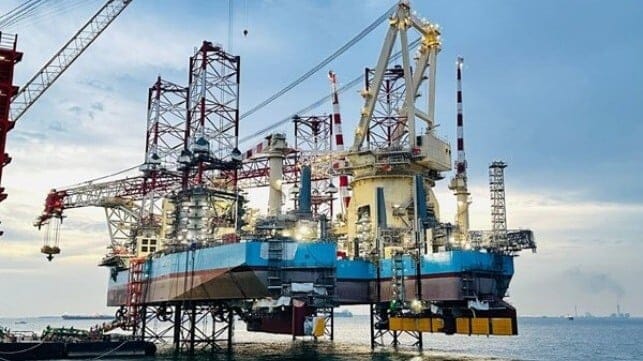
Singapore shipyard group Seatrium reports that the dispute with Maersk Offshore Wind over a nearly completed newbuild wind turbine installation vessel has been resolved. The company has agreed to finance the vessel for Maersk Offshore Wind and called the arrangements “the optimal way forward” for the interests of the shipbuilder.
Under the terms of the agreement, Seatrium will deliver the vessel to Maersk Offshore Wind by February 28, 2026. Maersk has agreed to pay the balance of the contract price, a total of US$360 million, although Seatrium is agreeing to finance $250 million. It reports that it will hold a mortgage on the vessel and that they have mutually agreed to use an interest-bearing credit arrangement for up to 10 years. It will be repaid through cash generated by the vessel, and Seatrium will have first priority rights over the vessel.
The dispute emerged when Maersk notified Seatrium on October 9 that it was terminating the contract for the wind turbine installation vessel, even though it was nearly completed (98.9 percent). Seatrium reported that Maersk was citing delays and "construction issues." Maersk had paid 20 percent of the contract price, which was awarded in March 2022.
Seatrium protested the termination of the contract and vowed to seek redress, including the right to contest the notice of termination, and/or to commence legal proceedings to seek all available remedies for wrongful termination. Both companies had sought arbitration over the dispute.
Following the reaching of the agreement, both Seatrium and Maersk have resolved to withdraw and discontinue the arbitration proceedings.
“After evaluating all feasible options alongside the end-customer, the company is of the view that the arrangement above is the optimal way forward for the interests of the group and the company’s shareholders, taking into consideration the relevant circumstances, including financial impact, certainty of recoverability, and the risk of lengthy and costly legal proceedings,” said Seatrium in a statement.
The 475-foot-long ship was launched in May 2025 and was designed as part of a push by the former Maersk Supply Services to expand into wind turbine installation. It incorporates a unique locking system to receive feeder vessels from shore with the components for the wind farms.
The vessel has been described as futuristic with capabilities to meet the needs of the U.S. offshore wind industry, including handling the largest offshore wind turbines and improving installation efficiency by up to 30 percent.
Seatrium reports the vessel is now 99.8 percent completed. In the summer, Maersk had highlighted the vessel when it was undergoing jack-up tests.
Maersk was contracted by the Empire Wind offshore wind farm being built off New York for the installation project. Located approximately 25 to 48 kilometers (15 to 30 miles) southeast of Long Island, the project will be comprised of 54 Vestas 15 MW wind turbines.

that matters most
Get the latest maritime news delivered to your inbox daily.
Empire Wind has faced opposition from the Trump administration, including in the spring, when it had a 30-day pause just as offshore work was due to start. The dispute was settled, and work started in May, but today, the Trump administration announced it was pausing all the licenses of offshore wind projects under construction, including Empire Wind.
Maersk Supply Services (later reformulated as Maersk Offshore Wind) announced in 2024 that it was partnering with Louisiana-based Edison Chouest Offshore for the feeder component of its approach to offshore wind installation projects. The project called for two tugs and two barges to be built by Bollinger Shipyards. They would be owned and operated by ECO in support of the installation system and comply with the restrictions of the Jones Act, which requires American-flagged vessels to transport the materials to the installation site.
