


The New Normal for Hull Husbandry: A Continuous Hull Record
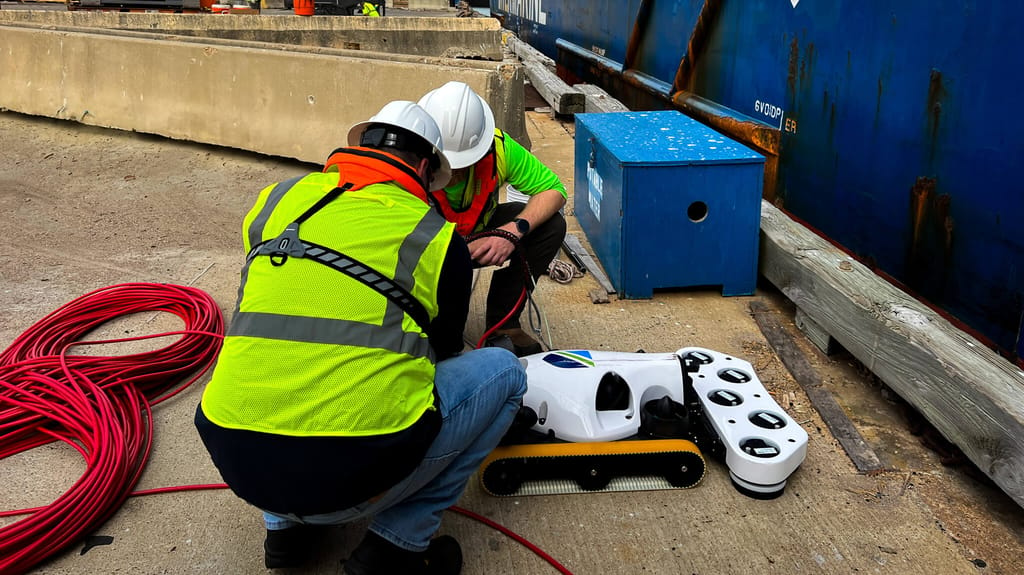
Biofouling regulation is moving from voluntary guidance to mandatory rules. But the building throughline is this: hull management is becoming a matter of record, and keeping the hull clean is only part of what that record has to show.
The Rules are Changing
For most of the past decade, managing biofouling was a matter of good practice. The IMO's biofouling guidelines are still voluntary, but the direction remains strong.
Regionally, the rules are already here, and they are spreading. California requires vessels to keep a biofouling management plan and record book, as well as to file an annual report. Australia and New Zealand screen for biofouling on arrival. Brazil's standard, with new penalties, requires the same plan and record book and the logging of every inspection and in-water cleaning.
These rules all share the same directive. Operators need an established workflow to document the condition of the hull, record maintenance activities, and maintain an on-demand log with confidence.
The push is a steady tightening throughout the industry toward a world where a clean hull is not enough. Removing biofouling is only part of hull maintenance, and true visibility comes from data that is verified by frequency.
The Record is Half the Requirement
Proactive management was always the cheaper option on fuel. Now, it is also becoming the lower-friction path through regulation. The record keeping it enables is what gives it this designation. A proactively cleaned vessel provides more data and reporting from the frequency alone.
A cleaning with no documentation barely counts. What an inspector, a port authority, or an auditor wants to see is the history: what condition the hull was in, when it was inspected, what was done, and what resulted.
This is where many operators are exposed, and not because of negligence. A maintenance record is usually assembled through separate dive inspections, cleaning contractors, and port calls, all designed with relatively episodic methodology. This segmented approach does not provide a clear picture of hull condition.
Why the Insurer Cares Too
This is not only a regulatory matter, it is also a matter of risk; thus, the P&I clubs have also supported the shift to new documentation requirements.
A documented hull history is evidence, removing ambiguity, be it incurring a fine for a non-compliant port cleaning, a dispute over the hull condition, or an operational delay. A record kept as part of routine operations, simultaneously, is far stronger than one reconstructed under pressure afterward.
Even the Security Case Comes Back to the Record
Through 2025 and into 2026, a series of tankers were damaged by limpet mines attached to their hulls, in most cases after calling at or trading with particular ports, and with the devices often timed to detonate once the vessel had moved on. In at least one case, the mines were found only because the port required a hull inspection on arrival.
Although this is a specific threat tied to a specific trade, it illustrates the same point. The hull is the largest part of the vessel, yet it is routinely neglected. It is inherently a challenging surface to investigate. Dedicated threat inspection is a purpose-built job, and Greensea IQ builds for it separately, rather than pushing for a cleaning pass to double as a threat sweep. What you can see and document, you can manage.
Where the Record Comes From
Ultimately, all paths lead to the same practical requirement: a hull record that is continuous rather than occasional and generated as part of normal operations.
EverClean by Greensea IQ was built to produce exactly that. It began as an autonomous, proactive hull-grooming platform, but it was engineered on a design foundation to navigate, gather data, and report back. This framework allows it to accomplish more than grooming. When EverClean adheres and grooms the hull, it holds the fouling low, aligning with the regulation request, and records the hull's condition as it works, building a position-referenced account pass over pass. The cleaning and the record are the same activity, not two separate tasks to schedule and reconcile.
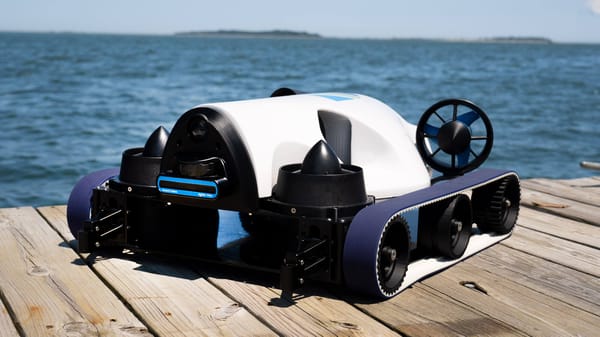
EverClean Inspection Vehicle by Greensea IQ
This same foundation allows EverClean to work as a separate inspection vehicle when grooming is not needed. It has the ability to free-fly the hull like a traditional ROV, then attach for close, position-referenced mapping; this hybrid range sets it apart from a fixed crawler or a free-swimming ROV.
The EverClean platform is powered by Greensea IQ's Core software, which supplies the navigational precision, advanced autonomy, and aggregated data reporting that is vital to a comprehensive inspection. The architecture was created to be flexible: Greensea IQ has built custom payloads to document measurements like hull-thickness measurement, and is always testing new sensors and configuration for added capability.
EverClean is designed as one platform with two work functions. It is deployed proactively when a hull needs cleaning, and it serves as a dedicated inspection vehicle to assess and record; both workflows report a digestible dataset that can be mapped over time.
Greensea IQ has spent two decades on the software that makes autonomous systems dependable in this environment. It is this maturity that provides peace of mind for a record that holds up when a surveyor, insurer, or security officer needs it most.
If you are looking to learn more about EverClean's inspection performance, as well as how proactive grooming keeps a vessel in line with developing regulations, request the EverClean capability brief.
This article is sponsored by Greensea IQ.
The opinions expressed herein are the author's and not necessarily those of The Maritime Executive.
