
ReCAAP and Shipping Industry to Discuss Practices to Deter Piracy
[By ReCAAP ISC]
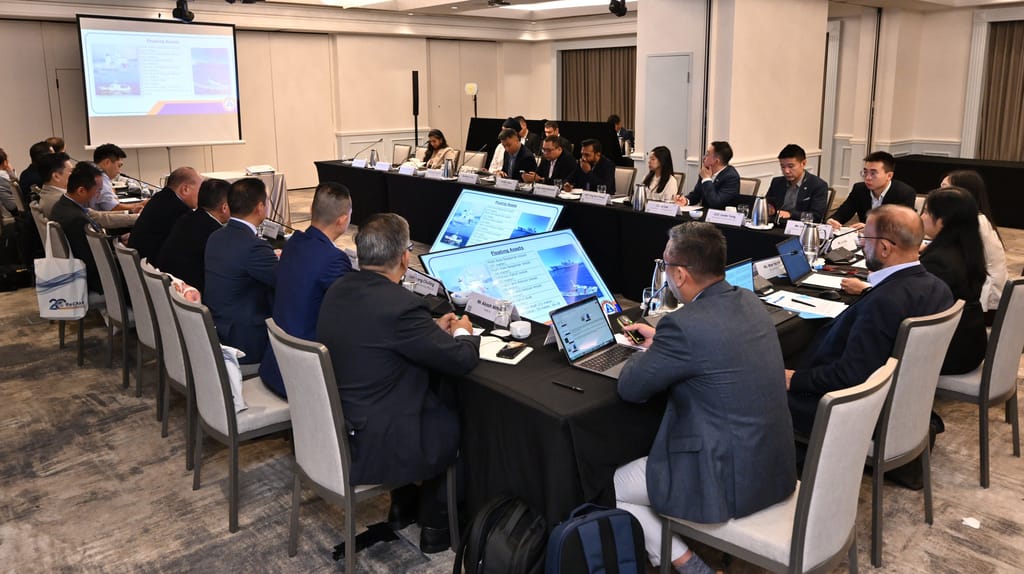
The ReCAAP Information Sharing Centre (ISC) today held a dialogue with representatives from the shipping industry to discuss the latest situation of piracy and armed robbery against ships in Asia and West Indian Ocean region. Representatives from the Maritime and Port Authority of Singapore, Information Fusion Centre and the Singapore Police Coast Guard also attended the dialogue.
From January to June 2026, a total of 35 incidents of armed robbery against ships in Asia were reported to the ReCAAP ISC. This represents a 64% decrease compared to the 96 incidents reported in the same period last year. Twenty-one out of the 35 incidents occurred in the Straits of Malacca and Singapore (SOMS). There were 10 incidents of sea robbery reported in Philippine ports and anchorages in the first half of 2026, compared to zero incidents during the same period last year.
During the dialogue, participants discussed best practices to deter unauthorised boardings and armed attacks in the SOMS, West Indian Ocean Region and the Strait of Hormuz. These include implementing ship specific risk assessment and vessel hardening measures, conducting regular security drills, and continuous monitoring and reporting by ships transiting high risk areas.
Participants also discussed the use of technology such as artificial intelligence cameras on ships to identify safety risks and unauthorised perpetrators, and the adoption of digital platforms to enhance maritime domain awareness and improve risk assessment for commercial vessels.
ReCAAP ISC Executive Director, Mr Vijay Chafekar, said, “The use of technological tools can help shipping companies make more informed risk assessments, detect potential threats, and adopt region specific security measures to protect crew and ships. I would like to encourage the shipping industry to use the ReCAAP Data Visualisation Map & Panel (Re-VAMP), an online dashboard which can display the locations and timings of unauthorised boarding incidents in Asia. It is a useful tool to assist shipmasters in making risk assessments and instituting the appropriate preventive measures.”
The products and services herein described in this press release are not endorsed by The Maritime Executive.
