


Polaris Evaluates "Unmanned Bridge" for Open-Ocean Navigation
Most recent AI-navigation ventures have been in the realm of "assisted navigation," with the modest goal of augmenting the bridge team, but some are forging ahead into the realm of truly unmanned operations - at least in benign conditions. Korean tech firm Avikus - along with its parent company HD Hyundai Heavy Industries, Polaris Shipping and ABS - has launched a study on a "conditional unmanned bridge" system for low-risk use in the open ocean. It is an early test of the technology's potential to not only improve safety, but also reduce labor hours.
"The unmanned bridge concept is expected to be the first form of autonomous shipping to enter the market under the IMO MASS Code framework," explained Jaeho Kang, Co-CEO of Avikus, in a statement released Tuesday. A non-mandatory MASS Code was adopted by IMO last month, and will be formalized in mandatory form in 2030; in between, Avikus says, data and experience from real-world testing will help inform the final rule. Avikus' autonomous navigation support system has type approval from DNV, and it is installed as standard equipment on newbuilds from HD Hyundai, giving it an early leg up on achieving commercial scale.
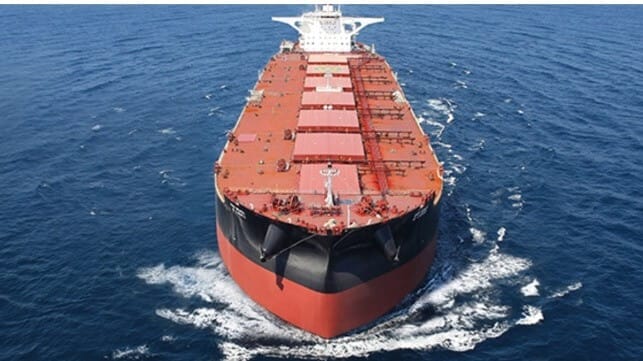
In the test with Polaris, Avikus will work with ABS and HD Hyundai to design a system and operating framework for fully unmanned operations during open-ocean passages, where traffic is light. The test case is a 325,000 dwt very large ore carrier (VLOC), which navigates long stretches of open ocean for much of its operating lifespan.

that matters most
Get the latest maritime news delivered to your inbox daily.
Polaris will pull on its own operational data from the vessel to determine where the boundary should be between unmanned and manned conditions on the bridge, Polaris chief operating officer DoHoon Kim said in a statement, taking into account crew response times. Avikus will pull together the technical requirements; HHI will handle any vessel design modifications required; and ABS will evaluate the concept's safety and its regulatory compliance, including a gap analysis.
"The technical complexity of the concept lies not in any single system, but in the interactions between autonomous navigation, vessel design and the conditions during unmanned bridge periods," ABS Chief Technology Officer and SVP Patrick Ryan said in a statement. "ABS will apply a structured safety evaluation, drawing on hazard identification, functional safety analysis, and alignment with the IMO MASS Code, to get a clear, evidence-based picture of the unmanned bridge concept."
