


UAE Resumes Cross-Gulf Trade with Iran
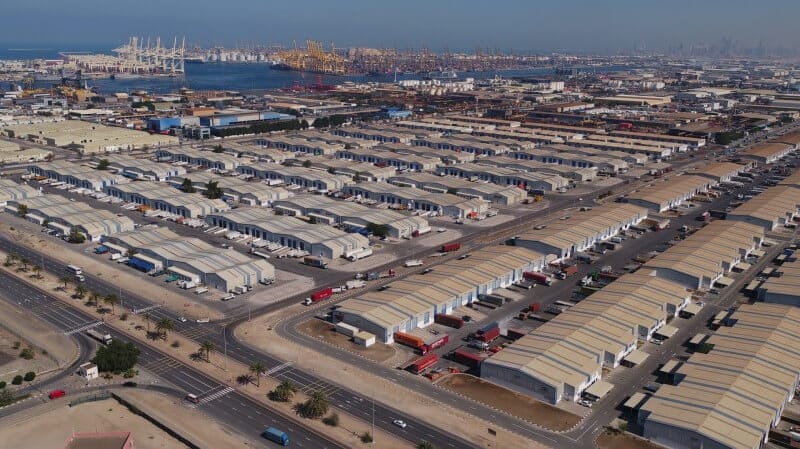
A little-appreciated consequence of the all-out war that broke out in the Gulf on February 28 has been the disruption to the United Arab Emirates’ trade with Iran.
A foundation of the Emirates’ extraordinary growth since 1979 has been its role as the import-export gateway to Iran. Not so long ago, about 90 percent of Iran’s trade with the outside world passed through DP World’s massive container terminal at Jebel Ali, where, from a central distribution point, global container liners transferred cargo to smaller ships servicing numerous Iranian ports within the Gulf. This was a hugely profitable business for DP World, the revenue stream for the Dubai government providing capital for the early phases of the Emirate’s explosive growth. The growth and profitability of Emirates Airline followed a similar pattern, with Dubai acting as a hub for Iranians wanting to switch from local networks and use the services of Emirates Airline’s unmatched global footprint. Business and trade with the supposedly isolated Islamic Republic were a huge engine for growth.
So, in this regard, Iran has not really been isolated since 1979 – it has been thoroughly integrated with the economies of the GCC, notwithstanding the strictures of global sanctions applied on Iran. There has been a strong mutual inter-dependency. So, while there have been political differences between the GCC and Iran, principally over Iran’s desire to be seen as the dominant nation in the region, the strategic aim behind its regional expansionism program, which sought to subvert the political system in many neighboring countries, there have always been strong economic reasons to maintain a working relationship. Expatriates in Dubai who never meet any locals may not appreciate just how many Iranians and Iranian businesses operate in Dubai, and how a large proportion of the Emirati citizen body has roots in Iran.
Private enterprise and commercial interest are powerful forces in the Emirates, and therefore it is no surprise that trade has once again started flowing across the Gulf, notwithstanding that Jebel Ali is temporarily cut from global supply through the Strait of Hormuz. Kpler analyst Rebecca Gerdes, who keeps a close eye on container movements in the Gulf, reports that more than 60 containerships made cross-Gulf passages in July, up from 10 in June. In the period up until July 31, traffic was averaging a daily container liner in each direction between Jebel Ali and the Rajaei civilian port in Bandar Abbas. Five container-carrying vessels, all flying flags of convenience, are apparently shuttling to this route, namely the Yekta 4 (IMO 9303675), Mehran 1 (IMO 1111117), Farahi 2 (IMO 9034688), J. Pioneer (IMO 9116711), and Capilano (IMO 9358577).
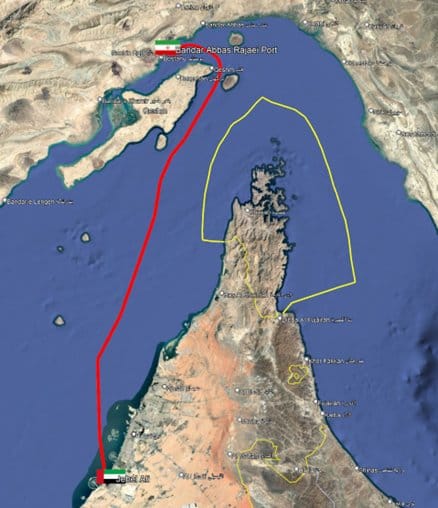
The route followed by Capilano and other container liners between Jebel Ali and Bandar Abbas Rajaei (red), keeping towards the Iranian coastline (Google Earth/CJRC/Kpler data)
The conflict between Iran and the United States has in recent days settled into what appears to be an economic contest of endurance, pitching the U.S. desire to limit inflation and oil price rises against Iran’s need for finance to fuel its war effort and to keep the population happy with essentials. The U.S. naval blockade of Iranian ships and ports being enforced from outside the Gulf applies most of the leverage the United States needs to have to keep an advantage in this battle, and the volumes being carried on the Jebel Ali to Bandar Abbas route will not make a substantial impact. The contents of the containers on the route one can expect are being closely monitored, and will tend towards medicines and foodstuffs rather than dual-use electronics and fertilizer.

that matters most
Get the latest maritime news delivered to your inbox daily.
Still central to the trade is Jebel Ali, with its sophisticated cargo handling and logistic facilities. The difference with the pre-war era is that Jebel Ali is now being serviced from the landward side, with goods being trucked (or railed) in and out from Fujairah, Khor Fakkan, Sohar, and Salalah, and from Europe and beyond by trucks coming from the Mediterranean and Saudi west coast ports. Clearly, these elongated trade routes, involving switches between transport means en route, are economically inefficient – but needs must. Moreover, between the UAE and Iran, there is a baseload of bilateral trade; the fresh fruit and vegetables in the Spinneys supermarkets in Dubai, amongst many other classes of goods, come largely from Iran.
Oman’s Foreign Minister has been an advocate for a new security regime in the Gulf, calling for the end of the containment of Iran and its integration into a legal and practical framework shared by all Gulf states. There is already a degree of economic integration between all Gulf states, as the resumption of cross-Gulf trade shows. But the bar to deeper integration at both the economic and political level appears to be an unwillingness on Iran’s part to observe legal and practical frameworks which the others all have, most noticeably the United Nations Convention on Law of the Seas (UNCLOS), the 1968 UN Non-Nuclear Proliferation Treaty, and the IMO’s 1968 Traffic Separation Scheme covering the Strait of Hormuz.
