

Israeli Counter Attacks Across Iran with Red Sea Transits at Risk
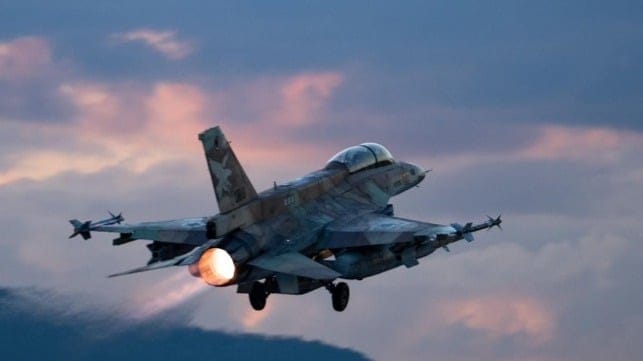
Israel has responded to four waves of IRGC missile attacks, none of which appear to have damaged their targets, with a series of attacks across Iran. Iran has claimed to have targeted Israeli airbases at Nevatim and Tel Nof, and after announcing its attacks would last for a week, then declared them to be at an end, dependent though on events in Lebanon.
Israel will have been observing activity in Iran closely since the ceasefire began on April 8, and to have built up a list of high-priority targets to be addressed when an opportunity presented itself. The fact that the Israeli action was unilateral, without any pre-warning to the United States, will also have given the Israelis the freedom to attack a target list that otherwise might have been moderated in response to U.S. concerns.
Early reports suggest that the Israeli targets were spread across the country, with strikes recorded in Isfahan, Tabriz, Tehran, and at Bandar-e Masher in the northern Gulf, where the Karoon petrochemical complex may have had a role in producing ballistic missile fuels. Social media video shows out-of-town targets being hit in mountainous areas, suggesting that missile, air defense and logistic facilities are being hit rather than leadership figures. However, there are reports of a large explosion in the National Garden area in central Tehran, where the Iranian foreign ministry is located, which could be an Israeli attempt to influence Iran’s negotiating effort. A statement from the Israeli Ministry of Defence, announcing the end of Israeli operation Roaring Lion, said that its aim was to destroy elements of the Iranian air defense system which had been restored or enhanced since the end of the ceasefire in April, so that Israel would continue to have freedom of maneuver in Iranian skies.
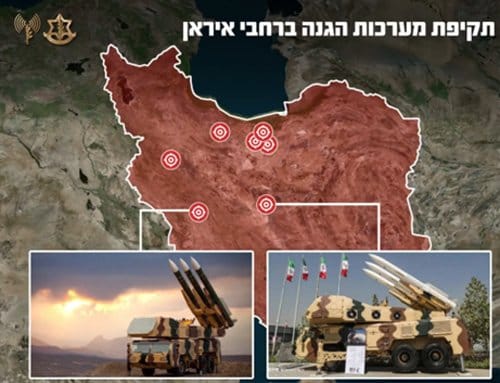
Israeli Defence Force graphic showing targets hit during Roaring Lion (still from Israeli Defence Forces video)
If Iranian oil facilities have been hit, the usual IRGC response is to hit back at similar installations in Gulf states. GCC states will be prepared for such attacks, but beyond defensive measures may feel that offensive retaliation is called for as well, creating an escalatory spiral.

that matters most
Get the latest maritime news delivered to your inbox daily.
At the same time, the Houthi leadership has claimed to have participated in the strikes on Israel with missiles of their own, and appear to have declared an end to what was in effect a general halt to maritime targets in the southern Red Sea and Gulf of Aden area, where no target at sea has been hit for nearly nine months. It remains to be seen if there is a divergence between rhetoric and reality, which should become clear if the Houthi leader Abdul-Malik Al Houthi makes an appearance on television, following up the bombastic statement on Yemeni television which military spokesman Brigadier Yahya Sare’e has already delivered. The doyen of the Yemeni analyst community, Mohammed al Basha, has noted a significant increase in “Unity of Fronts” messaging from the Houthis, who are agitated in particular about the situation in Lebanon. The threat to the ceasefire comes at a time when tensions between Saudi Arabia and the Houthis are rising, likely as a consequence of the Houthis failing to make as much progress as they had been hoping for in negotiations, which could have led to an infusion of Saudi funding and an end to the Saudi economic blockade.
Any breakdown of the ceasefire in the southern Red Sea and Gulf of Aden area will have a direct impact on the pressures being felt by Gulf States consequent upon the closure of the Strait of Hormuz. Red Sea ports are being heavily used firstly to export Saudi Arabia’s crude, to the extent that total exports have dropped only marginally since the capacity of the East-West pipeline was boosted. It would also affect the ability to truck containers across Saudi Arabia to the Gulf states, bringing in essentials and foodstuffs. It would also delay the deployment of a European post-crisis naval policing force, which had been in the planning to help stabilize the situation in the Strait of Hormuz.