


Iran Threatens to Attack Ships for Using Non-Iranian Routes Through Hormuz
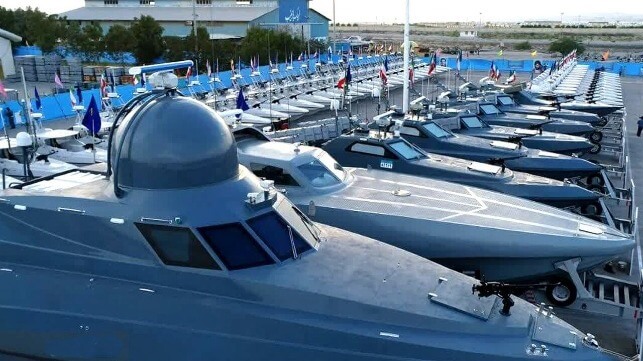
Amidst a reported disagreement within Iran's leadership over whether to prioritize control of frozen bank accounts or control of the Strait of Hormuz, the Iranian senior military command center is signaling a strong preference for the latter - and a continued willingness to use force.
On Thursday, the Khatam al-Anbiya Central Headquarters - the Iranian equivalent of the Pentagon - threatened shipowners with attacks if they attempt to transit the Strait of Hormuz without approval. "Any failure to comply, deviation from the designated route, or disregard for the navigation protocols of the Islamic Republic of Iran in the Strait of Hormuz will be met with an immediate and forceful response from the armed forces," the headquarters staff said in a statement carried by state broadcaster IRIB.
There are three general routes through the strait at present: the northern, Iranian-controlled route past Qeshm; the preexisting Traffic Separation Scheme, which is believed to be mined; and a southern route along the Omani coastline, approved by the IMO and defended by the U.S. military. All are nominally free of charge during the 60-day period of negotiations between the U.S. and Iran, and Iran has agreed to make arrangements for unobstructed passage (contingent on the rest of the agreement being met). The Iranian military wants to ensure that all unobstructed passages happen under Iranian control, within Iranian waters, facilitating a post-MOU transition to a permanent Iranian control system for the waterway.
The U.S. government has offered to unfreeze more Iranian money held in overseas accounts, in effect exchanging funding for a more compliant Iranian approach to the strait, so far without success. Officials close to the diplomatic talks told the Wall Street Journal that U.S. negotiators have offered Iran access to some of its own blocked bank accounts - worth somewhere in the range of $6 billion, three times the amount of the 2016 cash payment approved by President Barack Obama - if Tehran agrees to give up control of Hormuz and set aside its long-term ambition to charge "service fees" for vessel transits.

that matters most
Get the latest maritime news delivered to your inbox daily.
The access to foreign funds would be a swift and much-needed windfall for the Iranian government, whether to provide for its own citizens in a severe economic downturn or to increase military spending and rebuild its missile and drone programs. It reflects a newly pragmatic approach by the administration: while still reportedly preparing for a military option, the White House appears open to financial solutions to the Strait of Hormuz problem - though at least in public, Iran is not taking the offer. Deputy Foreign Minister Kazem Gharibabadi said Thursday that the strait remains "under Iran's command."
The short-term payment might be far less than the long-term payoff if Iran could control Hormuz permanently (which some question on practical grounds). The Iranian government hopes to earn up to $40 billion every year in fee payments for crossings, according to the Wall Street Journal.
