
Iran Responds to Trump's "Project Freedom" With Escalation and Attacks
Iranian forces fired on U.S. vessels, multiple foreign-flag ships and an onshore oil terminal over the course of the first day
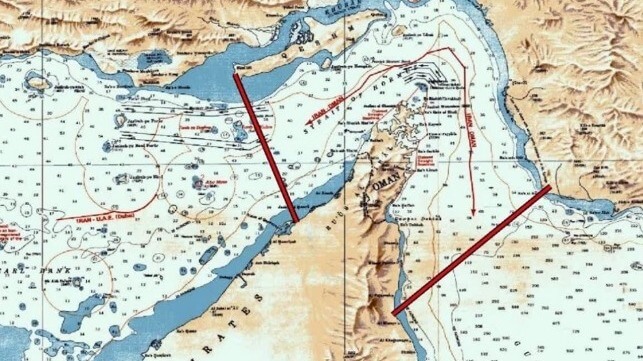
Following the Trump administration's announcement of a support system designed to "guide" ships out of the Arabian Gulf and through the Strait of Hormuz, Iran has escalated its shutdown enforcement with attacks on shipping and infrastructure, along with a strategic expansion of its declared control zone. The zone now covers waters off Fujairah, the UAE's bypass route for oil exports; if it is within the capabilities of Iran's weakened military to enforce, a blockade on Fujairah would further reduce global traded oil supplies by as much as 1.5-1.8 million barrels per day, deepening the energy crisis.
"Iran’s announcement of an expanded control envelope in the Strait of Hormuz - coupled with strikes on oil facilities in Fujairah and strikes on oil tankers - points to a deliberate escalation toward the United Arab Emirates’ oil export bypass routes," commented Hamidreza Azizi, a fellow at Berlin-based think tank SWP. "The objective is to keep alternative export channels at risk, sustain elevated oil prices, and block any perception of normalization. In other words, the message is that Donald Trump’s mission in the strait will not be cost-free."
The U.S. support mission - dubbed "Project Freedom" - is off to an active start. According to U.S. Central Command, a number of U.S. Navy destroyers made a rare transit of the Strait of Hormuz, and two U.S.-flagged ships made the risky voyage out of the Gulf - the first American vessels to exit since the start of the conflict. Maersk Line Limited has confirmed that one of the vessels was the U.S.-flagged ro/ro Alliance Fairfax, and said that the transit was completed without incident.
In a call with reporters, Adm. Brad Cooper of U.S. Central Command said that Iran had opened fire on U.S. warships and U.S. vessels during the first day of Project Freedom operations. U.S. forces responded with force and destroyed some Iranian small craft, he told the Washington Post's Dan Lamothe.
Iran's military has also targeted foreign-flagged vessels. One bulker and one tanker reported attacks in the Strait of Hormuz on Sunday. In addition, a Korean-managed boxship, HMM Namu, reported an explosion of unknown cause in its engine room on Monday while anchored outside of Umm Al Quwain. Multiple sources have also reported that the tanker Barakah was attacked by two drones during a Hormuz transit; the crew is reportedly safe, according to operator ADNOC.
Separately, an Iranian drone attack was reported on Monday at the Fujairah Oil Industry Zone - the first kinetic strike on a GCC infrastructure target since the early days of the ceasefire in mid-April. Three Indian nationals were injured in the attack, according to local authorities.
Shipping interests remain cautious
Given the conflicting messaging about safety of navigation in the strait, most maritime industry stakeholders are taking a watch-and wait approach to the "Project Freedom" announcement. While Maersk Line Limited said that it has had extensive consultations with the U.S. military about every detail of Monday's U.S.-flagged vessel transits, no similar outreach appears to have been made to the rest of the global shipping industry. The U.S. has not yet communicated any formal guidance about its ongoing plan to "guide" shipping through the waterway, according to industry association BIMCO.
"In view of the Iranian threats against any ship attempting to transit the Strait of Hormuz without coordination with Iran’s military, there is a risk of hostilities breaking out again if 'Project Freedom' goes ahead," advised BIMCO in a statement. "The overall security situation for the shipping industry is currently unchanged, and our advice is for all shipowners to continue carrying out thorough risk assessments."
If anything, many shipowners are more concerned than they were previously about the possibility of Iranian attacks, given Iran's resumption of kinetic action in response to the U.S.-endorsed shipping corridor. "Risk has increased to all shipping and ports across the Gulf. Anticipate US/Israel strikes against Iran," advised Martin Kelly of EOS Risk Group in a statement Monday.
Multiple analysts have suggested that given the foreseeable risk of Iranian attacks, the White House's shipping corridor could be an intentional end point for the U.S.-Iran ceasefire agreement - an escalation of tension, performed in the expectation that Tehran will retaliate with force.
"The administration appears unwilling to wait for the blockade [on Iran's oil exports] to 'work.' There is likely growing recognition within senior ranks that earlier timelines, assuming economic pressure would compel Iranian concessions, were unrealistic. It is also possible that the administration is deliberately seeking to provoke an Iranian response, one that could provide the justification needed to resume military operations. Whether by design or by consequence, this dynamic increases the risk that escalation becomes self-reinforcing rather than controlled," cautioned former Israeli Defense Intelligence Iran analyst Danny Citrinowicz.
However, the U.S. has been noticeably quiet on the question of whether Iran's attacks meant the end of the ceasefire, or whether they even constituted a violation. CENTCOM's Adm. Brad Cooper declined to comment when asked directly earlier in the day, and in a conversation late Monday, President Trump appeared to downplay Iran's reaction.

that matters most
Get the latest maritime news delivered to your inbox daily.
"[Iran's drones] were shot down for the most part,” Trump told ABC News' top D.C. correspondent, Jonathan Karl. "One got through. Not huge damage." He also suggested that the attack on HMM Namu was a Korean matter. "Shots were fired at a South Korean ship, and I think South Korea should take some action," Trump told Karl.
The U.S. and Iran are not the only actors capable of escalating the conflict. The UAE's Ministry of Defence said that its air defense systems engaged 12 ballistic missiles, three cruise missiles, and four UAVs launched from Iran on Monday - some number of which made it through to the Fujairah tank farm. The UAE, often on the receiving end of Iranian strikes, has reserved the right to respond to the attack. "It is not clear what provoked these two attacks, which are an unambiguous breach of the ceasefire. But it is a dangerous escalation as the Emirati tolerance for further Iranian attacks is currently very limited, and any such action may provoke a proportionate counter-attack," an experienced Mideast security expert told TME.
