


Prosecutors' Report Faults Bayesian's Crew for Sinking
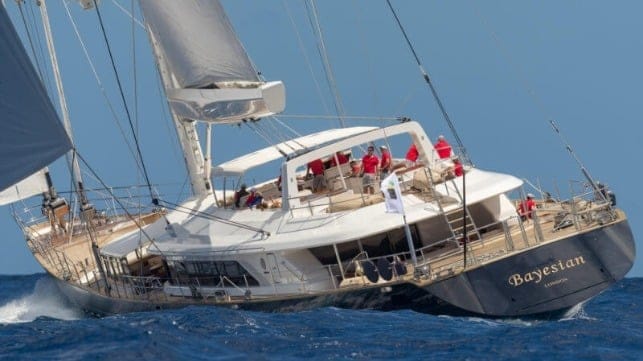
The capsizing of the glamorous superyacht Bayesian was one of the most high-profile marine casualties of 2024, and multiple disputes over the cause of its loss continue. Three members of the crew are under investigation in connection with the sinking, which killed tech billionaire Mike Lynch and six other people, including Lynch's teenage daughter; a report commissioned by Italian prosecutors has concluded that the sinking was attributable to crewmember error, contrary to findings from the UK Marine Accident Investigation Branch.
In the early hours of August 19, 2024, Bayesian was anchored off Porticello, Sicily to wait out windy weather. Her centerboard was raised and sails were all furled, all reportedly compliant with the terms of her stability booklet. Winds picked up at 0300 and strengthened to 30 knots by 0355. At 0406, Bayesian capsized to starboard suddenly and violently, then sank.

that matters most
Get the latest maritime news delivered to your inbox daily.
The master, James Cutfield, and two crewmembers - Tim Eaton and Matthew Griffith - were caught up in an inquiry brought by local prosecutors in Sicily, and could potentially face manslaughter charges. The prosecutor's office commissioned its own expert report on the cause of the sinking, and the initial results are in. According to Sky News, the prosecutors' experts determined that the weather at the time of the casualty was "little more than a squall, a sudden increase in wind speed that precedes thunderstorms and downpours" - implying that it should have been manageable for the crew. In this view, "the yacht therefore sank due to the crew's improper actions, their underestimation of the weather, and certain safety devices not being activated properly," the channel reported.
The UK MAIB reached a different conclusion. To get at the root cause, MAIB commissioned the University of Southampton's Wolfson Unit for Marine Technology to analyze the casualty. Based on the characteristics of the mast and stability condition of the vessel, the Wolfson Unit study found that if the wind was blowing directly onto Bayesian’s beam, a gusting wind speed in excess of 63 knots would likely cause a knockdown and capsizing. The risks of operating in the vessel's specific stability configuration in high winds "were not identified in the stability information book carried on board," MAIB found. "Consequently, these vulnerabilities were also unknown to either the owner or the crew of Bayesian."
