


Iran Rejects Proposal for Joint Governance of Strait of Hormuz
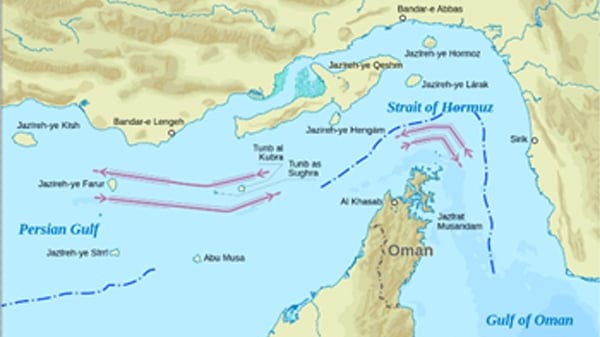
Iran has rejected the latest Omani proposal to share control of the Strait of Hormuz, according to the Wall Street Journal and a top Iranian official.
The international traffic separation scheme (TSS) for the strait is located in Omani waters, but Iran has used its drone and missile capabilities to force a halt to almost all shipping traffic in the southern half of the waterway. The dominant hardline faction within the Iranian government - aligned with the Islamic Revolutionary Guard Corps, a U.S.-designated terrorist organization - has put a high priority on controlling the strait for strategic purposes, despite heavy military and economic pressure from the United States.
Oman has been in talks with Iran for months on a joint scheme to administer the waterway, and had proposed to share "fees" for services rendered to passing ships. The newest version of that plan had the approval of the GCC countries, according to Reuters.
Iran rejected that proposal on Tuesday, diplomats close to the talks told the Wall Street Journal. In an interview with Iranian state television, Iranian Deputy Foreign Minister Kazem Gharibabadi emphasized that Iran would not allow a return to the prewar status quo, when ships transited the strait without interference.
The Omani plan called for assistance from a foreign military for removing naval mines from the strait, he added - mines that Iran emplaced earlier in the conflict. The Iranian government would not accept this proposal, but it would accept an arrangement in which Iran controls all of the inbound route and a part of the outbound route, he said. A southern Omani lane - independent of all Iranian control - would not be tolerated for even "one hour," he said. Iran has recently attacked neutral shipping in the waters just off Oman's Musandam Peninsula.
Gharibabadi also denied recent U.S. claims of ongoing negotiations with Iran, and said that no requests for talks had been made in recent weeks.
"The Strait of Hormuz is a very important indicator for assessing Iran's success in war The arrangements that will be imposed on the Strait of Hormuz will have long-term effects on Iran's security. If the arrangements for the Strait of Hormuz return to the previous status, our success in war will not be complete," Gharibabadi said.
New Iranian strikes

that matters most
Get the latest maritime news delivered to your inbox daily.
Iran launched a new salvo of ballistic missiles at U.S. bases in Jordan late Tuesday, ending a four-day pause in fighting. All were shot down before reaching target, U.S. officials said. Shortly after, U.S. Central Command confirmed a series of joint U.S.-Saudi strikes on Iran-linked militia positions in eastern Iraq.
"The attack [on U.S. forces] is further proof that Iran has no intention of surrendering and is not acting out of distress or a desire to beg for negotiations. On the contrary, the leadership in Tehran is prepared to take significant risks because it sees the current confrontation as a decisive battle over its regional status and its ability to shape the security reality in the Middle East," commented Danny Citrinowicz, former head of the Iran analysis desk for Israeli Defense Intelligence.
