


China Denies Targeting Panama-Flagged Ships for Increased Inspections
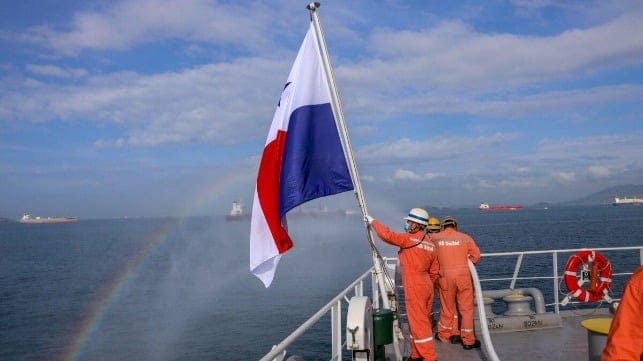
China’s Ambassador to the United States is asserting that China’s increased inspections of Panama-flagged ships are due to fishing boat collisions and not a targeting of the flag. Speaking at an Organization of American States event in Panama, Ambassador Xie Feng denied that China is targeting Panama-flagged ships as a form of retaliation for the cancellation of CK Hutchison’s port contracts.
Starting in March, there were numerous reports that Panama-flagged ships were experiencing an increased number of Port State inspections in Chinese ports. The reports said that the number of detentions of the ships had also increased dramatically. This came a little over a month after the Panama Supreme Court ruled the contracts with CK Hutchison to operate the port terminals at Balboa and Cristobal unconstitutional.
Panama’s Foreign Minister Javier Martinez-Acha highlighted the increase in inspections and detentions of vessels flying Panama’s flag at the beginning of April. He called on China to respect the legal sovereignty of countries. His comments were backed up by calls from multiple authorities for China to stop its actions, with five Latin American States expressing solidarity with Panama.
The new Chair of the Federal Maritime Commission, Laura diBella, also highlighted the situation in a statement of her personal views at the end of March. She cited reports that the inspections far exceeded historical norms and were coming under an informal directive. She said it appeared China intended to punish Panama after the transfer of Hutchison’s ports.
Ambassador Xie said today in Panama that the inspections were “in accordance with Chinese laws and international conventions.” He asserted that China does not target any specific country and called the actions “fully legitimate.”
“Regrettably, since the start of 2026, Panama-flagged ships have been involved in several consecutive collisions between merchant or fishing vessels in Chinese waters, resulting in a number of people killed and missing,” asserted Xie. “Out of a sense of responsibility for maritime safety, including the safety of vessels and especially personnel, China has conducted port state control inspections on incoming vessels in accordance with Chinese laws and international conventions, which do not target any specific country or flag and are fully legitimate.”
Data from the Tokyo MOU researched by Lloyd’s List Intelligence, however, showed that the number of inspections doubled in March from historic norms and nearly doubled again in April. It said the number of detentions imposed in March and April on Panama-flagged vessels surpassed the number for all of 2025.
The investigation also indicated that the number of ships exiting the Panama ship registry had surged after the inspections began.
Xie went on in his comments to also highlight what he called “clearly politically driven” actions by Panama. He referenced the ending of the concession to CK Hutchison that had been first issued in 1997.
Xie, according to the embassy, urged the Panamanian side to “correct its mistakes and protect the legitimate and lawful rights and interests of Chinese businesses.” He echoed a familiar line from the Chinese saying that if contracts could be disregarded, market principles ignored, assets taken over, and operators forced out, how could there be confidence to invest in Panama.

that matters most
Get the latest maritime news delivered to your inbox daily.
Unconfirmed reports said that China had also instructed companies not to continue their business dealings with Panama. The state shipping company, COSCO, in early March, announced it was suspending its container service to the port of Balboa in Panama.
CK Hutchison has filed multimillion-dollar claims against Panama seeking arbitration for damages. Panama has said it will rebid the operations in the two ports later this year and that it will require separate operators for each port. The moves came after Donald Trump asserted that China was running the Panama Canal.
