


China Begins to Return to the World Oil Market
China's withdrawal from the global oil market was one of the biggest surprises of the Strait of Hormuz shutdown. Shortly after Iran closed the strait in early March, China quietly banned exports of refined petroleum products and drastically cut its purchasing of foreign oil, taking the world's largest buyer off the market overnight - thereby offsetting the drop in Gulf supply and keeping a lid on crude prices. It has now lifted its prohibition on fuel exports, opening the door for privately-held refineries to resume purchasing foreign oil and exporting Chinese gas, diesel and jet fuel.
Market sources told Reuters that a division of Rongsheng Petrochemical, one of the largest independent refiners in China, has received an export permit to sell fuel to overseas buyers this month. Rongsheng has not confirmed the report, but if true, it would be the first private Chinese refiner known to receive such a permit in months. Taken together, licensed refineries will likely export about three million tonnes of fuels out of China this month - mostly jet fuel, according to Reuters' sources.
The profit potential behind these exports will likely drive refiners to resume importing oil, including the sanctioned Iranian oil used by some Chinese "teapot" private refineries. These companies buy the overwhelming majority of Iran's crude oil exports, using ship-to-ship transfers as a subterfuge to hide the crude's true origins.
China's buying of Mideastern oil grades has already ticked up, according to Argus. Chinese refiners recently picked up 26 million barrels for July or August delivery from suppliers in the GCC states, the commodity data firm reports. The sales are driven in part by deep discounts on Saudi grades for prompt loadings, and in part by China's need to refill stockpiles that were drawn down during the Hormuz shutdown.
Combined with renewed tightness if Hormuz hostilities spiral again - a possibility that both the U.S. and Iran have suggested, amidst a back-and-forth exchange of strikes - the return of China to the buy-side of the market would support higher global oil prices, especially after unsold Iranian floating inventory clears.

that matters most
Get the latest maritime news delivered to your inbox daily.
Increased Chinese diesel exports will also help offset Russia's decision to ban foreign sales of its own domestically-produced fuel, a response to the increasingly effective Ukrainian strikes on Russian refineries. Russian diesel exports were already down by half year-over-year in June, according to energy consultancy Sparta, as the country's abundant fuel surplus began to evaporate under Ukrainian attack.
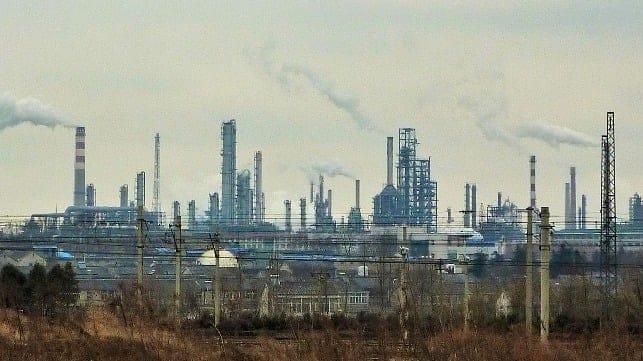
Top image: Refinery at Ganjiaxiang, Nanjing (Vmenkov / CC BY SA 3.0)

