


Carrier USS Kennedy Completes First F-35 Fighter Landing and Launch
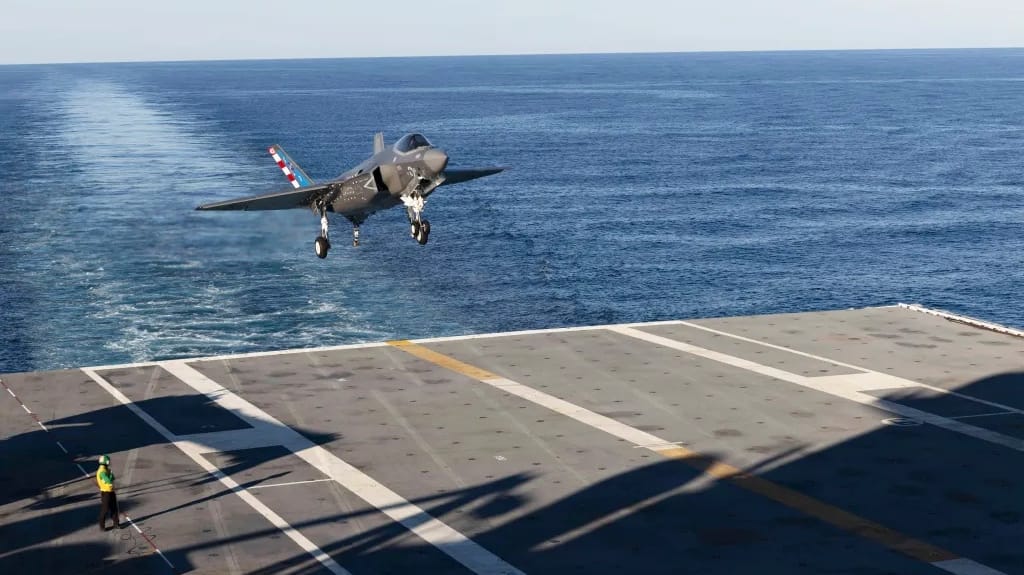
On Tuesday, an F-35 stealth fighter jet landed aboard the newly-built carrier USS John F. Kennedy for the first time, the U.S. Navy says. The landing is a milestone for the carrier's progress for commissioning, now expected sometime in the second quarter of next year.
The carrier also completed its first F-35 launch, using its electromagnetically-actuated catapult system to propel the plane back into the air.
Kennedy is the second in the class and the first to deliver with all of the special features required to support the F-35C fighter on deployment. The ship completed acceptance trials in August and received "preliminary acceptance" on September 29. The service says that this status will open up the fastest path possible to get the carrier up to full combat readiness after years of delays.
As of September, the Kennedy team was still completing testing of four of the ship's Advanced Weapons Elevators, the electromagnetically-actuated platforms that carry munitions between the stores on the lower deck levels, the hangar bay and the main deck. The AWE system was designed to be faster than previous designs, but it proved to be a multi-year reliability challenge during commissioning of first-in-class USS Gerald R. Ford. The Navy believes that lessons learned from the experience with Ford will make Kennedy's commissioning go faster.

that matters most
Get the latest maritime news delivered to your inbox daily.
The third Ford class carrier, the future USS Enterprise (CVN-80), is also experiencing delays and is now on track to deliver in 2030. The timing of the fourth hull, CVN-81, is uncertain and depends in part on an executive decision. The White House has ordered a study on installing steam catapults and hydraulic elevators on CVN-81. Steel has already been cut and the change would likely cause delays, according to America's sole carrier shipbuilder, Huntington Ingalls Industries.
"It's a significant effort [to change the design for steam catapults]. It would delay the ship schedule significantly and there'd be a pretty significant cost related to it that we'd have to figure out with the Navy," HII CEO Christ Kastner said on the Mission Critical podcast last week.
