


Canada’s Churchill Port to Export Grain for the First Time in Six Years
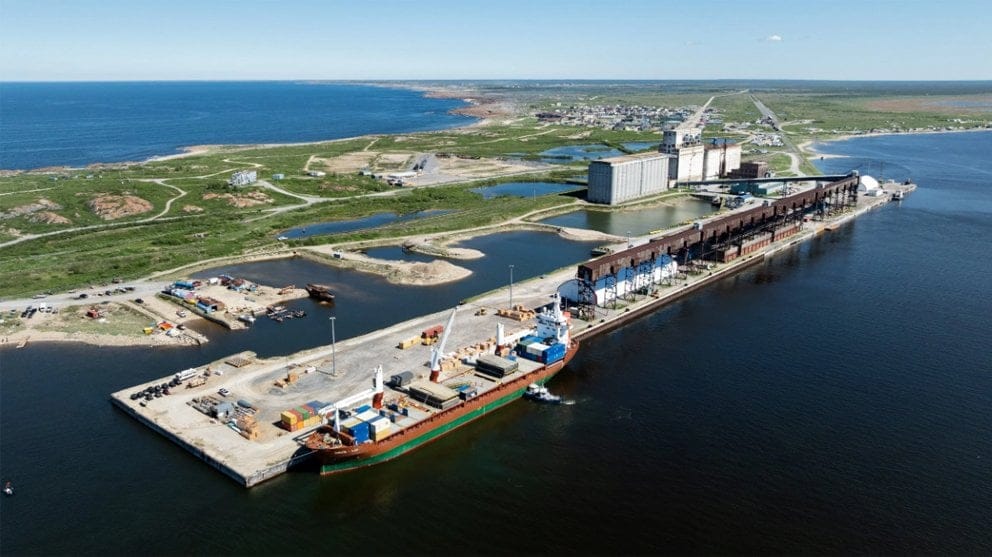
Efforts to revitalize and expand Canada’s Port of Churchill, located in Manitoba in the reaches of the Arctic, are building momentum as shipments of prairie grain are again starting to move toward the port. For the first time since 2020, Churchill will serve as an export port for Canada’s grain crop as the owners of the port, Arctic Gateway Group, work to expand its operations.
The federal government of Canada and the province of Manitoba are supporting the efforts to expand the operations at Churchill. The Globe and Mail newspaper reports the governments have provided C$262.5 million (US$187 million) to support the efforts, including for planning, design, and upgrades to the port and the Hudson Bay Railway that moves cargo to the port in the Far North.
Arctic Gateway Group reports loading will begin on Friday, July 17, to bring grain from Manitoba on the Hudson Bay Railway to Churchill. It reports that multiple export vessels will ship the grain later in the summer to global markets.
Grain exports at the port had plummeted since 2021, when the Canadian Wheat Board ceased operations. Currently, the port exports small volumes of critical minerals, reports the Globe and Mail, and it is expected to also start potash exports from a small mine in Manitoba. In addition, Churchill handles cargo such as building supplies and hardware coming in for the communities and industry in the Nunavut territory, operated by the Inuit people.
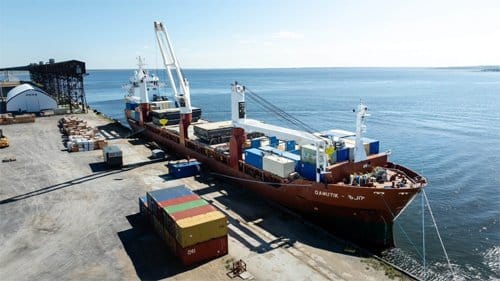
Port of Churchill supports supply ships that transport material to the indigenous communities in the Far North (AGG)
The first supply ship of the 2026 season for the Far North, Qamutik (12,760 dwt), departed Churchill on July 12. Company officials highlight that the ship, operated by Nunavut Eastern Arctic Shipping (NEAS), arrived on July 9, and they had been working hard to move materials on the railway. It departed, transporting a wide range of construction equipment, industrial supplies, trucks, and other goods.
Critics of the expansion efforts and the government financial support argue that the shipping season is too short to make Churchill a meaningful contributor to Canada’s exports. They also say that rail and insurance costs are very high, and the port lacks sufficient storage capacity.
Arctic Gateway Group, which is owned by the indigenous and northern communities, operates the port as well as the railway and the Churchill Marine Tank Farm. It acquired the railroad in 2018 and has been investing to upgrade its operations and capacity.
“It’s a strong signal of the progress made to restore and rebuild this corridor, and of the opportunity ahead as we continue growing the business with a diversified mix of exports. In addition to grain, we will also this year export critical minerals and potash, as well as industrial goods, supplies and equipment to Nunavut - representing the most diversified mix of annual exports in the Port of Churchill’s history,” said Mike Spence, Chair of the Arctic Gateway Group and Mayor of Churchill.

that matters most
Get the latest maritime news delivered to your inbox daily.
The port is also promoted as a vital link for businesses in Saskatchewan. The supporters cite the growing potential of Arctic shipping, saying Churchill can provide a vital export link.
Company officials are promoting the restoration of grain exports as a “strong foundation” to continue to grow and rebuild long-term traffic through the corridor.
