

U.S. Navy Shakes Up its Unmanned-Systems Office Once Again
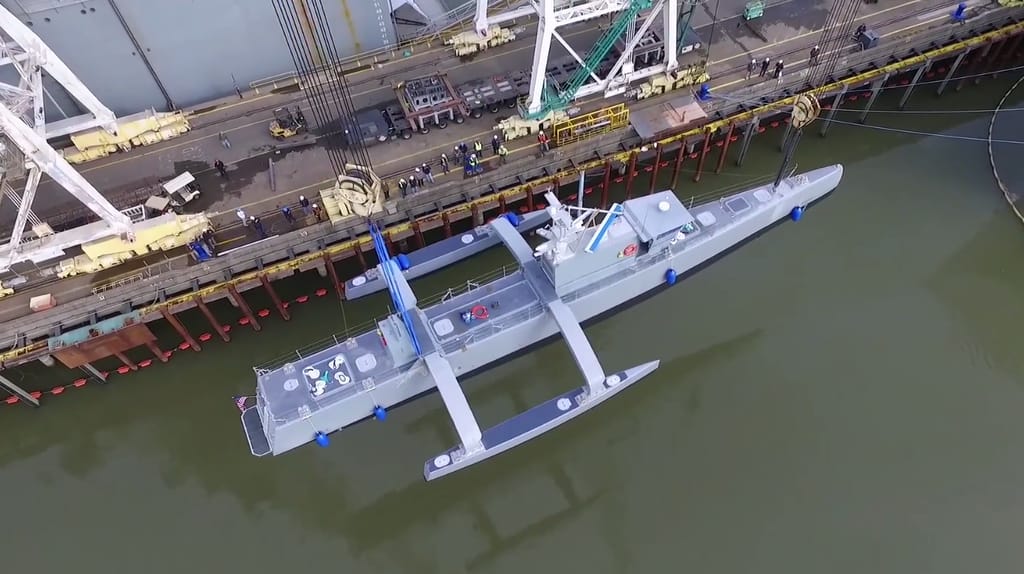
The U.S. Navy has once again reorganized its unmanned-systems division in a drive for speed of delivery, the latest in a long line of attempts to acquire working platforms at speed.
Removed from the procurement program is engineer Rebecca J. Gassler, eight months into her term as Portfolio Acquisition Executive for Robotic and Autonomous Systems. Her position is being effectively absorbed by the creation of a new Direct Reporting Portfolio Manager for Robotic and Autonomous Systems. Both the PAE and DRPM roles will be filled by Christopher Miller, augmenting his current role as the Navy's top surface combatant decisionmaker, Program Acquisition Executive Maritime.
As DPRM, Miller will report directly to Performing the Duties of Under Secretary of the Navy Capt. William Toti (ret'd, USN); Toti is a former industry executive and reformer who advocates for unified procurement teams that operate under a single direct-reporting executive, rather than the diffuse and conflicting lines of contracting authority previously found within NAVSEA. Toti helped establish the DRPM structure for the Navy's struggling submarine programs in 2025-26.
“We are at an inflection point in naval warfare, and the Department has been approaching robotic and autonomous systems through arcane processes that do not deliver capabilities at the speed our Sailors and Marines need,” said Toti. “Secretary Cao has directed us to replace that model with clear accountability, faster decisions, and a relentless focus on the warfighter.”

that matters most
Get the latest maritime news delivered to your inbox daily.
The Navy's approach to unmanned vessel acquisition has repeatedly changed, prompting industry complaints. Multiple conflicting iterations of the Medium Unmanned Surface Vessel (MUSV) program - the marquee effort to build and field an oceangoing unmanned combatant - have prompted confusion and led to bid protests by contractors who have been left out of future development. Two firms, Saildrone and Blue Water Autonomy, have filed lawsuits in response to a bid process that excluded them from the MUSV "marketplace" - a new-to-the-Pentagon procurement concept that gave seven firms access to a self-funded competition, at the exclusion of all others. The two contractors claim that their exclusion was arbitrary and that the Navy didn't follow its own rules in administering the program.
The Navy may also move the DPRM RAS staff out of Washington to get them closer to the fleet, hoping to speed up feedback cycles and collaborative development. "We must both improve and accelerate how we partner with industry to develop and deliver the next generation of warfighting capabilities," said Miller. "Success depends on ensuring operational requirements drive rapid development so we’re delivering the right solutions to the warfighter."