


Canada Considers a Subsea Power Cable to Europe
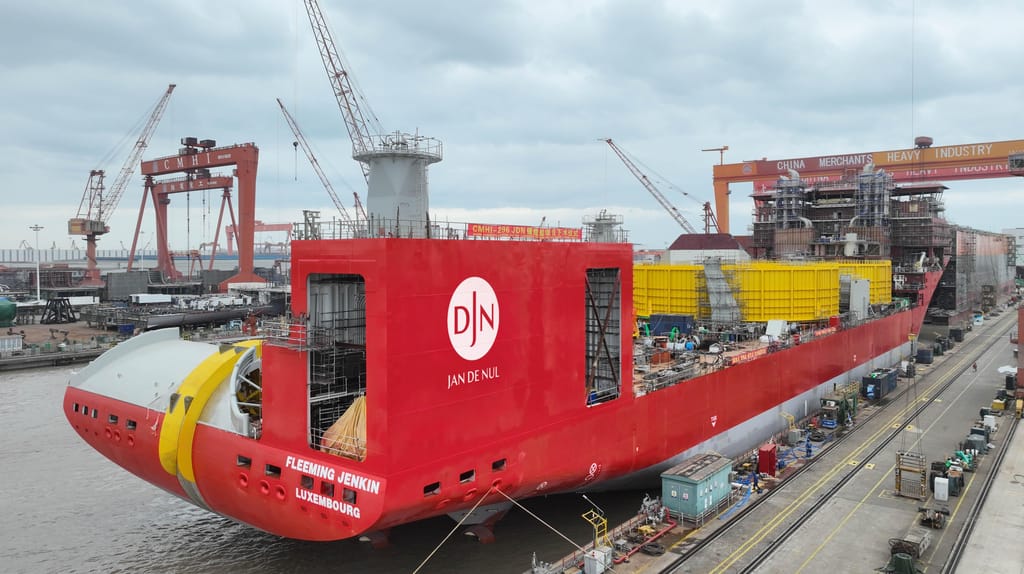
Canada’s prime minister has expressed interest in exporting Canadian energy such as LNG to Europe, along with renewable energy. Other recent discussions have focused on a unique possibility: an undersea electric power cable extending across the North Atlantic to Northern Europe.
Introduction
The concept of transporting energy under the ocean dates back decades. Earlier examples of the concept involved undersea pipelines carrying natural gas and oil. While the first undersea electrical power cables carried telecommunications signals (telegraphs), modern undersea electrical power cables carry grid-scale electrical energy. Such cables are widely used to transmit electric energy from offshore wind turbines to shore-based power grids.
Discussions dating back some 15 years focused on the possibility of transmitting electric power from geothermal sources in Iceland to power grids located in Scotland and England.
During that period, Canada had commissioned a study on domestic coastal kinetic ocean energy potential. Every 24 hours, lunar gravity pulls several hundred cubic miles of ocean water from the North Atlantic into Hudson Bay and into the Bay of Fundy which has the highest tides in the world. Present technology can only convert a small portion of the hydrokinetic energy to electrical power. Several hundred uninhabited small islands located along the eastern side of Hudson Bay and the eastern side of Ungava Bay have potential to support wind turbines, with additional potential for offshore wind energy.
Northern Summers
Western Europe has endured several hot summers where demand for electric power exceeded electrical generating capacity. The combination of European wind and solar energy conversion has routinely been unable to meet peak summer demand for electric power. A transatlantic undersea electric power cable capable of transmitting 20 to 50-megawatts of electrical power offers potential for relief to overstressed European grids, providing additional power to run air conditioning and building cooling systems.
Transatlantic Power Cable
The development of geothermal electrical energy at Iceland, with undersea electric power cables extending to the UK and Europe, could provide a basis to extend an undersea power cable from Eastern Canada to southern Greenland, then to Iceland.
An undersea power cable connecting Iceland to the UK and Europe would need to carry the combined electrical energy coming from both Eastern Canada and Iceland. There is future potential to transmit a mix of hydroelectric power, ocean tidal power conversion, wind energy conversion and nuclear power between Canada and Western Europe.
During overnight hours after midnight with minimal market requirement for electric power across eastern Canada, the AM peak requirement for electric power would begin across the UK and Western Europe. Electric power from Canada and Iceland would assist UK and European electric power utilities in providing peak period electric power their customers.
When the midnight and overnight requirement for electric power is minimal across Europe, Eastern Canada and Northeastern United States would gain access to European power generation capacity during the Northeastern American and Eastern Canadian peak evening requirement for electric power.
Power Cable Economics
A transatlantic electric power cable would enhance the economics of electric power generation in both Eastern Canada/Northeastern United States and Western Europe. Excess wind power generation for which there is minimal demand in one region could be transmitted to another distant region. Nuclear power stations operate best when run at constant power output. An east-west undersea power cable allows for transmission of off-peak nuclear power in order to satisfy electric power demand in a distant region. Peak tidal power generation can occur when local demand for power is minimal, with peak demand for electric power across the Atlantic.
The usable service life of the undersea cable system would greatly exceed the usable service lives of electrical battery-based energy storage by several orders of magnitude. Electrical storage batteries incur a ‘round-trip’ loss of efficiency, with up to 30% of electrical energy being dissipated as heat. A cable operating on ultra-high voltage with low current would reduce loss of energy as heat, delivering more electrical energy to the market compared to a system that is heavily dependant on grid-scale chemical-battery energy storage or other methods – like compressed air energy storage, which also incurs a massive loss of energy as heat.
Ocean Tidal Energy
The conclusion of high tide across Hudson Bay causes a massive river of seawater to flow east through Hudson Strait, reaching peak velocity in the vicinity of the Button Islands where kinetic energy potential is estimated to exceed 2,000 megawatts. Turbulent seawater in the channels between the Button Islands generate extreme mechanical forces that require specially reinforced kinetic turbines of extreme strength, capable of cost-competitive operation in severe water current conditions. Turbine housing and support structure would need to deflect the occasional iceberg while ensuring that the turbines remain operational.
Further south, there is potential to build tunnels deep under the isthmus between the eastern end of the Bay of Fundy and the Gulf of St. Lawrence. Turbines installed in the tunnels would generate repeated daily cycles electric power, courtesy of the difference in water height across the isthmus.
There is also potential for Quebec to generate additional hydroelectric power, for export to Europe. The installation of wind turbines along the eastern side of Hudson Bay will slightly cool the humid air that winds blow toward Quebec, potentially increasing rainfall over hydroelectric dam watershed areas.

that matters most
Get the latest maritime news delivered to your inbox daily.
Conclusions
A future transatlantic undersea electric power cable connecting between Canada and Europe via Iceland and Greenland incurs both merit and drawbacks. It would make for more productive use of off-peak electric power while reducing the expense and energy loss of energy storage technologies. The cable would enhance the economics of ocean power conversion, nuclear power, hydroelectric power from Quebec and Labrador, and wind energy conversion. However, Canada and the USA would need to invest in developing new electrical power generation capacity for domestic demand, with potential to export future off-peak power over to Europe.
The opinions expressed herein are the author's and not necessarily those of The Maritime Executive.
