

BHP Tests Out Tallow-Based Biofuel Blend With GCMD's Assistance
In a development that could increase availability of biofuels, Australian mining giant BHP and Singapore's Global Centre for Maritime Decarbonisation (GCMD) said they are piloting the use of an unusual kind of blended bio-based bunker fuel made partially from waste animal fat.
The impact of blending cooking oil and waste animal fat could be significant, considering that until now, biofuels for global shipping have relied heavily on used cooking oil, a feedstock whose availability is approaching its projected limits. For this reason, the production of biofuels from waste animal fats is seen as a promising option to expand the supply.
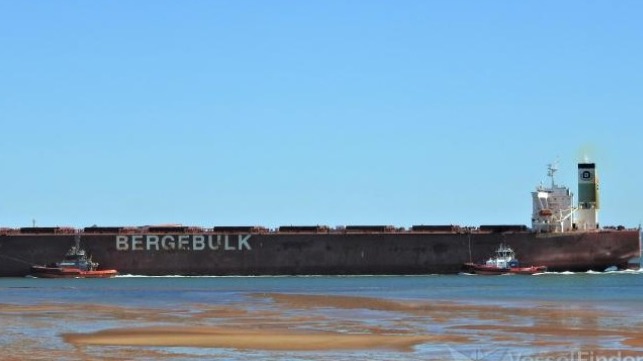
The BHP-chartered Newcastlemax bulk carrier Berge Lyngor (206,330 dwt), owned and operated by Berge Bulk and used to transport iron ore from Western Australia to China, is being used in the bio-blend pilot project. In early May, the 300-meter bulk carrier — which sails under the UK flag and was built in 2009 — bunkered in Singapore with a B100 bio-blend of 50 percent tallow-derived biodiesel and 50 percent used cooking oil.
The biodiesel was sourced and supplied by HAMR Energy, while the cooking oil was supplied by Mitsui & Co. Energy Trading Singapore. Mitsui also blended the fuel, while Dan-Bunkering coordinated and executed the bunkering operation.
By running on the bio-blend, Berge Lyngor had the potential to reduce greenhouse gas emissions by about 79 percent per voyage compared to sailing on VLSFO, according to the partners.
BHP and GCMD say the pilot project is needed to assess how biofuels from multiple feedstocks can be blended, handled, and used under real-world operating conditions. Challenges include fuel quality, handling, traceability, and onboard vessel performance.
Understanding onboard performance is key, since biofuels derived from different feedstocks have different properties that may impact operations. On the downside, these can include potential corrosion from oxidation and fuel system clogging caused by wax formation.
The outcomes are expected to shed light on the practical steps needed to integrate biofuel blends from different feedstocks into existing supply chains — a development that is expected to provide shipowners and operators with greater flexibility for fuel buying.

that matters most
Get the latest maritime news delivered to your inbox daily.
"As the world's largest bulk charterer, we want to continue to test and trial alternative fuels that will help increase supply and send industry demand signals for further investment," said Emma Roberts, BHP Vice President, Maritime & Supply Chain Excellence. "At a time when fuel security is vitally important to global trade, building opportunities for future biofuels is critical."
Top image: Berge Lyngor (VesselFinder / Graeme Waller)