


Amidst War, Iran's Merchant Fleet is Enjoying Boom Times
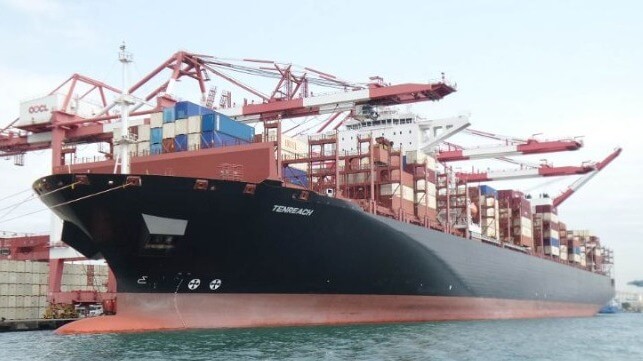
The merchant marine tends to sail on regardless in time of war, notwithstanding the risk. As the risk goes up, so do cargo rates. And so also does demand for the goods being carried.
For ships of the Iranian merchant navy, dominated by the state-owned but US-sanctioned Islamic Republic of Iran Shipping Lines (IRISL) and its subsidiaries, the current war is no exception. Business is booming.
The immediate evidence is on show in Iran’s ports. Since the start of the war on February 28 and throughout March, there were on average more than 20 arrivals and departures of cargo vessels every day in the Bandar Abbas commercial port - 22 vessels for example arrived on April 4. At the smaller port of Chah Bahar outside the Gulf and close to the border with Pakistan, there were 10 ships in port on April 5, and in recent weeks there have been on average two or three arrivals and departures every day.
Tanker traffic has also picked up, encouraged by the dramatic rise in oil and LNG prices since the war began, with dark fleet or Iranian-flagged tankers able to transit through the Strait of Hormuz without hindrance. A novel component of this uptick in traffic has been the resumption of deliveries of Iranian oil to India, for the first time since May 2019, authorized by a 30-day US waiver on the purchase of Iranian oil at sea. The first such delivery could have been by the OFAC-sanctioned Ping Shun (IMO 9231901), which lifted 600,000 barrels of crude at Kharg Island on March 4 and is now reporting her destination as China.
The apparent import of rocket fuel ingredients from China is also still in process. It is difficult from open sources alone to be sure what cargo is being carried on any particular ship. This is particularly so as weapons systems-related (or dual-use) materials contravening UN Security Resolution 1929 can easily be hidden among the large volume of cargo and containers which flow in normal times between China and Iran. Sodium perchlorate manufactured in China is shipped in sacks of pellets loaded into containers, and is the primary material used to manufacture ammonium perchlorate, which in turn makes up 70 percent of the standard fuel load of most of Iran’s solid-fueled ballistic missiles. The template for such journeys was provided by IRISL’s Golbon (IMO 9283033) and Jairan (IMO 9167291), which both loaded in Chinese ports in January last year and unloaded in Bandar Abbas in late March. Their cargoes of sodium perchlorate are believed to have been the combustibles for the massive explosion that occurred in the Bandar Abbas commercial port on April 26, 2025.
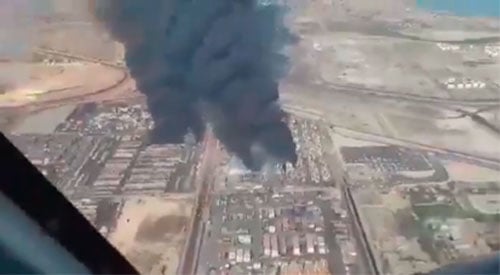
The explosion at the Rajaei Port container park in Bandar Abbas
Sodium perchlorate was converted into ammonium perchlorate solid rocket fuel primarily at Parchin, which has recently been subject to major attacks. Solid rocket fuel powers most of Iran’s inventory of ballistic missiles, including the medium range Khybar-Shikan and Fattah missiles and the shorter-range Fateh-110 and Zolfaghar missiles. The same material has also been intercepted en route to the Houthis in Yemen, where it is used to fuel the Palestine-2 missiles which have in recent days once again been fired at Israel.

that matters most
Get the latest maritime news delivered to your inbox daily.
Five IRISL ships, all OFAC sanctioned and showing similar repeat voyage characteristics on this route, have now arrived in Iranian waters ex China. Hong Kong-flagged HAZ-B cargo vessel Barzin (IMO 9820269) left Zhuhai on March 2 and arrived in Chah Bahar on March 22. Iranian-flagged HAZ-A cargo vessel Rayen (IMO 9820245) sailed from Zhuhai on March 13 and arrived Chah Bahar on March 29. Iranian-flagged HAZ-A cargo vessel Shabdis (IMO 9349588) left Zhuhai on March 2 and arrived in Chah Bahar on March 31. A fourth vessel is heading for Chah Bahar, the Iranian-flagged Zardis (IMO 9349679), which left from Zhuhai on March 21, and may still not have docked yet. A fifth vessel, the Iranian-flagged Hamouna (IMO 9820271) headed straight for Bandar Abbas, and was anchored off on April 5. Rail connections from Chah Bahar to the rest of Iran are incomplete, but the Iranians may consider it easier to truck hazardous goods from Chah Bahar rather than risk an entry into Bandar Abbas with an explosive cargo.
Notwithstanding the proven links of these cargo vessels to the manufacture of solid rocket fuel used to power Iran’s ballistic missiles, both the Chinese and Iranian authorities seem content to continue shipping sodium perchlorate on what is now a thoroughly compromised route. Their confidence in safety from interception on the route is sufficient to not use the available railway line connections from China through Tashkent in Turkmenistan to Iran instead, a route which can carry 40-foot (FEU) containers.
