


ATSB: Delayed Emergency Assistance a Factor in Breakaway Ships During Storm
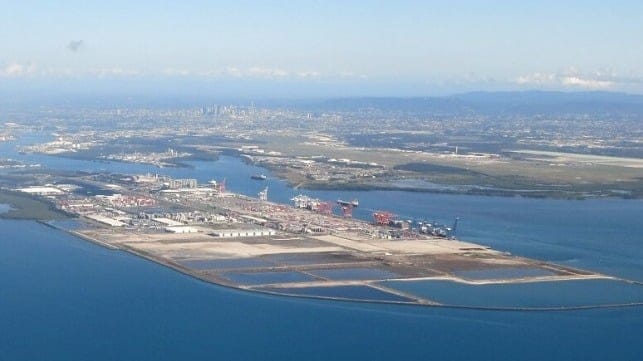
Delay in providing emergency assistance is emerging as a major contributing factor in which three containerships and a vehicle carrier broke away from their berths during a severe storm at the Port of Brisbane in November 2025, according to an interim report by the Australian Transport Safety Bureau (ATSB).
ATSB released its interim report on the serious incidents involving the containerships Volans, Wide India, and MSC Barbara, and car carrier Viking Passama that occurred on the afternoon of November 24, 2025, when Brisbane was hit by a fast?moving, severe thunderstorm. Due to the storm, the three container ships broke their moorings at the port, with one subsequently grounding. The car carrier, which was in the process of mooring as the storm approached, was also pushed off the berth.
The interim report, outlining the order of events, highlights the role that a delay in providing emergency assistance could have played in the incidents. It also summarizes the evidence that ATSB has so far managed to gather in the ongoing investigation.
ATSB notes that as the storm passed over Brisbane, Queensland’s largest multi-cargo port and the third largest container port in Australia, vessel traffic service operators contacted both harbor towage operators and the pilotage provider, requesting emergency assistance. However, the assistance was delayed due to the need for crews and pilots to make their way through road traffic congestion caused by the storm. By the time the pilots arrived, it was too late.
According to the report, the events surrounding the serious incidents unfolded on a day that was characterized by hot and humid weather conditions that often prevail over South East Queensland. Occurring during most of the month of November, the conditions were conducive to the formation of thunderstorms and had resulted in several significant storms developing across the region.
At 0930, Viking Passama, which is owned by Gram Car Carriers and which sails under the Marshall Islands flag, was inbound to the Port of Brisbane. It was preparing to embark a pilot at the Mooloolaba pilot boarding ground for its transit of Moreton Bay.
The containerships Volans, Wide India, and MSC Barbara were alongside a smaller feeder ship, Medkon Ten, having arrived at the port in the preceding days, and were moored at the container berths of Fisherman Islands, where they were loading and unloading containers. As part of the routine cargo operations, hatch covers from Wide India and MSC Barbara were offloaded onto the berth.
In the early morning hours, the Brisbane harbor master had received weather briefings indicating potential severe thunderstorms that afternoon and evening. The information was distributed by the Brisbane vessel traffic service to port stakeholders, and high windage ships moored in the port were directed to lower their outboard anchors and add extra mooring lines where possible.
Shortly after noon, the Bureau of Meteorology issued the first severe thunderstorm warning for South East Queensland before issuing a new warning two hours later indicating that very dangerous thunderstorms would affect the area at 1500. Around this time, the area recorded a rapid increase in wind speed and a roughly 180-degree change in direction about 20 minutes later, with gusts peaking at 71 knots, over 130 kilometers per hour.
Due to the severe storm, the ships broke mooring lines along the Fisherman Islands berths. The report indicates that Viking Passama, the car carrier, was being assisted by two tugs into its assigned berth. The ship had just come to rest on the fenders, and the crew was passing mooring lines ashore when the pilot recognized the imminent change in wind direction and ordered the tugs to push the ship against the berth. The rapidly increasing wind then started blowing the ship away from the berth, while heavy rain and large hail required the pilot and master to seek shelter. A short while later, its mooring lines parted, causing the ship to drift into the channel, about 120 meters off its berth. The ship was brought under control and pushed back to its berth by tugs after the wind abated.
For the 265-meter containership Volans operated by COSCO and sailing under the Liberian flag, the heavy winds caused its mooring lines to part. Though the ship’s master requested urgent tug and pilot assistance, none was available. The same fate befell the 255-meter vessel Wide India, which is operated by Hapag-Lloyd and sails under the Marshall Islands flag. Berthed adjacent to Volans, the ship broke free, forcing the master to use its main engine to prevent it from drifting astern into the container feeder Medkon Ten that remained fast alongside at the next berth. After being informed that tug assistance was not available, the master maneuvered the ship slowly upriver, maintaining the minimum speed required for steering to keep the ship under control.
Operated by Mediterranean Shipping and sailing under the Panamanian flag, the 304-meter MSC Barbara was pushed off its berth by the strong winds, causing its mooring lines to part. With its main engine not ready to maneuver and without propulsion, the ship drifted north before grounding. The ship was refloated with the assistance of three tugs.
The report states that no injuries were reported during the incidents. The Viking Passama and MSC Barbara sustained minor damage.

that matters most
Get the latest maritime news delivered to your inbox daily.
“This was a severe weather event, resulting in a complex situation involving several ships and harbor vessels,” said Angus Mitchell, ATSB Chief Commissioner. He added that as the investigation progresses, it will include a thorough review of the available meteorological and climatological data, shipboard and shore-side mooring arrangements, harbor towage, emergency arrangements, and the effectiveness of the port’s procedures and operational guidance.
ATSB will release a final report detailing the analysis and findings at the conclusion of the investigation.
