

An Ocean of Services
From towing and wreck removal to firefighting and oil spill response, a salvor’s work is never done.
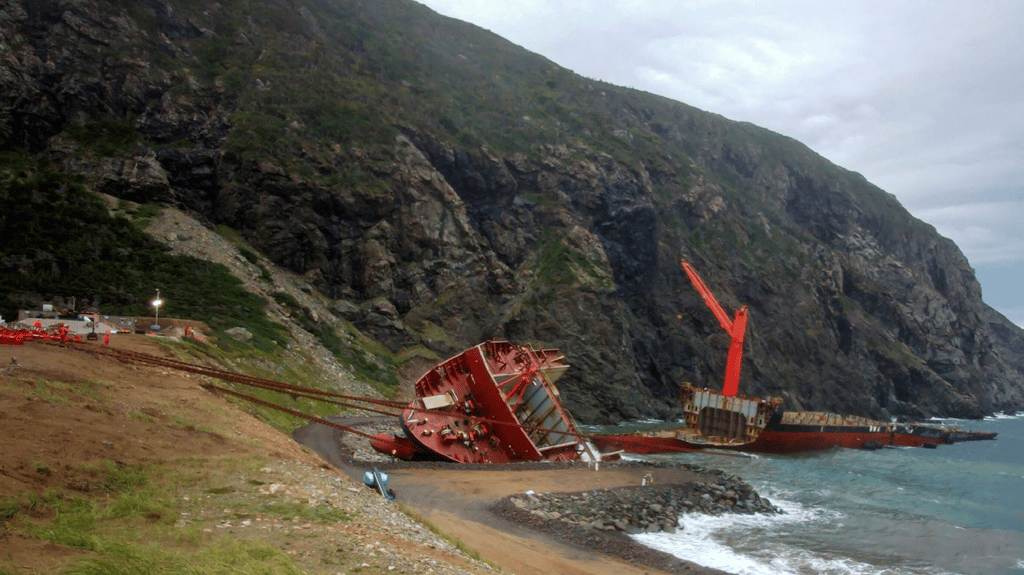
(Article originally published in Sept/Oct 2026 edition.)
For more than a century, you could gauge the state of the marine salvage industry by the number of Lloyd’s Open Form (LOF) cases.
A simplistic explanation of a typical LOF case is a vessel calling a salvor to perform a rescue operation. The agreement constitutes a blank check for the salvor to provide whatever equipment, labor and services necessary to complete the operation. Known familiarly as a “no cure, no pay” contract, the operation must first be completed, and an arbitrator then reviews the case and decides on the appropriate billable amount for the services provided.
Salvors take most of the financial risk while vessel owners have a mechanism for the rapid initiation of emergency services. Historically, the annual number of LOF cases was the best measure of the health of the marine salvage industry. For the past two decades, however, this number has been in sharp decline. Yet salvors like Donjon Marine, Resolve Marine, Global Diving & Salvage and Vanguard Tech have expanded their services far beyond LOF cases. 2026 has demonstrated that marine salvage is a strong, healthy industry that includes oil spill response, lightering, vessel removal, towing, firefighting and an ocean of other emergency services.
Donjon Marine
It’s been just over a year since U.S.-based Donjon Marine was acquired by the private equity Tallvine Group, and Donjon CEO John Witte, Jr. says it’s more like a partnership than an acquisition. Tallvine and Donjon have since added a West Coast affiliate and are looking at another “bolt-on” towing organization on the Gulf coast.
Thus far in 2026 the industry has not had a major rescue operation like the Costa Concordia, Key Bridge collapse in Baltimore or Golden Ray. “Our salvage work to date in 2026 has involved removal of numerous hazards in support of the U.S. Corps of Engineers and the U.S. Navy, small barge salvage, emergency towing and other localized events,” Witte explains.
Donjon also has a shipyard in Erie, Pennsylvania and is expanding into the Great Lakes.
Stevedoring and construction support work may not be the first things that comes to mind when thinking about salvage, but they’re keeping Donjon busy as port infrastructure continues to grow and change. Vessels are built larger with more variation in cargoes, resulting in the industry-wide need for upgrading standard salvage assets.
When a request would come for an open ocean emergency towing case, a tug with 70 to 90-ton bollard capacity could be dispatched without concern. Today, capacity limit is not a given and must always be considered prior to mobilization. It’s not just towing that’s affected. Pumping, marine firefighting and heavy lift capabilities, and the appropriate labor force to meet the response are increasing as well.
“Maybe we should modify the phrase, ‘bigger is better’ to ‘bigger is necessary,’” Witte quips.
The longtime joint venture between Donjon and Smit Salvage Americas continues to be busy providing OPA-90 services in the U.S. as well as contributing to salvage efforts in the Strait of Hormuz area. “When a salvor is required to work in a war zone,” Witte says, “it becomes an entirely different situation and much more than a difficult commercial response. While absolutely necessary, we all hope that it ends very, very soon.”
Vanguard Tech
Vanguard Tech is a U.K.-based, intelligence-led maritime risk, response and recovery partner that supports shipowners, operators, insurers and their representatives globally. Vanguard clients have a partner managing a situation’s intelligence, casualty monitoring and physical response – all within a single operational structure.
Its business has developed from maritime risk, intelligence and crisis management to the broader area of casualty response and salvage capability. “Our focus is on remaining nimble, adapting to what the market needs and continuing to support our clients and the wider industry as that operating environment evolves,” says Matthew Cooke, Senior Salvage Manager & Americas Lead.
2026 has been a particularly active year for Vanguard’s casualty response team with a significant number of simultaneous operations in and around the Strait of Hormuz. To preserve confidentiality and without identifying individual vessels or clients, these cases have included emergency towage operations involving disabled tankers and other large commercial vessels including a laden vessel that had lost steering and required the rapid mobilization and coordination of suitable towage assets.
“The salvage landscape is ever-changing,” Cooke states, “from regulation and safety culture to larger vessels and new operating environments. 2026 has also become a year of wartime vessel incidents, bringing a very different set of risks and operational challenges.”
A response in a war zone often takes the form of recent Vanguard operation. The vessel required a combination of emergency services working in a fluid and seamless manner including towage, divers performing subsea patching, engine-room and aft-peak dewatering, structural stabilization and the coordination of ship-to-ship cargo discharge operations – the kind of variables that Donjon’s Witte described and politely understated as “much more than a difficult commercial response.”
Resolve Marine
A global leader in maritime response, recovery and compliance, U.S.-based Resolve Marine also understands that the business of marine salvage is as diverse as the waters of the vast oceans.
“Our customers range from mom-and-pop fishing owners to technology companies literally pushing the limits of space,” states Daniel Dettor, Director of Business Development. “Time and again they rely upon Resolve Marine to solve their maritime challenges. It doesn’t get any better than that!”
Resolve has been busy this past year. The team responded to an oil rig that suffered a catastrophic leg failure off the coast of Trinidad. The multi-phase project consisted of stabilizing the compromised rig and mitigating environmental risks including the removal of hydrocarbons and hazardous drilling materials.
The team then dismantled and removed the rig’s topsides, rig mat, drill floor and derrick using the salvage barge RMG 1000 equipped with two American 450-ton cranes. The topsides were transferred to a submersible barge fitted with custom-engineered grillage, enabling the structure to be safely transported for final disposal.
Currently, the Resolve team is working on several interesting projects including the wreck removal of a containership in Newfoundland, Canada, removal works on behalf of the U.K. government on an American Liberty ship that sank during World War II in the Thames Estuary outside London, and a fire on an LNG-fuelled car carrier in the Pacific.
It’s impossible to forecast what the future of marine salvage will be, but one area everyone seems to agree on is specialized marine firefighting. The transport and use of lithium-ion batteries in containers and cars has been a concern for several years now, and Dettor says, “I don’t see these types of casualties abating anytime soon. What most people don’t realize is the work scope that follows extinguishment of the fire.” This includes damage to cargo, hazardous material recovery, wastewater management and fire damage remediation.
A good example was the response to the Francis Scott Key bridge collapse. The public and stakeholders know that removing the containership Dali and reopening the port of Baltimore was managed in just 55 days. What people didn’t see was the laborious tasking of dealing with the damaged cargo and the associated regulatory hurdles.
Global Diving & Salvage
Seattle-based Global Diving & Salvage has been part of the Moran Group since 2019. Its core service lines include commercial diving, marine construction, marine casualty response, and environmental and emergency services.
Those services sprang into action when Category 5 Hurricane Lowell hit Kauai in early September. Within days of the storm, the Global team mobilized to address a vessel that had been damaged at its slip in a small boat harbor. After deploying a containment boom and confirming the vessel’s stability, divers accessed its fuel tanks and recovered 1,000 gallons of fuel, sealing all vents and fills and preventing further discharge.
Like the Francis Scott Key bridge response, there were plenty of challenges on the overlooked back end of the project. With inter-island logistics strained, demobilization took real coordination, moving equipment from Kauai to Oahu to Maui and finally back to Seattle.
The Global approach to disaster response is fast mobilization, close coordination with agencies and the flexibility to adapt mid-operation while keeping safety and environmental protection front and center.

that matters most
Get the latest maritime news delivered to your inbox daily.
Global Vice President Aaron Harrington says “You can’t fake safety, and you can’t fake respect. Every project we take on comes down to the same thing: Work together with purpose, treat everyone on that job site the way you’d want to be treated, and commit to doing it right, every time.”
Dive instructor and retired USCG reserve officer Pat Zeitler is a regular contributor to The Maritime Executive.
The opinions expressed herein are the author's and not necessarily those of The Maritime Executive.