
The Hidden Clause Contradictions Driving Demurrage Claims
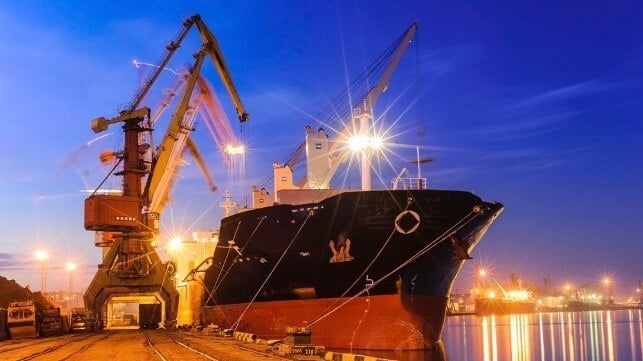
A bulk carrier arrives at Paranagua on a Saturday morning at 08:00 local time. Sugar cargo, clean fixture, terms agreed weeks earlier in what looked like a routine email exchange. The master tenders Notice of Readiness on arrival.
The vessel waits. Laytime does not start counting until Monday at 08:00, leaving two full days on the owner's side of the ledger as unpaid time. Three weeks later, when the Statement of Facts (SOF) lands on the demurrage analyst's desk, the claim is already mature.
The charterer points to one clause, the owner to another. Both are in the fixture, but they contradict each other.
This is the kind of demurrage dispute that gets settled slowly, expensively, and without anyone learning much from it, because the contradiction sits at fixture stage while the cost surfaces at claim stage, and the two ends of the workflow rarely meet.
It is also more common than the industry tends to admit.
When Marcura’s laytime and demurrage team reviewed a sample of recent fixtures to see how often the same pattern recurred, the answer was 15%. About one in seven fixtures carried a contradiction between the Notice of Readiness (NOR) terms and the cargo operation terms that would not surface until a claim was already on the table.
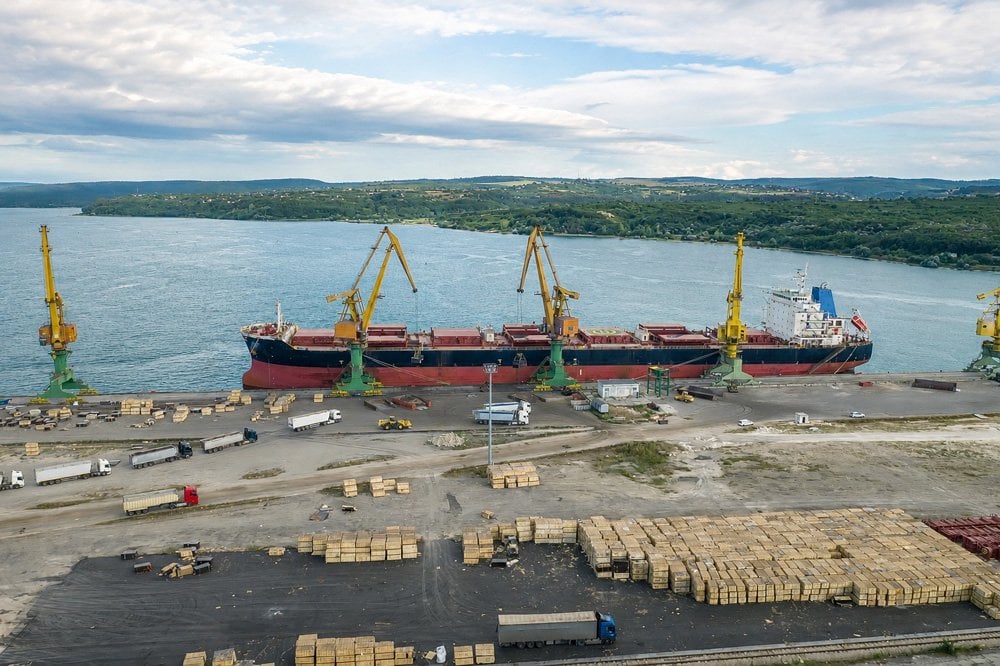
SHEX, SHINC, and the gap in between
The cargo terms on this particular fixture were SHINC (Sundays and Holidays Included). On paper, that reads as the more permissive arrangement: laytime counts continuously, weekends and holidays alike.
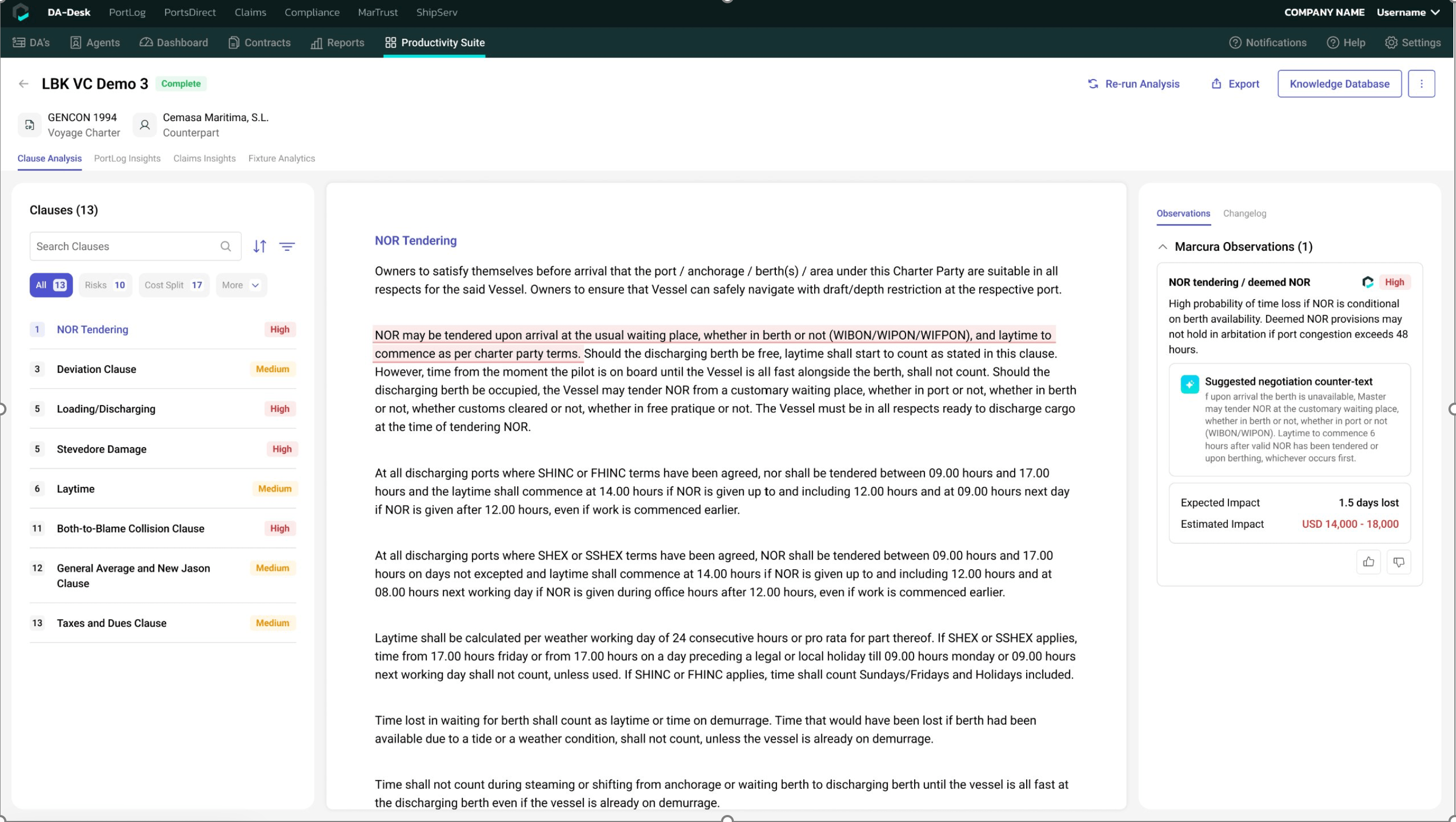
The NOR acceptance clause, however, restricted tender to working hours: 08:00 to 17:00 Monday to Friday, and 08:00 to 12:00 Saturday. Outside those windows, NOR could not be validly tendered.
The vessel arrived at 08:00 on a Saturday, past the Saturday cut-off in some operators' reading of the clause, and certainly outside the Monday-to-Friday window.
The NOR was accepted, but the clock did not start until the next valid acceptance window. Two days of working time disappeared into the gap between two clauses that, read separately, both looked entirely reasonable.
If the NOR acceptance had been ATDNSHINC (Any Time Day or Night, Sundays and Holidays Included), the Saturday arrival would have carried no penalty. The cargo terms and the acceptance terms would have aligned, and the two days would have counted.
A single wording difference created two days of unpaid time and a claim then took weeks to resolve because the contradiction was real, not simply a misread.
-Full-Res.png)
Why this keeps happening: "as per last"
The Paranagua fixture inherited its NOR clause from a previous one. "As per last" is the shorthand. A charterer or broker carries terms forward from a recent fixture into a new one, sometimes without revisiting every clause.
The intent is speed. The effect is that clauses written for a different trade, port, or season are carried into a fixture they were never tested against.
In the sample reviewed, "as per last" was the single most common origin of an inherited contradiction.
The fixture template moves. The cargo type changes. The port rotation changes. The NOR clause moves with the template, even when the cargo terms underneath it have shifted.
That is how SHINC cargo terms end up under a restricted-hours NOR clause. It is also how a daylight restriction designed for one terminal ends up applied to another where it was never needed.
Closing the loop between claims and chartering
The deeper issue with the Paranagua case is not the contradiction itself. It is that nothing in the way most operators manage claims and chartering ensures the next fixture is written with that lesson already learned.
Demurrage and laytime claims generate, by far, the richest dataset a maritime company holds on its own operational behaviour.
Every closed claim is a record of which clause was contested, which port it played out in, which counterparty disputed it, and which interpretation prevailed. In aggregate, that data does something a single analyst's memory cannot.
It reveals patterns: the clause-port combinations that recur, the counterparties that test the same wording fixture after fixture, and the inherited "as per last" templates that travel from one trade into another while quietly carrying unpaid time with them.
In practice, the Paranagua contradiction is the kind of issue that needs to be caught in two places: once before the fixture is signed, so it never reaches the vessel, and once after the claim closes, so the pattern is captured for the next fixture.
Connecting those two stages creates a practical feedback loop between chartering and claims handling. Marcura works at both ends, and the integration between them is what turns the process into an operational discipline.
Before the fixture is signed, the Charter Party Risk Analyser reads the full charter party in around six minutes and flags clause-level contradictions, including the SHEX-against-NOR-window mismatch that cost the Paranagua fixture its two days.
Each flag comes with the reasoning behind it, allowing the chartering desk to see why the clause has been surfaced and decide whether to accept the risk, renegotiate the wording, or review the inherited clause.
After the claim closes, Marcura Claims captures the contradiction as structured data, including clause type, port, counterparty, arrival-day pattern, and settlement outcome. Over time, that record becomes the operator's own pattern library, drawn from more than 20,000 claims processed annually across dry bulk, tankers, chemicals, and project cargo.
When the next fixture is being drafted, patterns from previous claims are surfaced directly into the chartering view through the Marcura platform.
The wider point
Demurrage and laytime claims are usually treated as a downstream problem. The Paranagua case is a reminder that the decision-making window sits much earlier. By the time the SOF arrives, the contradiction is already locked into the fixture.
The fix is not simply a new system. It is the discipline of reading the NOR clause and the cargo clause as a single instrument, treating "as per last" as a question rather than an answer, and closing the loop between the claims data that already exists and the fixture decisions that have yet to be made.
In a market where freight margins are thin and counterparties are sophisticated, that loop is increasingly becoming the difference between a demurrage book that quietly leaks and one that compounds in the operator's favor.
About the author:
Janani Yagnamurthy is SVP, Product, Strategic Growth at Marcura.
This article is sponsored by Marcua. For more information, visit the company online.
The opinions expressed herein are the author's and not necessarily those of The Maritime Executive.
