U.S. Grain Exports at Risk From Aging Barge Fleet and High Replacement Cost
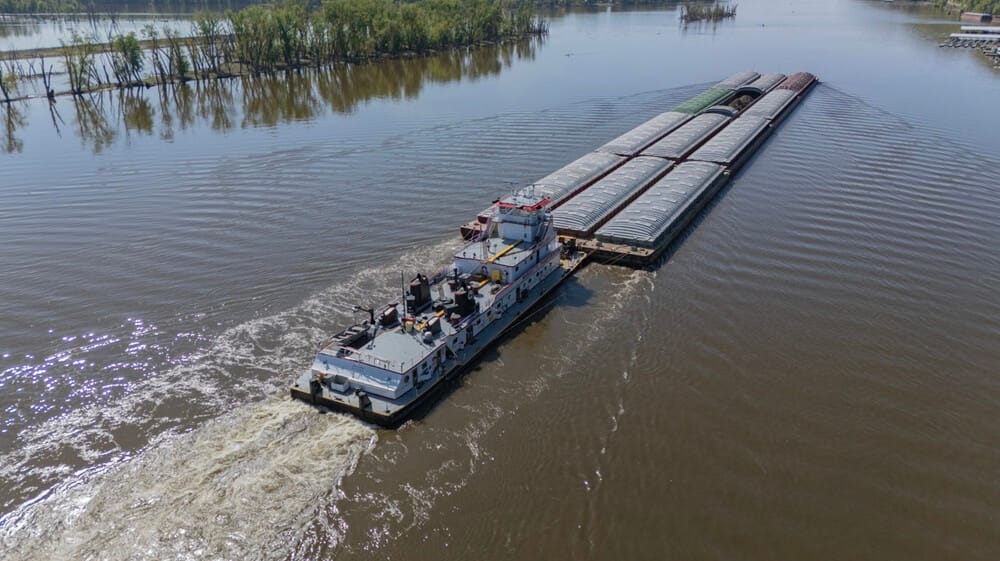
The United States faces a squeeze on grain transportation over the next decade because its inland barge fleet is retiring vessels faster than it builds new ones, according to CoBank, a cooperative bank that serves rural industries.
In a report released this week, CoBank projects that the U.S. inland barge fleet will shrink by about 17 percent by 2035. The fleet is aging fast, and high construction costs are discouraging owners from replacing old barges, the firm says. Combined with recurring low water on the Mississippi River, the bank says, that points to a transportation bottleneck for grain exports and tighter margins for farmers.
CoBank’s analysts say the inland waterway system is entering a period of “structural tightening,” with significant consequences for grain shipping and the wider farm economy.
The inland barge fleet stands at 19,668 barges this year, down 7.6 percent over the past decade, according to Current Data figures cited by CoBank. Over the same period, the fleet’s average age has risen from 13.8 years in 2016 to 17.6 years. Grain hopper barges typically last 25 to 30 years before corrosion and wear weaken their steel hulls.
Builders turn out about 410 new barges a year, while 500 to 1,000 are retired. If those trends hold, CoBank expects the fleet to fall to 16,240 barges by 2035, 17.4 percent below today’s level.
Cost is the main obstacle to replacement. Steel is the largest input in barge construction, and U.S. plate prices remain high because of strong domestic demand and long-standing Section 232 tariffs. Labor and financing costs have also climbed. A new inland hopper barge now costs roughly $1 million or more, compared with about $650,000 a decade ago.
The shortage is arriving just as export growth is expected to put more pressure on the Mississippi River barge system. USDA projects that U.S. grain and oilseed exports will rise nine percent by 2035, mostly from corn and soybeans.
Barges on the Mississippi carry about half of all U.S. corn and soybean exports and one-third of wheat exports. But repeated years of low water have raised doubts about how reliably the river can move that grain. When water levels are very low, barges cannot be fully loaded and tows are often cut in size.
Aging infrastructure adds to the strain, according to the analysis. Old locks and dams are increasingly vulnerable to disruptions, which cause long delays and reduce the system’s efficiency.
“Barges remain the most efficient and cost-effective method of moving grain to export markets, but transportation costs are likely to continue increasing over time, given the tightening fleet. Freight values are already above historical norms, even during periods that were traditionally considered offseason. It’s a looming headwind for U.S. grain exports that’s unlikely to subside any time soon,” said Tanner Ehmke, CoBank’s lead grains and oilseeds economist.

that matters most
Get the latest maritime news delivered to your inbox daily.
As older, cheaper barges leave service and more expensive new ones replace them, CoBank expects freight rates to begin to reflect today’s higher building costs. Railroads compete with barges for some grain traffic, but they cannot fully replace the waterway system.
If the industry doesn’t keep investing in new hopper barges and waterway infrastructure, CoBank warns, rising transportation costs could squeeze farm margins, weaken the prices paid to farmers and reduce U.S. export competitiveness.