

Ferguson's Second Ferry Departs on Builder's Sea Trials
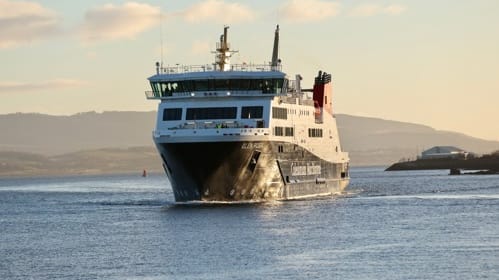
Scottish shipbuilder Ferguson Marine is hoping to bring the construction of the ferry Glen Rosa to an end early next year. This follows the commencement of builder’s sea trials for the ferry, which will now be delivered in February.
Ferguson Marine announced that Glen Rosa, one of two LNG dual-fuel ferries whose construction has been characterized by unprecedented delays and cost overruns, has set sail from the Inchgreen quayside for sea trials on the Firth of Clyde. While Ferguson is billing the builder’s sea trials as another significant milestone in the vessel’s journey toward completion and entry into service, the trial is coming a month late.
In late October, in an update to the Scottish Parliament, the company had indicated that sea trials were to be pushed to this month after a number of “minor system issues” were identified.
The company has warned that the costs of building the vessel will rise further because of changes to the scope of work. In the changes recommended by the Glen Rosa Coordination Group, Ferguson has been tasked to install the vessel’s new redesigned propeller blades before Glen Rosa is handed over to its operator, Caledonian Maritime Assets Limited (CalMac). In the initial plans, the blades had been scheduled to be installed afterwards. The new blades have become necessary after a vibration issue was detected in its sister vessel, the MV Glen Sannox that entered service in January last year, also after enduring long delays and cost overruns.
In the update to the Scottish Parliament Transport committee, Ferguson said the blades will be installed during the available dry-dock window in late January next year. The change to the scope of work will mean additional costs, said the company. While originally Glen Rosa was designed to be built at a cost of $200 million, its costs have risen to $245 million, without taking into account the new costs for the propeller blades installation. When incorporated, the vessel’s total costs are expected to rise again to $260 million.
This change in the scope of work also affects the sequencing of liquefied natural gas (LNG) commissioning. Ferguson has stated that due to safety reasons, the vessel cannot enter dry dock with LNG on board. According to the company, introducing LNG and commissioning the system before dry-docking would incur additional costs in subsequently removing the fuel and repeating the bunkering and commissioning process after dry-docking.
To avoid extra costs, the company says that the ideal approach is to defer LNG commissioning until the drydock work is complete. After that point, the company plans to bring LNG on board, complete commissioning of the LNG system and demonstrate its operation, thus avoiding the cost of undertaking the process twice.
Ferguson told the committee that its focus is to achieve handover of Glen Rosa by February with the new blades fitted and LNG commissioning completed. Before delivery to CalMac, Glen Rosa will undergo owner’s sea trials to demonstrate the vessel’s dual-fuel capability. The ship is currently running on diesel.
“Our team remains completely focused on producing quality work and rigorous testing, ensuring we deliver a reliable, robust vessel that will serve island communities for generations to come,” said Andrew Milligan, Ferguson Marine's Executive Director of Technical.
that matters most
Get the latest maritime news delivered to your inbox daily.
The Glen Rosa is being built for CalMac to serve on the Arran route. The 102-meter vessel will have a capacity to carry up to 852 passengers plus at least 127 cars or 16 heavy goods vehicles, or a combination of both. At around 3,000 tonnes, she is considerably heavier than Glen Sannox.
The contract for the two vessels was awarded to Ferguson Marine in 2015, with both ships originally scheduled for delivery in 2018. The project has been beset by design and construction issues from the start, and first-in-class ferry Glen Sannox has been in and out of service since delivery last year due to vibration, hull cracks and a fuel leak.