

Two More Tankers Hit Off Oman, Houthis Threaten Saudi Red Sea Ports
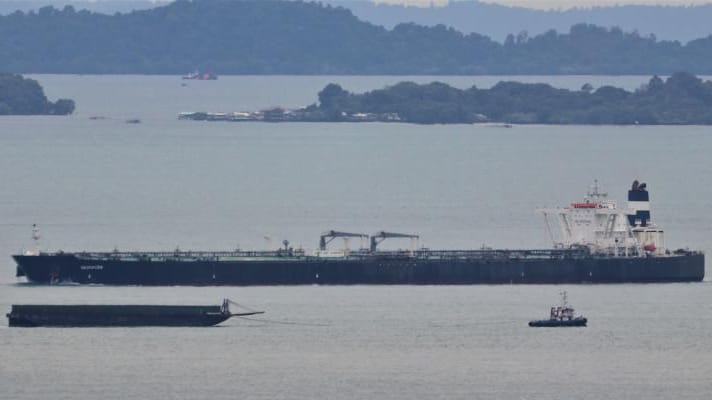
Two more tankers were hit by projectiles in the Strait of Hormuz on Saturday morning, the latest strikes in an accelerating pace of likely Iranian attacks.
An outbound tanker was hit in the stern by an unidentified projectile about 11 nautical miles north of Khasab at about 0500 UTC, UKMTO said. Its crew was evacuated, according to maritime security firm Vanguard Tech. At about 0550 UTC, a second outbound tanker was hit in the engine room about 17 nautical miles east of Khasab, and the strike started a fire on board, Vanguard Tech reported. No casualties were reported in either incident.
Vanguard Tech and analyst Noam Raydan have both identified the two vessels as the Hong Kong-flagged VLCC Torkel (IMO 9340635) and the Hong Kong-flagged Suezmax Arina (IMO 9248813). Raydan counts at least 22 confirmed attacks in and around the strait since the start of the month.
On Saturday, Iranian forces claimed that an oil tanker caught fire after hitting a naval mine east of the strait. It did not name the vessel, and Reuters could not verify the claim. Iran frequently announces mine strikes on shipping in and around the Strait of Hormuz; the U.S. Navy claims to have cleared the area of mines, and most of the vessel damage observed to date is not consistent with naval mine strikes.
The strikes are the latest in a long string of attacks on the Omani side of the strait. A product tanker chartered by ADNOC was set on fire off Khasab on November 7. The LPG tanker Tara Gas burned for days after an IRGC drone hit its engine room on November 16, and one of its crew was still missing when the fire was brought under control. On November 17, the ADNOC product tanker Navig8 Messi was struck north of Khasab, leaving a Jordanian seafarer missing and 11 others injured.
UKMTO counted six tankers attacked in the week to November 18, and it has recorded 106 incidents in the strait since the conflict began on February 28. Ship transits fell to 263 that week from 308 the week before. The Joint Maritime Information Center rates the threat in the strait as "severe," meaning an attack is highly likely. Iranian media say Tehran is preparing a convoy of tankers to challenge the U.S. blockade line.
In the Red Sea, the Saudi-led coalition said on Friday that it had struck Hodeidah, the main port for food and other supplies entering Houthi-controlled northern Yemen.
Houthi military spokesman Yahya Saree responded by instructing shipping companies to "immediately evacuate their ships" from Saudi Red Sea ports. He warned port workers to leave, and he threatened other civilian targets within Saudi territory. On Sunday, Saree claimed that Houthi forces had attacked and hit the Aramco/Sumitomo-built refinery at Rabigh, located on the Saudi Red Sea coast. The claim has not been confirmed.
The strikes and counterstrikes are an outgrowth of the long-running Yemeni civil war, which has flared up this year amidst hostilities between the U.S. and Iran, the Houthis' primary sponsor. Saudi Arabia backs Yemen's internationally recognized government (IRG) based in Aden.

that matters most
Get the latest maritime news delivered to your inbox daily.
Because of Iranian attacks in the Strait of Hormuz and Arabian Gulf, Saudi Aramco has ramped up volume at its Red Sea loading terminal at Yanbu. Houthi attacks on Saudi tankers, the Saudi East-West Pipeline, and various energy facilities on the Saudi Red Sea coast have all impacted Aramco's operations - though the supermajor has proven highly capable of bouncing back.
Top image: Torkel (file image courtesy Mark Wei / VesselFinder)