
Traffic Through Strait of Hormuz Ticks Up, But Iran Retains Control
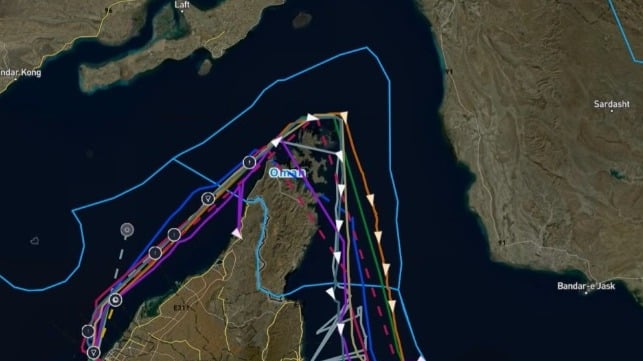
Transit volume through the Strait of Hormuz remains a fraction of what it was before the Iran conflict, but there are signs that outbound movement is picking up, according to maritime data consultancy Windward. In particular, a new trickle of transits through Omani waters appears to be holding steady at several vessels per day, suggesting that there may be a stable alternative to the "Tehran toll booth" at the north side of the waterway.
Windward's independent analysts counted 11 ships passing through the Strait on April 5. Fars News Agency - the outlet of the Islamic Revolutionary Guard Corps, which now controls traffic in the Strait - put the number somewhat higher at 15 vessels for the day.
Outbound transits continue to dominate traffic, according to Windward, suggesting that most IRGC transit permits are granted to allow ships trapped in the Arabian Gulf to leave. Much of the "tollbooth" tanker traffic is Iran's own energy commerce, as Iran continues to sell oil into global markets and profit from the tight supply environment.
The new Omani corridor is showing signs of life. Two to four vessels have used the route every day since April 2 - a meaningful change. The functional route appears to be a rare sign of diplomatic progress: an Iranian official claimed last week that Iran was coordinating with Muscat on a "monitoring" protocol for the strait, and the Omani foreign ministry confirmed Sunday that staff talks had been held with Iranian counterparts on "smooth passage through the Strait of Hormuz." Omani and Iranian technical staff "presented a number of visions and proposals" to each other for how to operate the strait, the ministry said.
However, traffic remains limited to a small fraction of normal amounts, says Sparta analyst Hoa Nguyen. "First, it is a drop in the ocean compared to pre-war levels. Second, lots of ships being included in the trackers are bulk carriers or containers. Third, the vast majority being outbound traffic with a tiny portion being inbound with links to Iran," he said in a research note Monday. "Only when inbound traffic [crosses] can we have any confidence in any normalization scenario."
For this reason, Iranian control is a strategic disadvantage for the GCC states, which have a high degree of economic dependence on the waterway. On Monday, top UAE diplomat Anwar Gargash told Reuters that "the Strait of Hormuz cannot be held hostage by any country," and he insisted that freedom of navigation must "be part and parcel of the settlement of any ?conflict" between Iran and the United States. The White House and Tehran continue to exchange threats and peace proposals; the most recent updated White House deadline for Iran to reopen the waterway expires at 2000 hours on Tuesday, at which point the U.S. and Iran may choose to escalate the conflict.
Multiple defense analysts predict that Iran will remain in control of the strait for an extended period, even in the event of escalation. For now, Tehran continues to demonstrate its de facto authority over navigation: it claimed Sunday that it has given permission for "brotherly Iraq" to use the strait unhindered; on the same day, Iranian authorities ordered two Qatari LNG carriers that were headed for the "toll booth" route to turn around and go back.

that matters most
Get the latest maritime news delivered to your inbox daily.
The traffic restriction has sent oil prices (and backwardation) soaring, specifically for deliverable barrels. Trading sources told Reuters Monday that traders are selling WTI Midland into Asia for July delivery at a premium of up to $30-40 over dated Brent, a sign of the tight market in the Gulf-dependent Far East.
Diesel prices have soared as heavier Arabian Gulf barrels exit the Asian refining mix and middle distillate output falls. In Singapore, diesel prices are running in the range of US$13 per gallon at the pump. In California, where energy prices are exposed to demand from the Asian market, retail diesel exceeded $7.50 per gallon statewide and breached the $8 mark in San Francisco - a national record.