


When Bridge Teams Lose Control Without Realizing It
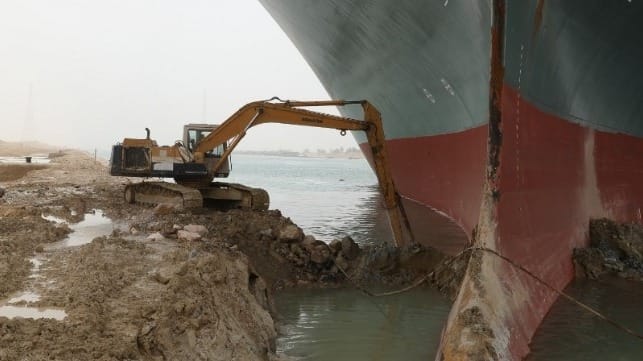
Following recent discussions on hydrodynamic instability in confined waters, an important operational question remains: Why do experienced bridge teams sometimes lose control of a vessel — without recognizing it in real time?
In many marine casualties, loss of control is not a sudden event. It develops gradually, often while the vessel still appears manageable.
The Illusion of control
On the bridge, control is typically assessed through heading response; rudder feedback; visual alignment with the channel; and engine response. As long as these indicators appear normal, the situation is perceived as stable.
However, in confined waters, this perception can be misleading. Hydrodynamic forces — especially when combined with environmental factors such as wind and shallow water — may begin to alter vessel behavior before it becomes visibly critical. The vessel is still responding, but it is no longer behaving predictably.
Delayed recognition
One of the most dangerous aspects of confined-water navigation is delayed recognition. The transition from stable control to instability is not always obvious. There is often no single alarm, no immediate failure.
Instead, corrections become slightly less effective; rudder angles increase; and the vessel requires more input to maintain track. These changes can be interpreted as “normal variation” rather than early warning signs.
By the time the deviation becomes clearly visible, the system may already be operating beyond a recoverable threshold.
Nonlinear response
At the core of this issue is a nonlinear relationship between cause and effect. Small increases in speed, small changes in position, or moderate environmental forces can lead to disproportionately large responses in vessel behavior.
This is particularly relevant in shallow and confined waterways, where squat reduces under-keel clearance, rudder efficiency decreases, and bank interaction forces intensify.
As a result, corrective actions may begin to produce unexpected outcomes. More rudder does not always mean more control. In some cases, it produces the opposite.
Cognitive bias under pressure
Bridge teams do not operate in a vacuum. They operate under schedule pressure, pilot expectations, traffic constraints and environmental uncertainty.
Under these conditions, there is a natural tendency to assume that the situation remains controllable — especially if it was under control moments before.
This creates a cognitive bias: “If we are still on track, we are still in control.” In reality, control may already be degrading.
The critical gap
The most dangerous phase is the gap between actual loss of controllability and recognition of that loss.
This gap can be only minutes — but it defines the difference between recovery and casualty.
Once the system crosses a nonlinear threshold, recovery options narrow rapidly.
Closing the gap
Reducing risk in such scenarios does not depend on more technology alone. It depends on operational awareness.
Three practical measures can significantly reduce exposure:
- Recognizing early signs of reduced control effectiveness
- Establishing predefined thresholds for intervention
- Maintaining active bridge team engagement during pilotage
Most importantly, bridge teams must accept that loss of control is not always visible when it begins.
From control to awareness

that matters most
Get the latest maritime news delivered to your inbox daily.
Modern vessels are technically advanced, but their behaviour in confined waters remains governed by physical limits. Understanding when those limits are being approached — before they are exceeded — is a key element of professional navigation. In many cases, the incident does not begin when control is lost — it begins when the loss of control is not yet recognized.
Volodymyr Smirnov is a Master Mariner with over 25 years of experience on large ocean-going vessels, including more than 18 years in command. His professional focus includes operational risk, bridge team decision-making, and confined-water navigation.
The opinions expressed herein are the author's and not necessarily those of The Maritime Executive.
