
Agility at Sea: Geopolitical Shocks Reshape Energy Shipping
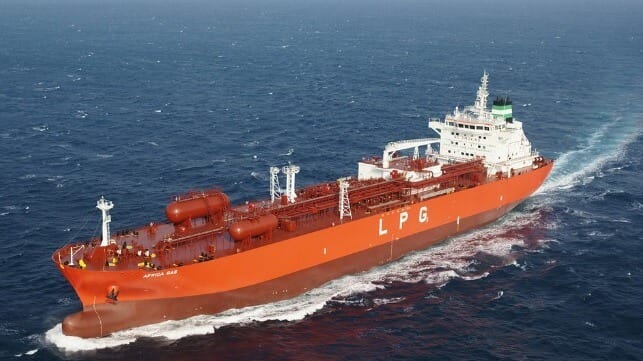
Conflict in the Middle East has practically halted shipping traffic through the Strait of Hormuz. The narrow passageway is not technically closed, but the risks now dissuade most attempts at passing through. Tanker traffic has dropped roughly 90 percent. Around 400 vessels, many just sitting full of oil, wait anchored or sheltering in the Gulf. Maersk, MSC, Hapag-Lloyd, and CMA CGM all suspended transits. Insurers pulled war risk coverage almost immediately, and freight rates experienced massive hourly volatility. The Strait moves about a fifth of the world's oil supply on a normal day; now, however, the amount is negligible.
This de facto closure of Gulf trade seriously impacts importers in Asia and Europe, with an even heavier impact on fast-growing economies like those in Africa. Africa's demand for LPG and refined products has outstripped almost every other region in terms of growth. This indicates an optimistic future for a prosperous Africa, but currently, it has seriously strained markets and shortened the timelines for commoditized purchases. Delays from rerouting, geopolitical crisis, or lack of supply can cause major inconveniences. The gap between when there is a demand signal and when delivery is expected is now quite short, and the Hormuz crisis has made that gap a first-order problem.
Additionally, port infrastructure has not kept up with the rapid growth for materials and energy supply. Most of the legacy ports along West and East Africa can only dock vessels in the 10,000–15,000 DWT range. New deep-water terminals are set to open across Morocco, Senegal, and Nigeria. These are genuine upgrades that will scale trade significantly; however, they will only serve industrial corridors without replacing the distributed, higher-frequency supply that most of the continent actually depends on. Similar to value chains in parts of South and Southeast Asia, growing demand requires faster, more varied delivery, forcing smaller parcels to arrive more often. More frequent shipping is quite expensive even in normal times, but when a corridor like Hormuz tightens, it can kill markets that rely on the smaller weekly imports.
A few commodities traders are handling the crisis better than others. They are the ones who built flexible vessel portfolios before this Hormuz crisis ever happened. Companies like Vitol, Trafigura, Glencore, and BGN Group have been able to maintain commercial structures that let them shift parcel sizes and route options whenever conditions might suddenly change. Petredec, for example, a specialist in LPG, designed its fleet around varied port constraints currently being faced in Africa. BW LPG, the largest VLGC fleet operator in the world, has been adding mid-sized chartering capacity alongside its core large-vessel business. And Geneva based BGN Group has gone even further by venturing with South Korea's HMM on a pair of 88,000 cubic-metre VLGCs for high-volume routes. They have also partnered with Al Seer for a further five VLGCs, while maintaining smaller tonnage for shallower ports. Trammo and other LPG specialists are building similar depth.
BGN Groups’ Shipping Director Ozan Turgut has said that the system was established to address an increasing imbalance between energy needs and port infrastructure across developing countries. According to Mr. Turgut: “Hybridized shipping serves two purposes. First, it allows energy to reach far more demand centers without relying on costly rail or road transfers. Second, it allows us to supply rapidly growing economies whose energy demand is rising faster than port modernization. In many of these markets, ports were simply not built for today’s vessel sizes and a hybrid shipping model helps bridge that gap.”
Another development in hybridized logistics strategies is exemplified by NYK’s recently delivered Lucent Pathfinder. The ship is a dual-fuel VLGC that can run on LPG or heavy fuel oil, with meaningfully lower emissions than conventional diesel. BGN Group chartered the ship, sustainably expanding their portfolio. Former U.S. Federal Maritime Commissioner Rob Quartel has argued, “The West's oil dependence is a strategic liability; our rivals are building the zero-emission future now.”
There is a third layer that has not received enough attention in the African context, namely, coastal redistribution. Battery-electric vessels are not made for long-haul voyages, but the economics of electric vessels do start to make sense for shorter coastal hops, inter-port feeder runs, the Gulf of Guinea corridor, and routes between East African ports. Research has suggested that battery electrification becomes cost-competitive on routes under roughly 1,500 km. Nonetheless, the challenge in Africa remains the lack of charging infrastructure. Port development programmes and multilateral lenders could overcome that gap faster if the sector treated coastal electrification as logistics infrastructure rather than a climate project.
Conversely, digital infrastructure is streamlining physical infrastructure like ports and customs authorities. As Dr. Oluseye Akomolede, founder and CEO of Arcadia ECS, notes, “AI is about to become both a major driver of global energy demand and an essential tool for managing the infrastructure that delivers it. As shipping networks, ports, and logistics systems grow more complex, AI-driven monitoring, optimization, and security technologies will play an increasingly important role in keeping supply chains resilient.” Arcadia ECS is developing deep-learning systems that can secure ports, energy facilities, and other critical infrastructure without slowing operations.
The hybrid model of working large vessels for deeper water terminals, mid-sized vessels for legacy ports, and electrified feeders for short distance hopping redistribution is not new in shipping theory. But the cost of not having this capacity is growing significantly. The Hormuz crisis highlights a broader global challenge facing fast-growing energy importers.

that matters most
Get the latest maritime news delivered to your inbox daily.
Traders and logistics companies that built portfolio flexibility in advance are keeping cargo moving in the midst of the uncertainty. For emerging market buyers, hybridization presents a tempo advantage where cargo arrival will be reliable, and supply chains can hold even with increased diversification. Yet this model goes beyond the confines of emerging markets with the Hormuz crisis demanding increased flexibility across the board. Indeed, network and logistics flexibility will prove a crucial component to traders' competitive edge where reliability is no longer guaranteed at scale.
Glenn Schatz is co-founder of a zero-emission shipping company and formerly a program manager at the U.S. Department of Energy, as well as a submarine veteran and former adjunct professor at the U.S. Naval Academy. The views expressed are those of the author and do not reflect the official policy or position of the U.S DoD or the U.S. Government.
The opinions expressed herein are the author's and not necessarily those of The Maritime Executive.
