
Syrians Agree to Reduced and Limited Russian Presence
After months of speculation on the status of the Russian presence in Syria based on assessments of satellite imagery, an official Syrian government statement has provided some clarity on future arrangements. The SANA official government press agency announced on August 9 that the Syrian Foreign Ministry had concluded 18 months of negotiations with the Russians over the new arrangements.
The tidying-up agreement has apparently received the blessing of the U.S. government, who are keen to regularize their relationship with Syria so as to exploit Syria’s new importance as a gateway from the Gulf region to the Mediterranean.
Much remains unclear, but the announcement specified that that the Hmeimim air base was to be re-incorporated into the Syrian civil aviation authority’s Latakia Airport. The Russians will retain a training facility at Hmeimim, within a Syrian-flagged military facility. The ending of a Russian independent presence here was politically significant, as substantial numbers of Syrians previously loyal to the Assad regime had clustered around the base area to enjoy Russian protection. The new regime has guaranteed their safety under the new arrangements. Russian military aircraft movements can still be expected though Hmeimim, but these can be expected to be subject to the whims of the Syrian clearance procedure.
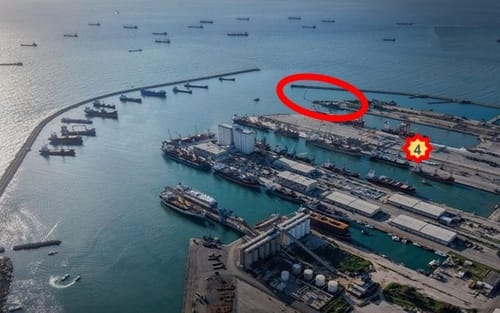
RFS Admiral Kasatonov docked in Tartus in June, behind an anti-drone barrier. Also present were a Grachonok Class and 2 x Raptor and port security vessels. Pier 4 will be given up for Syrian-Russian commercial use (SANA/CJRC)
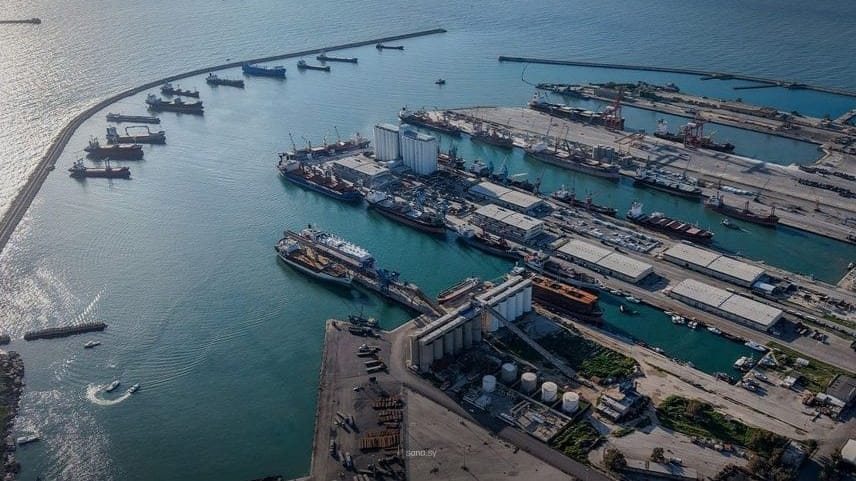
Further south along the coast at Tartus, the agreement sees the Russians giving up their national control of Pier 4 within the inner harbor, but seemingly retaining the northernmost pier in the harbor. This area will be designated a training base as well, but is likely to continue to see irregular Russian naval visits. Time will tell, but this is probably the facility that the Russians fought hardest to retain. Indications of the Russian intent to maintain their Syrian presence was apparent in early June, when three Russian specialist port security vessels were seen in the Tartus harbor basin, protecting two visiting Russian warships, the Gorshkov Class frigate RFS Admiral Kasatonov (F461). These port security vessels would not have been deployed unless there was to be a long-term-requirement for them. The Station 720 naval base seems likely, therefore, to cling on, albeit it will probably no longer boast the base repair and support facilities which it previously enjoyed.

that matters most
Get the latest maritime news delivered to your inbox daily.
In July, The Maritime Executive reported that Pier 4 was to be given over to handling Russian commercial cargo traffic, under an agreement made with the Syrian company Rus Line. Rus Line initially targeted cargo volumes of 250,000 tons per month through the new facility, handling Russian wheat, grains, animal feed, vegetable oils, timber, steel, clinker, coal, rice, sugar, and mineral oils, and over which the Ukrainians are likely to keep a close watch. The dockside would also planned to host light manufacturing and finishing, and act as a distribution center for Russian goods. The remainder of the port which used to be operated commercially by the Russian logistics company Stroytransgaz, remains covered by the $800 million DP World 30-year concession which edged out the Russian company.
Despite intense residual animosity between the Syrian leader Ahmed al Sharaa’s HTS militia organization and the Russians, given the intense fighting between them during the civil war, Syria still has some need of Russian aid and assistance. Notwithstanding the presence there in exile of former President Assad, the new Syrian leader has made what must have been two painful diplomatic trips to Moscow since assuming office. The agreement will see continuing support for a government machine in Syria bred and brought up under Russian tutelage since the 1970s.
