
Op-Ed: Strait of Hormuz Tests the Limits of the Law of the Sea
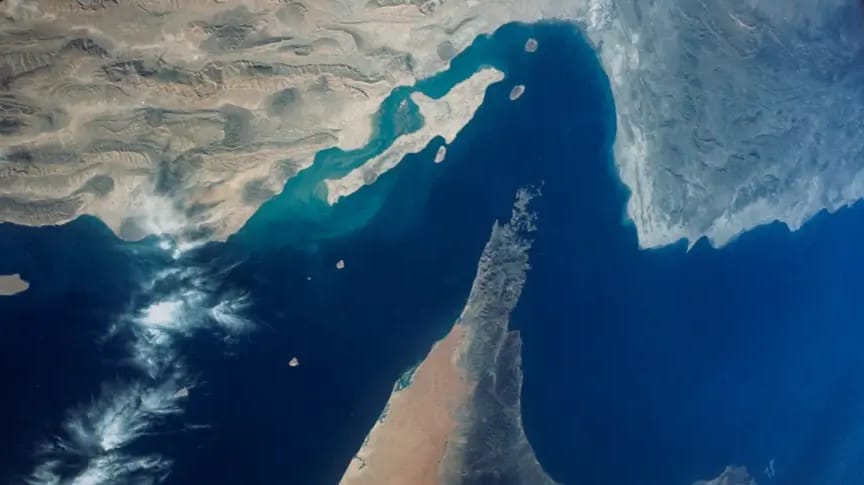
Every escalation in the Strait of Hormuz raises the same question: can international law keep one of the world's most important maritime chokepoints open? Renewed military tensions, attacks on commercial shipping, and competing interpretations of the legal regime governing passage have once again placed freedom of navigation under intense scrutiny.
At the heart of the debate lies a fundamental disagreement. While Iran, a non-party to UNCLOS, maintains that navigation through the Strait is governed by the regime of innocent passage, the United States and most maritime nations regard it as an international strait where the right of transit passage under Article 38 of UNCLOS applies.
The implications extend far beyond the Strait of Hormuz. They raise a broader question about the effectiveness of the international legal order at sea. If one of the cornerstone navigational regimes established by UNCLOS can be openly challenged without an effective enforcement mechanism or automatic sanctions, what does that reveal about the Convention's practical authority?
UNCLOS establishes a comprehensive framework for the peaceful settlement of maritime disputes, but it does not create an international body capable of enforcing its rules or automatically sanctioning violations. Disputes over the interpretation or application of the Convention may be brought before an international court or tribunal where jurisdiction exists, and any resulting judgment is legally binding on the parties. In practice, however, compliance depends far more on the willingness of States to respect those decisions than on any system of coercive enforcement.
Broader enforcement measures may be authorized by the United Nations Security Council under Chapter VII of the UN Charter, but only where it determines that a situation constitutes a threat to international peace and security. Even then, action depends on political consensus among the Council's members, including the absence of a veto by any of the five permanent members.
The challenge, therefore, is not that international law lacks consequences. Rather, its most effective mechanisms are neither automatic nor purely legal. They ultimately depend on jurisdiction, State cooperation and, above all, political will.
Transit Passage vs. Innocent Passage
The legal dispute over the Strait of Hormuz ultimately turns on the distinction between two navigational regimes recognized by UNCLOS: innocent passage and transit passage. Although they may appear similar, they confer significantly different rights on foreign vessels and regulatory powers on coastal States.
Innocent passage, governed by Part II of UNCLOS, allows foreign ships to navigate through a coastal State's territorial sea, provided their passage is continuous, expeditious and not prejudicial to the peace, good order or security of that State. Under this regime, coastal States retain broad authority to regulate navigation in accordance with the Convention.
Transit passage, established under Part III, applies to international straits connecting one part of the high seas or an exclusive economic zone with another. Article 38 guarantees all ships and aircraft the right of transit passage, a right that cannot be suspended by the bordering States. The regime was specifically designed to ensure the uninterrupted movement of international maritime and air traffic while preserving coastal State sovereignty.
The distinction is critical. Whether the Strait of Hormuz is governed by innocent passage or transit passage determines both the rights of foreign vessels and the extent of coastal State control over one of the world's busiest maritime chokepoints.
Competing legal positions
The legal dispute over the Strait of Hormuz is not about geography, but about the interpretation of the legal regime governing navigation through it.
Iran signed UNCLOS but has never ratified it and is therefore not a State Party. It argues that transit passage is a treaty-based right available only to States Parties and that foreign vessels navigating the Strait are therefore subject to the regime of innocent passage. Under this interpretation, the coastal State retains broader authority to regulate navigation through its territorial sea.
Oman, which borders the southern side of the Strait, is a State Party to UNCLOS and generally accepts the Convention as the governing framework. Although it has adopted interpretative declarations concerning the passage of foreign warships through its territorial sea, its overall approach has been pragmatic, balancing navigational rights with regional stability.
The United States, despite not being a party to UNCLOS, maintains that the Convention's navigational provisions relating to international straits reflect customary international law. It therefore regards the Strait of Hormuz as an international strait where the right of transit passage under Article 38 applies—a position shared by most maritime nations.
The disagreement is therefore not merely political. It reflects fundamentally different views of the legal basis governing one of the world's most strategically important waterways. As the Strait of Hormuz demonstrates, international law does not eliminate disagreement between States; it provides the legal framework within which those disagreements are managed.
Does UNCLOS require stronger enforcement?
The Strait of Hormuz exposes a fundamental limitation of the current international legal order. UNCLOS provides a comprehensive framework governing maritime navigation, but it does not create an international authority capable of enforcing its rules or automatically sanctioning violations. Compliance ultimately depends on the willingness of States to respect the Convention and the legal order it establishes.
Whether this is a weakness remains open to debate. Unlike domestic legal systems, international law has traditionally developed through State consent rather than centralized enforcement. Compliance is encouraged through diplomacy, judicial decisions, reciprocal State practice, economic interests and the reputational costs of disregarding internationally accepted legal norms.
For the maritime industry, this is far more than a theoretical legal debate. Shipowners, operators, charterers, insurers and P&I Clubs make commercial decisions every day on the assumption that internationally recognized navigational rights will be respected. Freedom of navigation underpins voyage planning, contractual risk allocation, marine insurance and, ultimately, the stability of global supply chains. Periods of legal uncertainty in the Strait quickly translate into operational uncertainty, influencing voyage planning, war-risk assessments, insurance costs and commercial decision-making throughout the shipping industry.
The Strait of Hormuz therefore illustrates more than a regional dispute over navigational rights. It demonstrates that the effectiveness of UNCLOS depends not only on its legal provisions, but also on the continued willingness of States to recognize those provisions as the common rules governing international navigation. As geopolitical competition intensifies, that consensus may face increasing pressure.
Whether UNCLOS requires stronger enforcement mechanisms remains an open question. Equally important, however, is whether the international community can preserve the consensus that has sustained the Convention for more than four decades.
Conclusion
The legal debate surrounding the Strait of Hormuz extends well beyond a regional dispute over navigational rights. It highlights a broader challenge facing international maritime law: legal rules are effective not simply because they exist, but because States are willing to recognize and apply them consistently.
For more than four decades, UNCLOS has provided the framework on which international shipping has relied. Although disagreements over its interpretation are inevitable, the Convention continues to function because the overwhelming majority of maritime nations accept it as the foundation of the modern law of the sea.

that matters most
Get the latest maritime news delivered to your inbox daily.
The Strait of Hormuz serves as a reminder that the strength of UNCLOS has never rested on automatic sanctions or coercive enforcement. It has rested on a shared commitment to a common legal order at sea. If that consensus weakens, the consequences will extend far beyond the Gulf. They will be felt across global shipping, where legal certainty remains one of the industry's most valuable assets.
 Capt. Lefteris Avagianos is a shipping professional and former Master Mariner. He is a graduate of the World Maritime University's Postgraduate Diploma in Marine Insurance Law and Practice and is currently pursuing an LLM in Maritime Law at The City Law School, City St George's, University of London. He also serves as a member of the United Nations Division for Ocean Affairs and the Law of the Sea (DOALOS) Pool of Experts for the Fourth Cycle of the World Ocean Assessment and is an Associate Fellow of The Nautical Institute. His professional interests include maritime safety, seafarer welfare, the social status of seafarers, and the practical application of international maritime law.
The opinions expressed herein are the author's and not necessarily those of The Maritime Executive.
