

Russia Pressures Royal Navy's Weak Spot
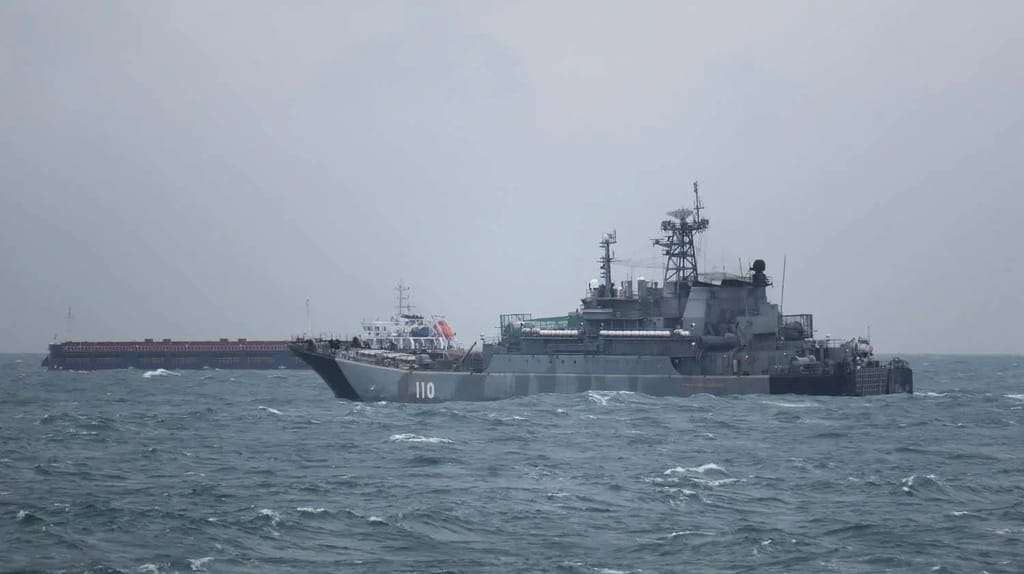
The expansion of Russian hostile activities in British waters in recent months could not have come at a worse time for the Royal Navy, putting pressure on resources in the particular capability areas where the Royal Navy is critically deficient.
The operations in British waters of Russia's GUGI underwater intelligence-collection submarines and vessels (such as the Vishnya-class intelligence-gathering ship Viktor Leonov) and the posting of a permanent picket ship in the North Sea (currently the frigate RFS Neustrashimy) – come on top of the burden of monitoring the movements of Russian dark fleet tankers and sanctioned vessels carrying military cargoes, which are primarily resupplying the state-sponsored mercenary Africa Corps in West and North Africa.
Clearly, the Russians are concerned about the possible interdiction of their vessels in the North Sea. Some vessels are being sent north and west around the British Isles to avoid territorial waters, and the Russians themselves struggle to field suitable naval escorts for those taking the shorter route through the English Channel. But equally, the Royal Navy does not have sufficient frigates to shadow these Russian movements, and it is having to use valuable Type 45 air defense destroyers or lightly armed patrol vessels instead – or, increasingly, to monitor movements only from the air, courtesy of Fleet Air Arm Merlin helicopters and Royal Air Force Protector surveillance drones.
Currently, only five Type 23 frigates are still in service, slated to remain in the fleet until the first of the Type 26 and Type 31 frigates come into service. The first two Type 26 frigates, HMS Glasgow (F88) and HMS Cardiff (F89), are being fitted out, as is the first Type 31, HMS Venturer (F12). But there is a long way to go before the ships will be fit to join the fleet, and it has emerged that insufficient resources have been allocated to the task of certifying the ships as ready for service. Nor has the certification process itself been modernized.
At the same time, two of the remaining Type 23 frigates look as if they are about to be declared unseaworthy because of hull corrosion problems, further jeopardizing frigate availability over the next three years. The perilous state of the frigate fleet poses problems not just for monitoring the increased Russian activity in home waters, but also for the ability of nuclear submarines and the two Queen Elizabeth-class aircraft carriers to operate with proper protection.

that matters most
Get the latest maritime news delivered to your inbox daily.
The British press has revealed that despite the alarming capability gap, the yards building the new frigates are still working “peacetime” hours, with no night shifts, overtime or weekend work. Whereas the Royal Navy is intensely agitated at its inability to meet its operational tasking, a more relaxed attitude appears to be prevailing in the Ministry of Defence’s procurement organization.
It is not all bad news for the Royal Navy, however. Some of the Type 45 destroyers are coming back into service after performance upgrades, and last week three Vanguard-class nuclear ballistic missile submarines were at sea, as were both aircraft carriers – HMS Queen Elizabeth (R08) in the Atlantic and HMS Prince of Wales (R09) off Gibraltar.