

Port Fees for Chinese-Built Ships and Shipping to be Delayed by USTR
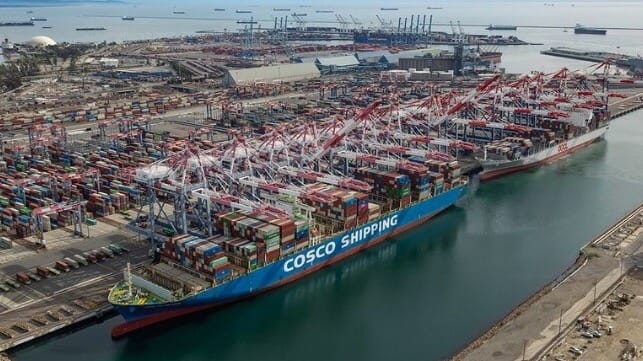
With just two weeks left until the one-year suspension of U.S.-imposed fees on Chinese-built ships and ships operated by Chinese companies is due to end, the U.S. Trade Representative has filed to extend the deadline. While little has changed in the situation over the past year, the USTR writes that a two-month extension would provide further time for trade negotiations with China.
The U.S. imposed the fees in October 2025 on all Chinese-built ships calling in U.S. ports as well as additional fees for all Chinese operators. It was presented as a remedial action to compensate for China’s unfair trade policies subsidizing and promoting its shipbuilding industry. There were fees for containers landed at U.S. ports as well as for cars being transported on car carriers, but it also impacted a broad range of companies with Chinese investors. Other portions included Chinese-built container cranes and equipment of ports and chassis and other parts and equipment.
China had angrily responded, saying the U.S. was trying to blame it for its systemic failures over many years of failing to support the U.S. shipbuilding industry. Chinese officials called the policy protectionist and responded by imposing reciprocal fees designed to punish the U.S. shipping companies.
The agreement to pause the fees for one year was the result of a November meeting between China’s President Xi Jinping and Donald Trump, which outlined broad trade agreements between the two countries. China reportedly made a suspension of the fees on shipping a condition of its agreement to buy U.S. agricultural imports.
The situation, however, has little changed over the past year, with Chinese shipbuilders further increasing their market share. China’s Ministry of Industry and Information Technology (MIIT) reported last week that Chinese shipbuilders accounted for 81.8 percent of the global new orders in the first nine months of this year. They took in orders representing more than 175 million DWT, an increase of 163 percent year on year, while output reached 58 million DWT so far this year. Chinese shipbuilders reported a total backlog of over 399 million DWT.
At the same time, Chinese exports have also surged. Shanghai reported it moved more than 5.1 million TEU during September. On the U.S. West Coast, the ports of Los Angeles and Long Beach, the main ports for landing Chinese goods, also reported record volumes.
The USTR says that the U.S. and China are continuing to engage in trade talks, “with the goal of obtaining the elimination of the acts, policies, and practices at issue in its investigation.”

that matters most
Get the latest maritime news delivered to your inbox daily.
The USTR opened a one-week comment period starting today, October 26, for its proposal to extend the pause on the fees. Comments are due by October 30. The current suspension runs through November 9, but the USTR plans to extend it for two months until January 9, 2027.
Market observers have said shippers appeared to be front-loading shipments this year, creating an early peak season due to the uncertainties over issues including these fees and tariffs. Predictions have called for an expected slowing in Chinese imports to the United States for the remainder of the year.