
“Pink Corridor” to Explore Nuclear-Powered Transatlantic Container Shipping
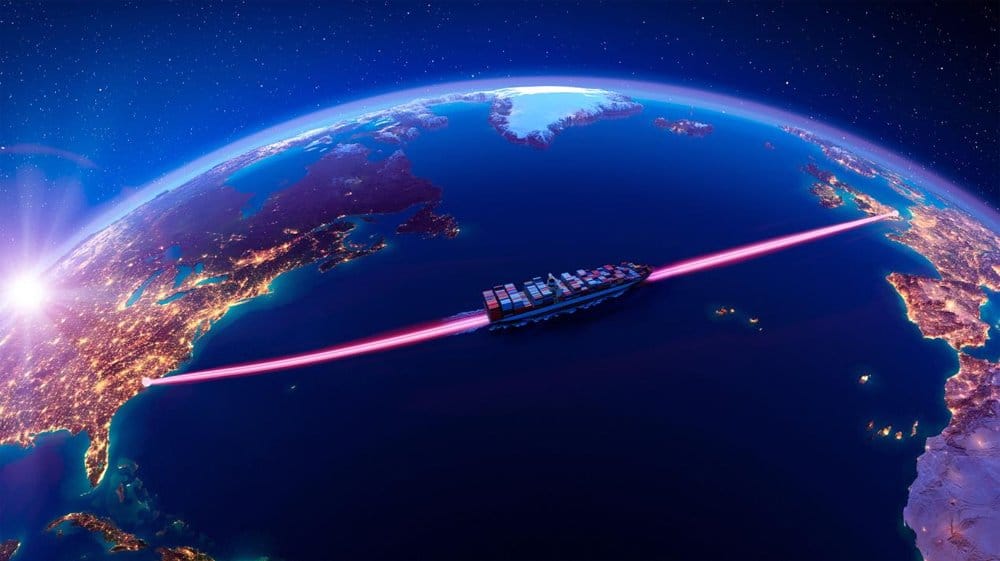
A new project focusing on the challenges of developing a so-called “pink corridor” for nuclear-powered transatlantic container shipping is taking shape. It will be led by Lloyd’s Register and A.P. Moller - Maersk working with the ports of Charleston, South Carolina, and Felixstowe in the UK to examine the security and safeguarding requirements for the theoretical deployment of a nuclear-powered containership route.
It comes as the prospects of nuclear-powered commercial shipping continue to entice the industry and regulators. Earlier forays into nuclear power for commercial shipping failed to gain traction in the 1950s and early 1960s other than the U.S. demonstration project Atoms for Peace that resulted in the passenger-cargo ship NS Savannah. Japan experimented with nuclear propulsion and the Soviets built a ship, Sevmorput, that remains active, as the industry is reawakening to the potential from a new generation of small nuclear reactors.
Last week, US Secretary for Transportation Sean Duffy posted, highlighting the potential for nuclear propulsion. It came as the US Maritime Administration signed a new agreement with UK-based Core Power’ that envisioned a fleet of 50 nuclear-powered merchant vessels. MARAD also announced agreements with the Port of Long Beach, California, and the Port of Corpus Christi, Texas, to explore nuclear projects.
According to the organizers, the Pink Corridor aims to provide a structured basis for collaboration, helping stakeholders understand the practical requirements, gaps and future work needed before any potential nuclear maritime corridor could be considered. Centered on a conceptual nuclear-powered container ship, the Pink Corridor will examine the requirements for theoretical port access on the specified route. Lloyd’s, Maersk, and the ports will focus on key areas including ship security, safeguards, cyber resilience, emergency response, insurance regimes, and alignment between maritime and nuclear regulatory expectations.
Nick Gross, Global Containerships Segment Director, LR, highlights they are taking a practical, collaborative approach to explore the issues. “The partnership brings together industry-leading players across shipping, ports and classification, reflecting the growing interest in nuclear technology as a route to more sustainable maritime operations,” says Gross.
The work is expected to support broader maritime development under the US-UK Technology Prosperity Deal and its bilateral commitment to explore civil maritime nuclear applications, including the potential creation of a shipping corridor between the two nations.

that matters most
Get the latest maritime news delivered to your inbox daily.
The collaboration also builds on LR and Core Power’s 2024 regulatory assessment study, which was formalized with Maersk through a joint development project exploring the safety, operational, and regulatory requirements for applying advanced nuclear power to container shipping.
The outcomes of the initial phase of the Pink Corridor project will inform the scope of a potential second phase, including areas requiring further study across engineering, regulatory, legislative, security and safeguards frameworks for nuclear merchant ships.
