


Your Papers, Please - The Shadow Fleet Comes Out of Hiding
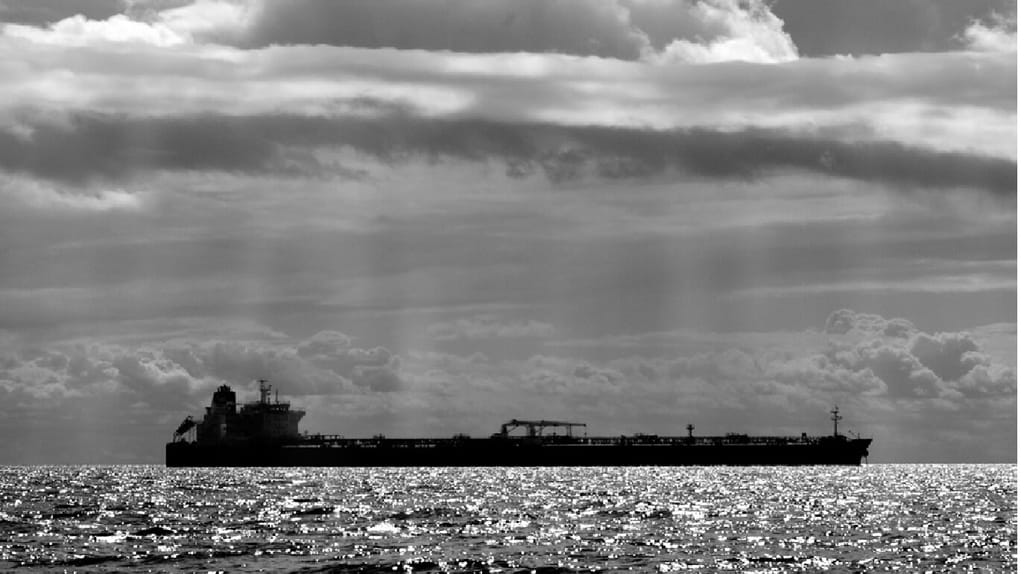
(Article originally published in July/Aug 2026 edition.)
What about the Phoenix? Or should I call her the Pacific Apollo, Virgo Sun, P. Fos, Odysseus, Varuna, Kiwala, Pushpa or Boracay? She's been flagged around the world – in Hong Kong, Liberia, the Marshall Islands, St. Kitts & Nevis, landlocked Mongolia, Gabon, Djibouti and, finally, Russia.
"A foolish consistency is the hobgoblin of little minds," said Ralph Waldo Emerson. He would be impressed: no hobgoblins in shipping!
Phoenix has had a rough life. French commandos boarded her. A limpet mine was stuck to her. She was detained in Estonia. She was implicated in drone incursions near Copenhagen airport. She then flew the flag of Benin, where she was never registered.
All this excitement sounds more appropriate for a warship than a merchant vessel. Are the stories all true? It doesn't matter. Phoenix is a symbol, and for that they're true enough.
Today, Phoenix is in a happy marriage with the Russian flag. She wasn't single for long. Three quick months after being released from de facto French detention in Saint-Nazaire in October 2025, she made her filings and by January 2026, she was under new colors.
THE WHITE, BLUE AND RED
She's not alone. According to Windward, an AI-powered maritime compliance and risk optimization company, she's joined by 68 other tankers. In the past eight months, they all left their old flags behind for Russia's white, blue and red.
At least she won't be boarded – or so the logic goes. Article 110 of the U.N. Convention on the Law of the Sea permits a warship to board suspected stateless ships, which includes ships hoisting false flags. But a Russian ship flying Russian colors can't be accused of that. That's one reason why the "shadow fleet" is embracing the daylight.
The other reasons? It's easier. It's more profitable. It's less risky.
Dozens of ships registered under the Russian flag last year, swelling its numbers by 25 percent, according to Clarksons. Many of the new registrants were sanctioned ships formerly using permissive registries, like Phoenix. When these registries were pressured by Western enforcers, the shadow fleet ships were cut loose.
Then they sailed as stateless vessels which are, as we saw, subject to boarding by commandos. To end this vulnerability at sea, reflagging to the Russian flag – the last one still standing – makes sense, especially since Russia provides naval escorts for its merchant ships. This ranges from SU-35 fighter jet overflights to Russian frigates like Admiral Grigorovich, reportedly escorting tankers through the English Channel and firing warning shots at a British yacht.
St. Petersburg, where the Russian Maritime Register of Shipping is located, offers these ships a home and access to state-sponsored insurance. Sovcomflot, Russia's government-controlled shipping company, owns roughly half of the vessels returning to the Motherland, so commercial and governmental logic have converged.
After years of war, the world has sorted itself into Russian-aligned or neutral powers who are willing to risk the opprobrium of the West. These interests would rather deal with a real flag with real papers. The strategic advantage of living in grey, in-between spaces is fading.
"SHADOW FLEET"
I don't often pay a compliment to regulators. But in this case, they've gotten good at what they set out to do and they're achieving their objective.
As of April 23, 2026, 632 vessels have been designated by the E.U. as belonging to the "shadow fleet." The vessels have ended up on that list for any number of reasons: carrying military gear, stolen Ukrainian grain or Russian petroleum (outside of the price cap); manipulating their AIS transponders; hopping flags (like the Phoenix), or using so-called "phantom insurance," which is another way of saying fake protection and indemnity club insurance that lacks real coverage or benefits.
An example of just such an insurance "scheme" is Ro Marine AS, ostensibly a Norwegian insurer headquartered in Oslo. It was responsible for issuing certificates of coverage to 255 ships, of which 76 have since been tied to the shadow fleet.
In 2025, Norway charged the owner and management with forgery and operation of an illegal insurance business. Lloyd's of London, with characteristic restraint, commented that Ro Marine AS "has been reported in various news releases as having issued fake P&I insurance certificates related to (re)insurance for vessels."
The best way to track down "phantom insurance" has been the challenge-and-response system devised by the Shadow Fleet Expert Group, the Nordic-Baltic organization focused on countering illicit shipping operations in the regional waters of the Baltic and North Seas. It first met in Copenhagen in 2024.
By simply asking tankers making use of the high seas to disclose their insurance, bad actors can easily be sorted out. Any ships refusing or providing fake insurance were logged, and these logs were then shared among the fourteen Expert Group countries, which include heavy-hitters like France, Germany and the U.K.
In this way, the IMO numbers of the implicated ships found their way into E.U. databases. These then fed the sanctions lists, like the one mentioned above from April 23, 2026.
SANCTIONS
When the E.U. sanctions a vessel, it loses access to European ports and terminals, insurance and finance, brokerage, bunkering, ship chandlery, crew change assistance, even tugs. In Germany, it can trigger up to five years in jail to contravene these prohibitions. All this makes it impossible to operate economically in Europe and beyond.
But a Russian ship is a vessel with compliant registration flying the flag of a hostile sovereign power in international waters. That is tougher to interfere with. Boarding such a ship would be an act of war against a sovereign power, not a law enforcement measure.
As the scope of action narrows, it's worth glancing at the cost of all this to the West.
Windward, the maritime intelligence company, disclosed in March 2025 – its last year as a public company – that it earned $37.2 million of revenue from compliance. That calculates to a per-customer figure of about $170,000. If larger companies paid more and smaller companies paid less, it's enough to hurt.
Know Your Customer (KYC) and Anti-Money Laundering (AML) solutions aren't free, and they range across the entire maritime sector from terminals making sure they aren't docking a sanctioned ship to bunker companies trying not to sell fuel to the wrong buyer.
A lot can happen in four years. Since Russia invaded Ukraine in February of 2022, maritime commerce has rebuilt itself around a broad and deep set of restrictions. Both Russia and Europe have suffered even if, generally, Russia may have borne the brunt of it: Its military and security spending consumes 40 percent of its federal budget. Still, all that isn't enough, and there's no sign Russia is exhausting its ability to continue hostilities.
As far as sanctions are concerned, tightening the screw further risks snapping off the head rather than engaging the thread.
Greece delivered an example: It blocked the 21st sanctions package, proposed on June 9, 2026, arguing that it would destroy Dynagas, a company that operates 27 gas carriers including some ice-rated ones that serve the Yamal "megaproject," a Russian LNG facility in the frozen wildlands of Siberia.
Dynagas, as the Financial Times reported, carries Russian LNG and is not subject to sanctions. Dynacom, the sister company of Dynagas, has in the meantime operated profitably since 2023 by lawfully carrying Russian crude in conformity with price caps.
If the sanctions had gone through, the Greeks argued, those ships would have lost their value. They would have been sold off to non-Western actors willing to do business with Russia, or perhaps even to Sovcomflot – a windfall for Russia, a Greek loss.
YOUR PAPERS, PLEASE
As for Phoenix, as of this writing, her AIS reads "FOR ORDER," no questions asked. (Since this article was written for the magazine, Phoenix (IMO 9332810) is again under the Russian flag shuttling between Russia and China delivering crude oil.)

that matters most
Get the latest maritime news delivered to your inbox daily.
Erik Kravets, is a maritime lawyer, and frequent contributor to The Maritime Executive.
This article appeared in the July/August issue of The Maritime Executive. To read the latest edition of the magazine, go to The Maritime Executive July/August 2026 Ship Management edition. To subscribe to the magazine, please go to https://www.maritime-executive.com/subscribe.
The opinions expressed herein are the author's and not necessarily those of The Maritime Executive.
