
OSG Appeals Labor Ruling Over Separate Bargaining Units for Deck Officers
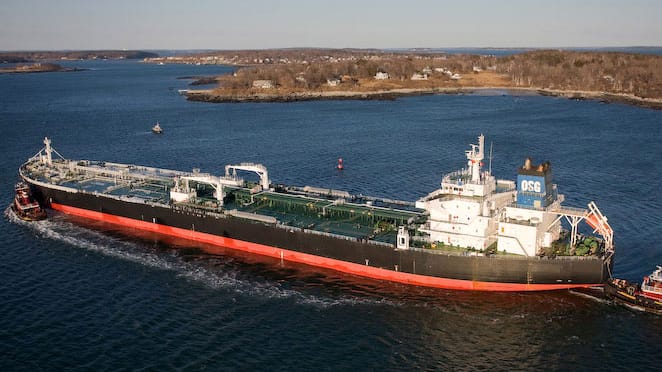
Overseas Shipholding Group and its affiliate Alaska Tanker Company are appealing recent decisions by the National Labor Relations Board on charges filed by the Masters, Mates & Pilots union. The case, which centers around recognition and composition of separate bargaining units for the two shipping companies' licensed deck officers, drew wide attention after the union issued a press release last week highlighting the NLRB decision.
In a statement to The Maritime Executive, OSG and ATC highlight that they respect the collective bargaining and representation process, noting that they have long-standing histories with several maritime unions, including the AMO, SIU, and MEBA. The companies note that they currently have nearly 800 unionized employees.
“The appeals are not to oppose union representation. We are appealing whether the bargaining units ordered by the NLRB are the legally appropriate units for the OSG and ATC fleet operations, including the interpretation of the supervisory responsibilities of chief mates under federal labor law,” explained OSG.
The appeal was filed in the United States Court of Appeals for the Eleventh Circuit. OSG’s lawyers assert that the order from the NLRB is “not supported by existing board law or substantial evidence, and that the board acted arbitrarily or otherwise erred in applying established law.”
The International Organization of the Masters, Mates & Pilots issued its statement highlighting the NLRB’s decisions in May and in August recognizing its rights and directing OSG and ATC to bargain in good faith with the union. It asserts that it involves representation for more than 125 licensed deck officers working as Chief, Second, and Third Mates aboard 17 U.S.-flag oil tankers. The union was emphasizing the companies’ participation in the U.S. Tanker Security Program, which is part of the broader operation that also consists of tankers, conventional and lightering ATBs, shuttle and conventional MR tankers, and non-Jones Act MR tankers.
The issue stems back to 2023 when the MM&P filed a demand for recognition as the exclusive bargaining authority for the Chief, Second, and Third Mates working on OSG and ATC tankers. It was put to a vote, and MM&P highlights that it received the majority of the votes (26 percent at ATC and 56 percent at OSG favored representation by the MM&P), while some voted for representation by the MEBA and some voted against the unions.
OSG has not commenced contract negotiations with the MM&P, questioning both the separate votes at OSG and ATC and the composition of the groups. The company asserts that Chief Mates are supervisors within the definitions in the labor act and should not be included in the collective bargaining agreement.
The NLRB in its decision, concluded that the companies “had not met the burden of establishing Chief Mates as supervisors” within the definitions in the labor acts. The board also agreed that the appropriate bargaining unit was composed only of employees of one company and not both.

that matters most
Get the latest maritime news delivered to your inbox daily.
MM&P had filed separate election petitions involving ATC vessels and another for the OSG vessels, meaning that the petitions proceeded on parallel tracks before the NLRB. The appeals were filed separately, but the NLRB, acting on behalf of all the parties, has now asked the 11th Circuit to consolidate the related cases so the overlapping issues may be reviewed together.
The MM&P continues to call for the companies to come to the bargaining table for a collective agreement for the licensed offices, excluding the captains on the tankers. OSG and ATC said that while the appellate review proceeds, they remain committed to lawful labor relations, safe and reliable vessel operations, and continuity in their day-to-day practices.
