
Icebreaker to Extract Macquarie Island Researchers Due to Bird Flu Fear
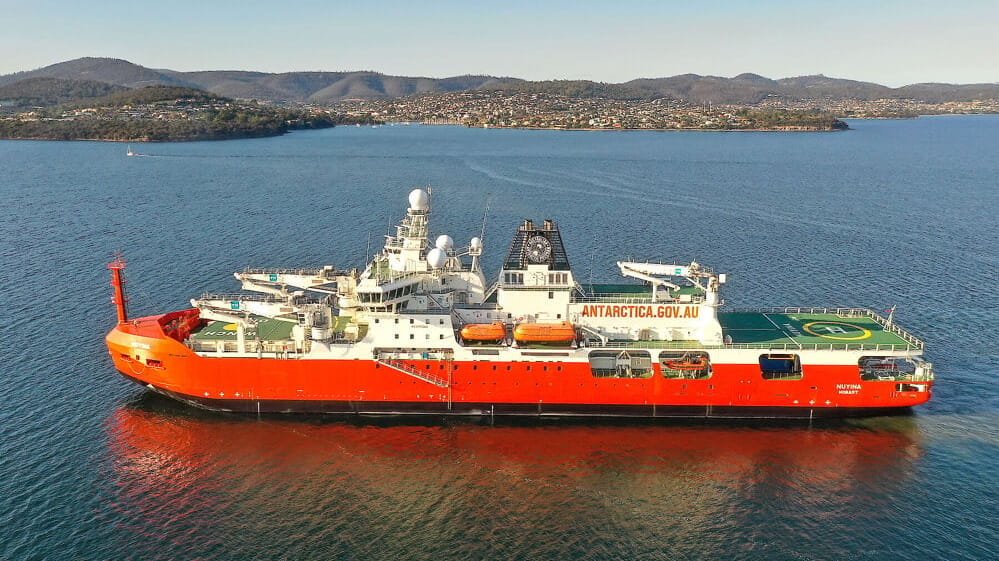
The Australian Antarctic Division (ADD) is preparing to dispatch its research vessel Nuyina to evacuate all the personnel at the Macquarie Island research station over the risk of a bird flu outbreak.
The Nuyina will sail to the island located in the Southern Ocean to extract the 24 expeditioners currently at the station after it became apparent they are facing the psychological risk of a potential H5 avian influenza (bird flu) outbreak. The station is located some 1,500 kilometers from Nuyina's home port in Hobart, Tasmania.
Apart from the expeditioners, the research vessel will also retrieve essential cargo because it remains unclear for how long the station will be vacated. ADD has only highlighted that it is exploring options for monitoring the situation on the island, hoping the expeditioners will return in the coming seasons.
Critically, this will mark the first time the station will stay without personnel since its establishment in 1948. The station is an important site for conservation, environmental, and climate research projects.
The Australian government contends that although bird flu has not yet been detected at the station, assessments are predicting a high likelihood of an outbreak due to the island being a wildlife sanctuary with up to four million seabirds and 100,000 seals.
The fears emerged after more than 13,000 seal pups died in the Australian territory of Heard Island and McDonald Islands in the summer. The H5 strain of bird flu was first detected on Heard Island late last year, and by June 2026, researchers said more than three-quarters of all pups were believed to have succumbed to the disease. Bird flu is a deadly disease for elephant seals, with a mortality rate of up to 90 percent.
Macquarie is currently free of the disease, but considering that thousands of elephant seals are born close to the station every spring, and because they are susceptible to bird flu, the decision was reached to extract the tradespeople, scientists, and support staff.
The government contends that while the disease’s risk to humans is considered low, the psychosocial risks of living near potentially large numbers of affected animals are unnecessary. The current team of 24 expeditioners has only been at Macquarie station for about five months, having started their year-long deployment in May.
“This is an unusual measure, but it's the most appropriate course of action based on our assessments of risk and operational realities,” said Sean Sullivan, Deputy Secretary at Australia’s Department of Climate Change, Energy, the Environment and Water.

that matters most
Get the latest maritime news delivered to your inbox daily.
The 525-foot icebreaker Nuyina is being dispatched to evacuate the personnel before it embarks on its scheduled program of Antarctica resupply operations in late October.
The mission to evacuate the expeditioners comes only weeks after ADD unveiled a major project to rebuild the Macquarie Island research station. The agency contends that due to the extreme weather on the island, many of the buildings are deteriorating and approaching the end of their useful life, necessitating a A$370 million (US$266.4 million) rebuild to allow for a continued year-round presence on the island. The project is expected to be completed by 2032.
