
Houthi's Unmanned Attack Boat Base Destroyed by Yemeni Forces
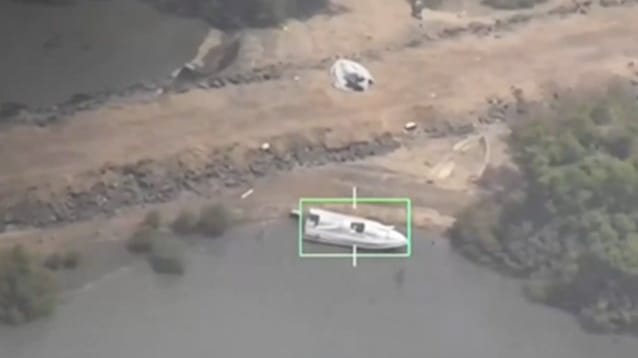
National Resistance Forces, fighting for the Internationally Recognized Government (IRG) in Yemen, destroyed a Tufan-1 unmanned attack boat at a Houthi naval outpost on the Yemeni Red Sea coast. The video of the drone attack appears to also show that another Tufan-1 and the Houthi naval outpost at the end of a causeway had already been destroyed in a previous attack.
The position of the Houthi outpost in the north of the coastal strip, which the Houthis hold, clearly indicates that the Tufan-1s were intended to be used against targets to the north, off the Saudi coast.
#?????
— ?????? ???????? ?????? ??????? ??????? (@Yem_army_media) August 30, 2026
?????? ??????? ??????? - ??????? ???????? ???? ????????.. ????? ???? ???? ????? ??? ?????? ????? ?? ????? ??????
*?????? ???????? ?????? ???????* pic.twitter.com/xDRAokU6kj
A Tufan-1 was used to attack the Greek-owned bulk carrier Transworld Navigator (IMO 9469924) on June 23, 2024. Despite a massive explosion, the Transworld Navigator remains in service, now sailing as the Bahamas-flagged Lonnie. The Tufan-1 had also been used by the Houthis in the attack carried out on June 12, 2024, against the Liberian-flagged bulk carrier MV Tutor (IMO 9942627), which eventually sank with the loss of one Filipino crew member.
Houthi propaganda videos show a Tufan-1 being steered towards a target by a two-man crew, who abandon their boat once the final target course is set and are recovered by an accompanying boat. The Tufan-1 is claimed to have a 150kg warhead with radio-controlled steerage, and a closing speed of 35 knots. The Houthis have a long history of building their own radio-controlled attack boats, and used one in January 2017 to attack the Royal Saudi Naval Force frigate HMS Al Madinah (F702), killing two Saudi sailors.
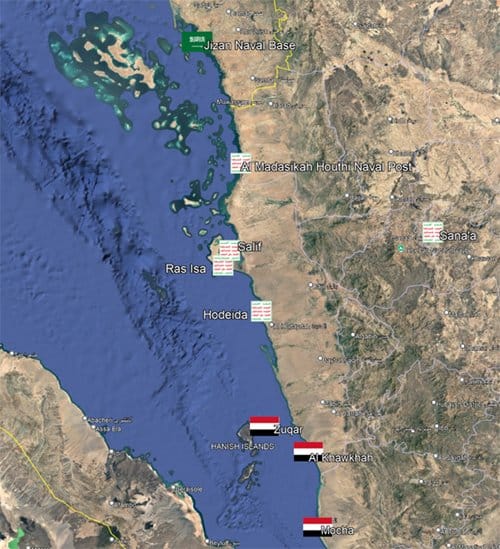
Location of Houthi ports and the Al Madasikah naval outpost (Google Earth/©CJRC)

that matters most
Get the latest maritime news delivered to your inbox daily.
In another incident earlier in the week, NRF naval forces intercepted a small dhow south of the Hanish Islands which had sailed north through the Bab el Mandeb on August 24. The dhow had on board a large quantity of Chinese and Iranian electrical components, sufficient for the manufacture of hundreds of drones, with associated radio-control equipment, along with documentation linking the consignment to the IRGC.
