


Germany Blocks COSCO’s Acquisition of Domestic Freight Company
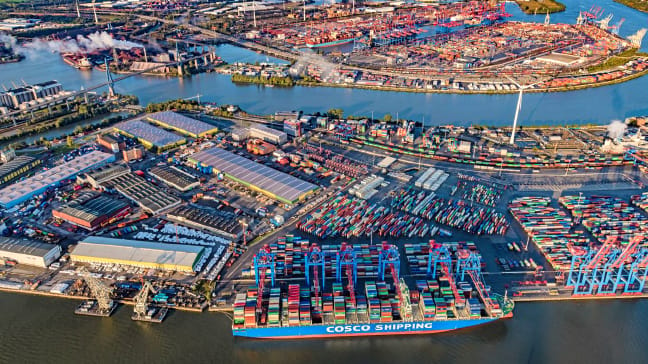
Germany’s federal government made official the decision to block the acquisition of a domestic freight forwarder and logistics company by the Chinese state-controlled COSCO Group. Political opposition had been mounting against the deal, with reports saying it demonstrates an emerging hardline against Chinese investments in Germany and Europe.
COSCO had announced in January 2026 plans to acquire an 80 percent stake in the German freight company Konrad Zippel. A domestic freight and logistics company that dates back to 1876, reports said it plays a key role in moving cargo between the Port of Hamburg and inland, especially into the eastern regions of Germany. It has a fleet of more than 200 trucks and also handles a range of intermodal transport, including by rail.
The two managing directors of Zippel had agreed to sell 80 percent of the company to a COSCO affiliate. One managing director was to retain 20 percent ownership and continue in a management role, while the other was selling all his shares and leaving the company.
The Federal Cartel Office cleared the deal weeks later, reporting that it did not find concerns based on competition law. It said there was no risk of a dominant market position being established in freight transport, but it does not oversee the broader issues of foreign investment.
Concerns began to emerge over the acquisition after the Federal Office for the Protection of the Constitution voiced fears about foreign investments. By September, however, it became clear that the Ministry for Economic Affairs, the Foreign Office, and the Ministry of Defense were all expressing economic and security concerns over the sale of Zippel to a Chinese state company. It was highlighted that Zippel provides logistical support to NATO and the German Armed Forces.
The Federal Ministry for Economic Affairs announced on Wednesday, October 7, that the Bundestag (the federal parliament) had officially voted to reject the sale. The Ministry reported the decision, saying concerns had been raised about security and dangers to German and European supply chains.
“The acquisition would have deepened dependencies and jeopardized the resilience of supply chains in Germany and the EU," the Ministry told the Financial Times.
Media reports indicate that Germany has only rejected eight foreign investment deals. It is said to review more than 300 each year.
It also represents a tightening of the government’s position toward China. Four years ago, COSCO announced plans to invest in Tollerport, one of the container terminal operators in the Port of Hamburg. The deal sparked strong debate in the German government. It finally decided to permit COSCO to acquire up to 25 percent of the terminal operator, limiting the larger investment of 35 percent that COSCO had sought.

that matters most
Get the latest maritime news delivered to your inbox daily.
German Chancellor Friedrich Merz, the Financial Times highlights, has taken a more aggressive position against China and foreign investment since taking office in May 2025. The paper says Germany has been seeking to counter the influx of Chinese electric vehicles and cheap steel, which is hurting German companies and exports. Germany was also caught in the Chinese embargo on the export of some rare earth minerals, which reportedly impacted German car manufacturing because of shortages.
Neither COSCO nor the Chinese Embassy responded to a request for a comment from The Financial Times.
