
France Successfully Refloats Grounded Bulker on First Try
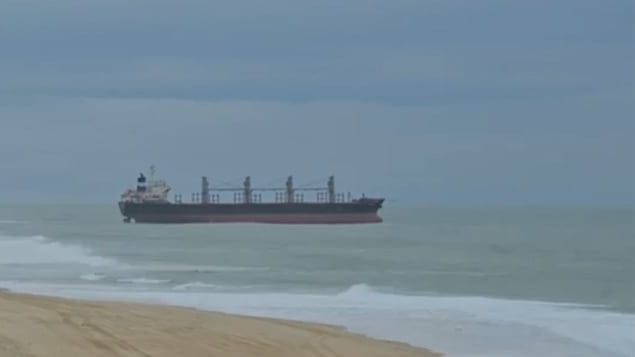
After days of preparation and a complex operation, French authorities reported the grounded bulker Miro G was refloated with no apparent damage to the environment. Previously, the authorities had said that because the ship went aground during a storm high tide and was high on the beach, it might have to be dismantled where it sat.
The Greek-owned bulker Miro G (28,200 dwt) had offloaded its cargo in Spain earlier in the month and was heading toward Rouen, France. On Thursday, November 19, it had told the French authorities that it was having difficulties maneuvering in a strong storm in the Bay of Biscay. Reports indicate wind speeds were persistent at 26 knots, with gusts up to 48 knots, while the waves were running 4 to 6 meters (13 to 20 feet). The ship went ashore overnight, and French forces airlifted 19 of the crewmembers from the ship, fearing it could capsize on the beach.
An initial survey showed no damage to the 169-meter (554-foot) vessel registered in Malta. Initially, the team had added ballast to stabilize the ship, which was being hit by the surf from the storm. Over the weekend, the decision was made to fully evacuate the ship as the storms continued.
The prefect’s office reported the weather had improved, and a decision was made to attempt to pull the vessel free on Tuesday afternoon’s high tide. The team had to be airlifted by helicopter to the vessel. They used an auxiliary generator, which had been airlifted to the ship, to run pumps in a de-ballasting operation.
?? Succès de l’opération de déséchouement du MIRO G ! Après plusieurs jours de mobilisation, l'opération de déséchouement du cargo MIRO G a abouti avec succès. Cette opération délicate a été conduite en parfaite coordination avec la @Prefecture40 dans le respect de la sécurité et de la protection de l’environnement marin et du littoral. Un vol de Falcon 50 de la @MarineNationale a pu confirmer qu’aucune pollution n'est présente dans la zone de l’échouement et autour du navire. ?? https://t.co/7iKsWPQs1O
— Préfecture maritime et commandement en chef ATLANT (@premar_ceclant) November 24, 2026
Jet skis and a rescue boat were used to help secure a 1,900-meter Kevlar cable between the ship and the tugboat Abeille Bretagne, which is under contract to the French government for salvage and support operations. Today, the authorities also contracted with private fishing boats and had them standing by with anti-pollution gear, as they would have been able to approach the shore if necessary.
A large spectator gallery formed on the beach to watch the complex operation. Around 3:00 p.m. local time, the towline grew taut, and the tug accelerated. The operation had begun about one hour before high tide, with officials noting the tide was at a maximum these days, about as much as a meter above when the vessel went aground last week.
Reports were that the Miro G started to move. Within about 15 minutes, the tug had maneuvered the cargo ship back into the water, and 40 minutes after the operation began, the ship was floating and being moved away by tugs. A Navy plane did a survey of the area and reported no visible pollution. The plan called for divers to make a full inspection of the hull, and the ship was being brought into a port for further inspections.
that matters most
Get the latest maritime news delivered to your inbox daily.
The prefect described the refloating to the local media as “a very fine operation.” The first deputy mayor of Lit-et-Mixe told the media she was very relieved to see the vessel back afloat and away from the beach.
The authorities said they only had until Thursday to refloat the vessel to take advantage of the peak high tides.