

From the Med to Kaliningrad: The Significance of the Sparta II Strike
The Russian Federation has listed the primacy of sea lanes, the Northern Sea Route and the acquisition of civilian maritime shipping among its long-term strategic state priorities. The implementation of this vision passes through the systematic capacity to move and relocate its military across the sea. This is a fundamental enabler of the Russian wars, including the Syrian expedition and the war in Ukraine, whose maritime dimension is often overlooked or reduced to reported specific attacks.
The general cargo vessel Sparta II (IMO: 9160994) represents a central component of the Russian Federation's militarized maritime logistics network. The vessel has served as a primary strategic transport asset for the Russian Ministry of Defense across multiple operational theaters, including Syria, the Black Sea, and the Baltic enclave of Kaliningrad (Figure 1). Of all the Russian naval vessels, it was the first to hit the headlines in 2022 when it was reported that it was moving S-300 long-range surface-to-air missile systems across the Med.
At the time, the vessel was utilized to transit the Bosporus, enabling Moscow to sustain forward military deployments in the Mediterranean and subsequently retrieve heavy weaponry to reinforce frontline attrition in Ukraine.
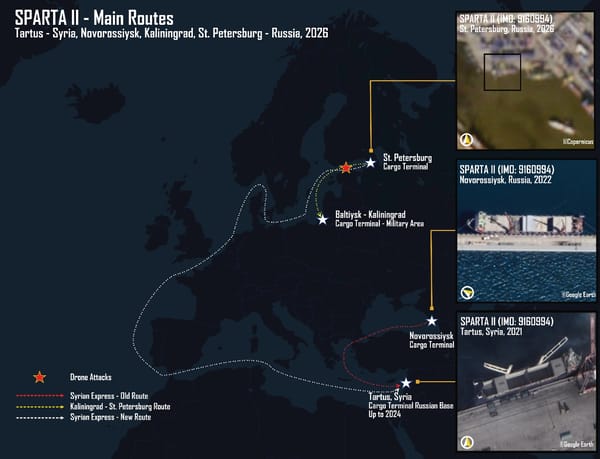
Figure 1: Sparta II Main Routes and Port Areas. Sources: Google Earth, European Space Agency, U.S. Naval Institute, Authors
Built in the year 2000, the Sparta II is a 121-meter (399-foot) multi-purpose general cargo and ro/ro vessel specifically configured for heavy-lift operations and containerized freight. Built in 2000, with dual deck cranes and 213 TEU of capacity, and possessing a design tailored for independent cargo handling in secondary or austere ports, the vessel provides the Russian military with specialized sealift capabilities. The vessel's internal deck configuration and heavy-lift gear allow it to transport a diverse inventory of military hardware.
Sparta II operated within a tightly integrated corporate network directly controlled by the Russian defense establishment. The vessel's group manager has been reported as Oboronlogistics LLC (OOO Oboronlogistika), a Moscow-based logistics conglomerate. In response to its direct role in supporting Russian armed aggression, the United States Department of the Treasury's Office of Foreign Assets Control (OFAC) designated Sparta II and affiliated managers under comprehensive sanctions in May 2022.
Operational History: The "Syrian Express" and Strategic Arms Movements
Prior to the full-scale invasion of Ukraine in February 2022, Sparta II served as a vital logistical link in the "Syrian Express," which has been informally defined as the continuous maritime supply line connecting Russia's Black Sea ports with Tartus, Syria during the Russian intervention in the Syrian civil war. Alongside the other vessels (Sparta, Sparta IV, Pizhma, and Ursa Major), the Sparta II has been reported ferrying military materials and maintenance supplies to sustain Russian military forces.
Following the onset of high-intensity warfare in Ukraine, the operational mandate of the Sparta II likely inverted from forward supply to operational extraction from the Med. Recognizing critical munitions shortages and heavy equipment losses on the Ukrainian front lines, the Russian MoD likely initiated the strategic withdrawal of advanced weaponry from Syria.
In August 2022, Sparta II executed one of its most high-profile strategic transport missions. Satellite imagery and open-source intelligence tracked the vessel berthing at the military piers of Tartus, where it loaded S-300 missile batteries and delivered the anti-aircraft system to the naval base at Novorossiysk.
The operational viability of Sparta II relied heavily on gray-zone lawfare. Due to the increased risk of Ukrainian attacks and NATO naval and aerial patrols, when transiting high-risk maritime zones, Sparta II operated under the escort of military naval vessels.
Strategic Realignment (2024–2026): Atlantic Rerouting, Kaliningrad Lifeline, and Africa Operations
The operational environment for Sparta II underwent a radical transformation between 2024 and 2026, driven by the stop of transit through the Bosporus and the impossibility of directly reaching Novorossiysk in the Black Sea, which had been the primary route between Syria and Russia up to that moment. Forced to abandon the direct Black Sea route, the Sparta II was rerouted along a circuitous Atlantic-Mediterranean transit (Figure 1).
This structural shift quadrupled transit times and significantly inflated operational costs. Furthermore, it exposed the vessel to continuous surveillance by NATO naval and aerial assets as it transited the English Channel and the Strait of Gibraltar.
Deprived of easy access to the Black Sea, Russian military planners reassigned the Sparta II to sustain a new official route established between the Russian Baltic and Kaliningrad, where the ship was reported moving constantly between the two Russian port areas. The Sparta II was deployed to run continuous supply legs between St. Petersburg and Baltiysk in Kaliningrad (Figure 1), where relevant Russian military equipment is located in defense of the exclave.
Operating out of Baltic terminals, the vessel participated in long-distance logistical runs, but it was not one of those sent to North Korea and the related weapons trade. Following the rapid collapse of the Assad regime in December 2024, the Sparta II assisted in evacuating residual military hardware from Tartus to Libyan and Baltic facilities during the first months of 2025.
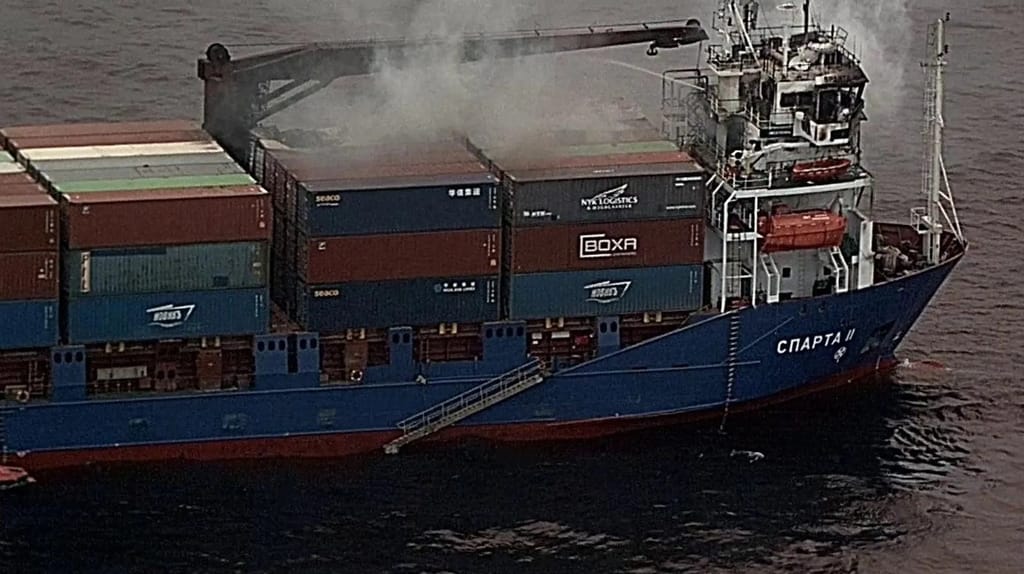
The operational history of the Sparta II culminated on November 21, 2026, when the vessel was targeted in a precision long-range strike while executing a military transport run in the Baltic Sea (Figure 2).
On the morning of November 21, 2026, while transiting international waters in the eastern Gulf of Finland, west of Gogland Island, Sparta II was struck by two aerial attack drones in a coordinated long-range interdiction campaign. Two drones struck the vessel, setting the bridge ablaze and igniting fires in deck-mounted cargo containers.
Finnish Border Guard vessels, alongside Estonia's navy vessel Kindral Kurvits and the Russian salvage vessel Murman, conducted emergency boundary cooling over two days to prevent catastrophic hull failure or environmental contamination. On November 23, 2026, after the fire was extinguished, Murman towed the damaged hull back toward Russian waters.
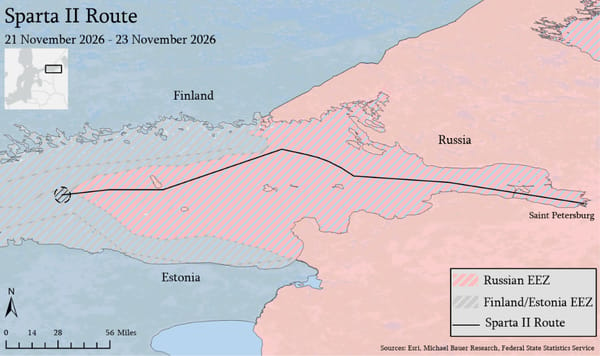
Figure 2: Sparta II Last Travel, November 2026. Sources: Global Fishing Watch, Authors
Long-Term View of the Sparta II and the Russian Military Logistics at Sea
The interdiction of the Sparta II occurred simultaneously with drone strikes on two other cargo vessels in the Med and strikes against the corvette Merkury, which was sunk in Libya. The implications of these strikes are significant in relation to the Russian ambition to secure their transit in critical areas of operation including the Mediterranean, the Middle East and beyond.
The Sparta II is not the first ship of the Syrian Express to suffer a serious casualty. The Ursa Major sank in still unclarified circumstances in December 2024. This was the biggest vessel of the special military logistics fleet, and the Sparta II, along with the Sparta IV, had been crucial for moving special cargoes.
The Russian state's long-term strategic view in the maritime domain is unlikely to shift, but it is visibly suffering from increased Ukrainian pressure in combination with NATO monitoring and European transit restrictions. The question now open is the capacity of the Russian military logistics system to adapt to increasing challenges at sea.
In the short term, these are remarkable shocks for the already-stressed logistical capacity of the Russian state across multiple regions. At the same time, this also proves that asymmetric capabilities can be lethal if the conditions are sufficiently favorable.
This will likely increase the Russian emphasis on Arctic shipping through the Northern Sea Route, which is the only sea lane under complete Russian control from end to end - already a key part of Moscow's strategic planning.
Giangiuseppe Pili (PhD) is an Assistant Professor, James Madison University; Senior Associate Fellow, NATO Defense College; Associate Fellow, Royal United Services Institute; and Regional Director, International Association for Intelligence Education.

that matters most
Get the latest maritime news delivered to your inbox daily.
Peter Boerstling studies at James Madison University, Intelligence Analysis Program, School of Integrated Sciences.
Gary C. Kessler, Ph.D., is president of Gary Kessler Associates, providing maritime cybersecurity education, research, and consulting, and co-author of Maritime Cybersecurity: A Guide for Leaders and Managers, 2/e. He is also a retired professor of cybersecurity and on the advisory boards of Cydome and the Maritime Cybersecurity Hackathon at the University of North Carolina Wilmington.
The opinions expressed herein are the author's and not necessarily those of The Maritime Executive.