


Converting PSVs for Expedition Cruising Creates Compelling Business Model
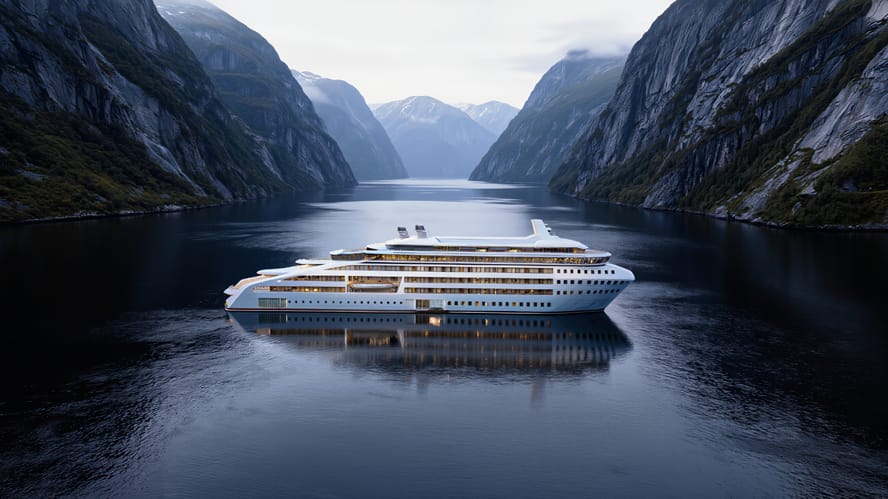
Architect and yacht designer Stefano Pastrovich has developed a novel concept that he believes can create a compelling business model and entry for boutique operators into the luxury exploration cruise market and private charters. He has developed studies for the conversion of existing platform supply vessels or fast supply vessels to create boutique luxury expedition cruise ships at a fraction of the cost and time of a newbuild.
“Conversions can be a very interesting way to start a business model that works, and to keep it going,” says Stefano Pastrovich. Explain the rationale for the PSV conversion, he says it can be a way to enter the market not only as an operator but also as an owner of a ship with a tailored product for smaller companies without the financial resources and depth of organization of the major cruise lines. He says these smaller operations “might also want to test this market with a limited budget and delivery time before deciding to start a newbuild from scratch.”
A graduate in architecture who studied in Genoa and Seville, Pastrovich designs luxury yachts and superyachts as well as specialized vessels. In the commercial sector, he points to the success of a conversion carried out for Schmidt Ocean Institute, which wanted to build a new research vessel. He said the cost of a newbuild was daunting for the foundation, so he instead designed the conversion of an existing ship into Falkor, a research vessel, which sailed for 11 years. The conversion proved so successful that the institute replaced the vessel with Falkor (too), which was also based on a conversion.
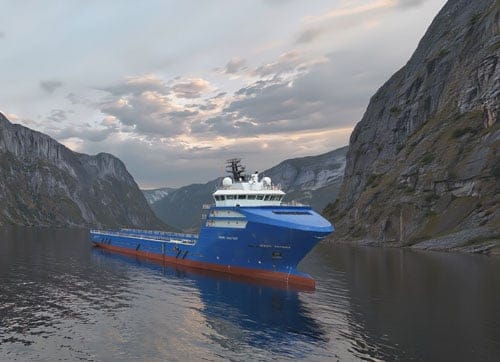
The project explores using platform supply vessels as the basis for the conversion
The concept for using PSVs as the basis for boutique explorer yachts or cruise ships started in 2015 with the downturn in the offshore sector supporting the oil and gas industry. A Norwegian shipowner asked Pastrovich to come up with a second life for two idle 88-meter (289-foot) PSVs.
Pastrovich designed a 30-guest option that would provide the experience of a superyacht. While the project did not proceed, it sparked the idea and led to the development of a 64-passenger version and a 116-passenger expedition cruise ship. Working with naval architects at Meccano Engineering, technical specifications have been developed for the conversion concepts. They had six shipyards quote the project for the 116-passenger version.
Expedition cruising is one of the fastest-growing segments of the cruise industry. Recently, crossover is developing with the ultra-luxury segment. Pastrovich believes the conversion could create an expedition cruise vessel, with layouts for 116, 108, or 60 passengers, that provides a strong model for boutique operators.
Unlike converting old ferries, which he found too big and complicated to rebuild, Pastrovich says PSVs provide a strong platform. He highlights that the backend of the ship is open “like a pickup truck,” which can be filled with a new piece of superstructure. A 36-passenger charter yacht would be based on a 70-meter supply vessel, while for the larger capacity vessels, the base would be 88- or 100-meter PSVs.
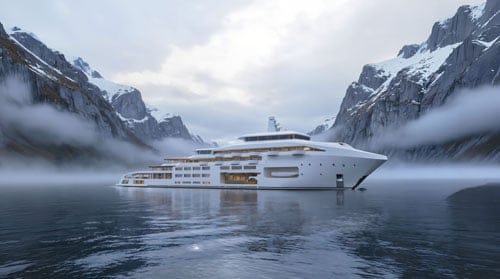
Concept for a luxury 64-passenger exploration cruise ship
He notes that supply vessels have a higher tonnage because they are conceived to carry very heavy loads and, as such, have deep hulls with a large draft that would support the conversion. He prefers the small vessels, which he notes could be lengthened, but where less of the volume is below the main deck. Pastrovich says the tanks in the hull are removed to create space for the interiors.
The hull, propulsion, and dynamic position capabilities remain intact in the conversion. The original designs were for vessels with station-keeping, redundancy, and long periods at sea, all of which would be a good platform for the conversion to passenger operations. The engineering goes into addressing the hotel load and adding fixed ballast to restore stability and address the new superstructure created in the conversion.
Economically, Pastrovich says the strong target today is for 36 guests as a charter vessel in the superyacht or boutique expedition segment. He notes that guests are already paying upwards of €2,800 per person per day and that demand is very strong in the segment. The 64- and 116-passenger versions follow the same logic and raise the profit margin.
The studies indicated that the 116-passenger version is “still very interesting,” says Pastrovich. He points to the economic commitment and benefits of delivery time. He highlights that when they had shipyards quote the 116-passenger versions some years ago, “the figures were extremely affordable compared with a newbuild.”
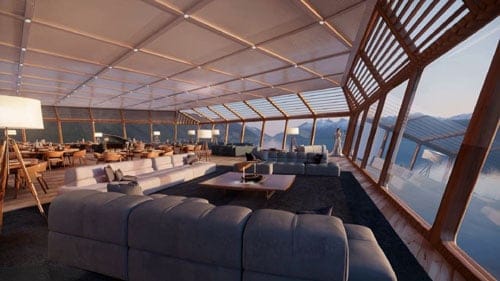
Lounge space aboard a converted PSV into a 64-passenger exploration cruise ship

that matters most
Get the latest maritime news delivered to your inbox daily.
He points to “the large difference in delivery time and in the starting budget” as the benefits of pursuing the conversion. The study estimated 14 to 20 months from yard entry to delivery, with less capital exposed and less technical risk. The hotel and amenities could be built as a block off-ship at the same time as the vessel is being prepared, and placed aboard as an assembly to speed the conversion process.
The product, says Pastrovich, “would not be a cosmetic refit, but a coherent fusion of engineering, architecture, hospitality, and operations.” It remains to be seen if any of the boutique operators will adopt this unique route to entering the hot market for expedition cruising and charter yachting.
