


What Does the Mideast Crisis Mean for Ports and Cargo Owners?
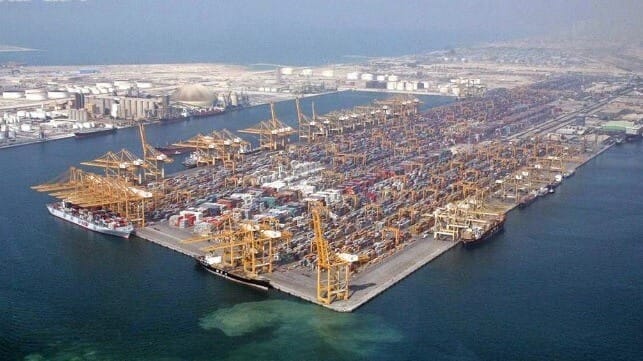
The war with Iran has reached critical levels with an increase in direct attacks on commercial container vessels. As of March 11 2026, three container vessels had been hit by “unknown projectiles”.
A Thai-flagged commercial vessel was hit 11 nautical miles north of Oman, causing a fire on board, a Japan-flagged commercial vessel sustained minor damage after it was struck about25 nautical miles off the United Arab Emirates' coast, and a third commercial vessel was hit about 50 nautical miles northwest of Dubai.
This will inevitably lead to a considerable strain on the supply chain worldwide.
A number of the significant containership operators have issued notices to cargo owners advising them that they intend to treat the carriage as terminated and that they will take steps to drop the cargo at a nearby port.
So what happens when those goods are dropped at a "nearby" port? It is questionable as to what is deemed as a safe nearby port, with suggestions that some operators are effectively dropping off containers with no justification or rationale as to the choice of port the containers are dropped off.
However, aside from the obvious concerns with containers and goods being scattered around the region in less than ideal locations, there are additional factors that will impact ports and terminals.
The global message is that the majority of ports remain open. However, there are of course exceptions in UAE, Bahrain, Oman and Saudi Arabia, of which some ports have advised that operations are suspended and others reporting significant delays.
There are already signs that ports will begin to experience "vessel bunching" as vessels are taking alternative routes and unplanned drop-offs at ports. In particular, port hubs such as Singapore and Rotterdam are already reporting that they are feeling the strain as those hubs absorb redirected cargo.
The increase in container traffic at particular ports is likely to lead to delays in unloading vessels, increased labor costs and a lack of suitable storage at ports. It is highly likely that this, in turn, will lead to an increase in claims for the loss and/or damage to cargo sat on the quayside - particularly where the ports are unable to provide adequate storage.
Whether those losses are recoverable from vessel owners will depend on what contractual terms have been agreed between the vessel owners and the shippers. Similarly, whether those losses are recoverable under a cargo policy will depend on what cover has been provided. Many claims are likely to be for losses due to delay which is, however, an excluded peril under the ICC(A) (see clause 4.5).

that matters most
Get the latest maritime news delivered to your inbox daily.
There are also likely to be claims from the ports and terminals themselves. Most ports and terminals will be insured through the local market so it will depend on what regional cover has been issued.
Shaan Burton is a Partner at the London office of global law firm Kennedys. This guidance appears courtesy of Kennedys and may be found in its original form here.
The opinions expressed herein are the author's and not necessarily those of The Maritime Executive.
