


Regulatory and Liability Challenges to Unlocking Nuclear Power for Maritime
2025 was a challenging year for the maritime industry’s decarbonization efforts. Reports at the beginning of the year highlighted that despite an acceleration in the industry’s engagement in low-carbon clean technologies, international shipping emissions were said to have largely returned to 2008 levels. Positive signals came early in January with the introduction of FuelEU Maritime (FEUM), which represents one of the most comprehensive pieces of regional emissions legislation to date, and which seeks to incentivize the integration of low-carbon alternative fuels.
FEUM was quickly followed by the unveiling of the IMO’s proposed Net Zero Framework, which represented a watershed moment in unifying previously fragmented regional emissions regulation in place of one codified global framework. However, following the framework’s delay as a result of the Marine Environment Protection Committee (MEPC’s) extraordinary meeting in October, shipping must continue to contend with pervading regulatory uncertainty, whilst having to navigate a patchwork of regional regulations.
Despite this uncertainty, the maritime industry remains committed to achieving the IMO’s 2050 net-zero target. It is within this context that the potential of nuclear technologies has gained significant traction in their marine deployment. In a recent technical report, titled Maritime Nuclear Development, Bureau Veritas Marine & Offshore (BV) details how technical viability, combined with significant technological improvements the new generation of reactors (Gen.IV) could lead to the first Small Modular Reactors (SMRs) being deployed in maritime applications from as early as the mid-2030s, beginning with near-shore operations at national-level projects, before wider international adoption, with the first nuclear-propelled pilot vessels (featuring Gen.IV technology) and commencement of full deployment by 2045.
Small is mighty
The development of SMR technology, which includes the Gen.IV — also known as Advanced Modular Reactors (AMRs) — is a watershed moment for marine deployment, including nuclear propulsion. These reactors are described as small (between 15 and 300 MWe per unit) and intended to be built in series in dedicated manufacturing plants and then transported (unfuelled) to shipyards ready for integration into assets. AMR designs include high-temperature gas reactors, molten-salt reactors, and liquid-metal reactors.
Notwithstanding their significant power capacity, one of the most notable features of AMRs, which greatly enhances their commercial potential, is their inherent safety characteristics. Widespread market skepticism of nuclear technology, including wider public concerns, is driven by the perception of the risk it poses in the event of an incident. However, Generation IV SMR technology’s passive safety design characteristics can improve such perception. Due to the new fuels and coolants that are used within the reactors, SMRs use natural phenomena to protect the reactor’s core integrity. These passive safety characteristics allow the systems to shut down without the need for external power, or human intervention, ensuring a “walk-away-safe” state during emergencies.
These safety characteristics also extend to the shoreside by theoretically requiring a much smaller emergency planning zone (EPZ) compared to water-cooler reactors. EPZs are designated areas surrounding a nuclear reactor which must have emergency plans, including evacuation and iodine tablets handouts, in the event of an incident.
Historically, the traditional application of EPZs definition criteria has represented a fundamental challenge when it comes to integrating nuclear technology into ships, both from a commercial, regulatory and operational perspective, as well as in public opinion. The itinerant operational profile of commercial shipping means that nuclear powered vessels, when such interpretation of EPZs is applied on a vessel reactor, result in unacceptable constraints to commercial ports.
This barrier is not one of technological immaturity but of a need for an update of the requisite insurance and liabilities provisions. The International Maritime Organization’s (IMO) SOLAS Code of Safety for Nuclear Merchant Ships is based solely on Pressurized Water Reactors (PWR), currently used in nuclear State navies, and is stuck in the 1980s context, when it was ratified. Further complexity is found in the lack of harmonized regulatory frameworks to govern the use of nuclear propulsion technologies in commercial maritime operations.
Regulatory realignment is key to securing nuclear ambition
The regulatory landscape that governs nuclear propulsion technology remains significantly fragmented. Nuclear regulation is at the national level/jurisdiction, while maritime regulation is at the international level. This fragmentation has led to a need to align various regulatory frameworks to allow for civil applications in order to resolve the issue of multiple conflicting jurisdictions that nuclear vessels will have to cross.
To secure the significant potential that modern nuclear propulsion technology represents, clear liability provisions must be established which are supported by coherent and codified regulatory structures.
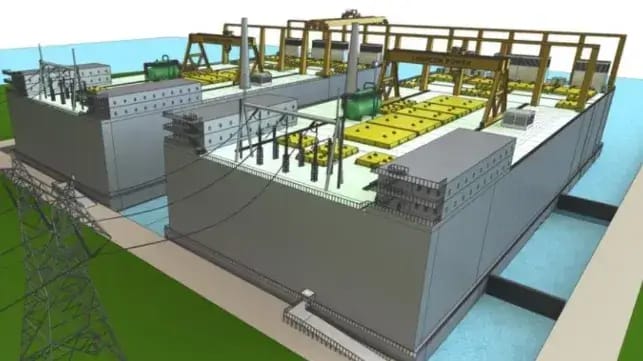
The 1962 Brussels Conventions, which sought to establish a liability framework for nuclear-powered ships never entered into force (due to the lack of ratifying number of countries), whereas existing nuclear guides from the IAEA – namely the Standard Series SSR6 Regulations for the Safe Transport of Radioactive Material – do not provide for the transportation of nuclear reactors once they have been fuelled. This establishes a clear regulatory gap regarding the transport of non-propelled nuclear civil units such as floating nuclear power plants (FNPP).
Furthermore, the IMO’s 1981 Nuclear Ship Code is the key instrument that governs the deployment of nuclear civil propulsion, but the regulation needs to be drastically updated in order to accommodate the advances that have been made in modern nuclear propulsion technology.
Greater collaboration and alignment between the IAEA and IMO to define a modern regulatory framework will accelerate the development of nuclear propulsion in commercial shipping, unlocking significant investment within the sector.
Collaboration will accelerate nuclear propulsion commerciality
The IMO has implicitly acknowledged the need to address these regulatory inconsistencies and has directed its Sub-Committee on Ship Design and Construction (SDC) to prepare a roadmap for the revision of the Nuclear Ship Code to be presented for a vote at the Maritime Safety Committee 111.
As regulatory clarity develops, industry bodies remain committed to supporting the safe development of nuclear propulsion technologies. As a leading classification society, BV has taken a central role in this effort through participation in the International Association of Classification Societies (IACS) working group on nuclear propulsion, as well as in the different initiatives of marine nuclear deployment at the IAEA, and as a founding member of the Nuclear Energy Maritime Organization (NEMO), which was established to assist governments and international organizations with the modernization of the entire regulatory ecosystem for nuclear-powered ships and floating nuclear power plants (FNPP).
More recently, in November 2025, BV co-headed the signing with more than 30 European companies from the French and international nuclear and maritime sectors, of the Declaration for Accelerating Nuclear for Maritime Applications during the World Nuclear Exhibition, in Paris. The signing represents a landmark initiative that unites international stakeholders across the nuclear, maritime, research, financial and regulatory communities in a shared commitment to promote a European initiative to advance the safe and sustainable use of nuclear technologies for maritime decarbonization.

that matters most
Get the latest maritime news delivered to your inbox daily.
The challenges facing the development of viable commercial applications of nuclear propulsion technology are multifaceted and complex. However, positive market signals from both regulatory and industry bodies mark a tipping point in the technology’s progression. Through a renewed focus on regulatory alignment, and a concerted effort to dispel widely held misconceptions about the realities of nuclear propulsion technology within commercial operations, the maritime industry has the chance to establish the blueprint by which wider industries may benefit from the net-zero potential of nuclear technology.
Jose Esteve Otegui is Offshore Gas & Power Market Leader, Bureau Veritas Marine & Offshore, and Federico Puente Expel is Maritime Nuclear Strategy Leader, Bureau Veritas Marine & Offshore.
The opinions expressed herein are the author's and not necessarily those of The Maritime Executive.
