


Op-Ed: In Ship Recycling, Progress Should Not Be Mistaken for the End State
Dr. Ishtiaque Ahmed’s recent article on ship recycling offers a thoughtful and erudite exposition of the legal relationship between the Basel Convention and the Hong Kong International Convention for the Safe and Environmentally Sound Recycling of Ships (HKC). His central proposition that the debate should focus on implementation rather than on choosing between the two conventions is well made and deserves serious consideration.
At EEC, our practical experience leads us to an additional conclusion: legal compliance and industrial transformation are not synonymous.
We have demonstrated that vessels of any flag can be acquired, owned and recycled in full compliance with applicable national and international laws through a transparent ownership structure in which a single accountable entity assumes responsibility from acquisition through final recycling. Such an approach mirrors the accountability expected under the Document of Compliance (DOC) and vetting systems in the tanker industry. In our view, genuine compliance requires clear responsibility, transparent ownership, and identifiable decision-makers not opaque structures or fragmented chains of accountability.
There is no denying that South Asia possesses significant ship recycling capacity and that standards have improved substantially in recent years. These advances deserve recognition. However, capacity should not be conflated with progress. A system can process large volumes while remaining fundamentally constrained by legacy infrastructure and methods.
The HKC itself illustrates this distinction. Negotiated in 2009 and entering into force in 2025 without substantive amendment, it was conceived as a pragmatic compromise intended to improve prevailing practices incrementally. It was never presented as the ultimate benchmark for industrial excellence. Yet there is an increasing tendency to portray HKC compliance as the destination rather than the beginning of the industry's evolution.
Such an approach risks institutionalizing the status quo instead of encouraging continued advancement.
History provides many parallels. Cargo was once moved manually through ships’ holds by large labor forces before mechanized handling and containerization transformed global logistics. Likewise, traditional rickshaw pullers in many cities have been replaced by electric vehicle operators who often enjoy greater productivity and economic opportunity. In both cases, employment did not disappear; rather, work evolved into safer, more skilled, and more productive forms.
The same question should be asked of ship recycling. Are we protecting employment, or are we preserving outdated working conditions?
Manual dismantling in open environments, exposure to hazardous materials, and reliance on operations conducted in inherently challenging conditions should not be regarded as inevitable characteristics of the industry. They are consequences of particular technological and infrastructural choices. Capacity does not emerge spontaneously, but where investment, regulation, and industrial intent converge, new models can and do develop.
HKC-compliant facilities undoubtedly represent progress over historical practices. Nevertheless, many do not yet achieve full containment of pollutants, dock-based dismantling, zero-discharge operations, or integrated circular industrial systems. These concepts are not unrealistic aspirations; they increasingly represent accepted practice across other sectors of heavy industry.
For this reason, frameworks such as the EU Ship Recycling Regulation and emerging higher-standard initiatives in jurisdictions such as the UAE seek to extend accountability beyond the immediate recycling operation to encompass downstream waste management, traceability, and broader environmental stewardship. Treating HKC compliance as a complete solution risks freezing development at the level of a negotiated compromise rather than encouraging continuous improvement.
Lifecycle arguments are frequently advanced in defense of existing recycling methods, particularly where rerolling and material reuse reduce demand for virgin steel production. These environmental benefits are genuine. However, lifecycle assessment should equally encompass transparent management of hazardous waste streams, verified pollutant control, emissions accounting, and auditable downstream treatment. Circularity and accountability should advance together.
Similarly, arguments that recycling should remain concentrated where existing ecosystems have developed deserve scrutiny. Industrial ecosystems evolve continuously. Containerization replaced breakbulk cargo handling despite the existence of mature commercial networks supporting the earlier system. Technological progress has repeatedly reshaped maritime industries without eliminating their economic importance.
The central question is therefore not whether HKC-compliant yards have value - they unquestionably do - but whether they represent the industry's final destination. In our assessment, they do not. They represent an important bridge toward more industrialized, transparent, and fully contained recycling systems.
Commercial realities increasingly reinforce this trajectory. Decisions surrounding end-of-life vessels are no longer determined solely by scrap price. Banks, cargo owners, charterers, insurers, regulators, and investors increasingly demand demonstrable environmental performance and verifiable governance. The relevant commercial question is no longer simply “What is cheapest?” but rather “What can withstand regulatory, financial, and public scrutiny?”
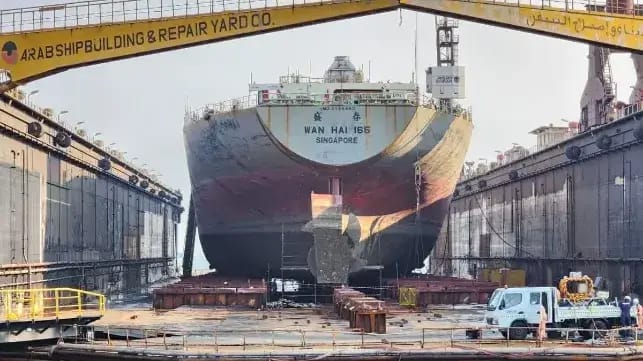
Another principle deserving greater attention is accountability at the source. Ships are engineered assets whose end-of-life management should form part of their lifecycle planning rather than being externalized to downstream actors. A sustainable future is likely to integrate dismantling into mainstream industrial engineering through dry docks, controlled facilities, permanent skilled workforces, and auditable processes that minimize exposure-based labor and environmental risk.
This perspective should not be interpreted as criticism of South Asian recycling industries or of sovereign regulatory choices. India, Bangladesh, and Pakistan have every right to develop regulatory frameworks suited to their own economic and developmental circumstances, and the principle of common but differentiated responsibilities remains an important feature of international environmental governance.
At the same time, objective technical realities remain. Methods relying on intertidal operations present inherent challenges when measured against more stringent frameworks such as the EU Ship Recycling Regulation, which extends obligations beyond many existing national requirements. Practical constraints including primary cutting within intertidal zones, gravity-assisted dismantling, downstream accountability, infrastructure limitations, and the economics of impermeable surfaces, heavy-lift systems and contained operations that make convergence with higher standards difficult without substantial structural transformation.
This observation should not be understood as criticism of sovereign policy choices but rather as recognition that different regulatory frameworks pursue different objectives and impose different expectations.
Ultimately, the future of ship recycling is unlikely to be determined solely by the HKC. Market expectations are already shifting. Numerous stakeholders seek non-beaching solutions and recycling pathways capable of satisfying heightened environmental, governance, and transparency requirements. Capacity for such approaches is beginning to develop accordingly.
The industry therefore faces a choice familiar throughout maritime history: whether to lead technological transformation or adapt only when compelled to do so. Double-hull tankers, ballast water treatment systems, and emissions controls all illustrate that practices once considered commercially impractical eventually became accepted norms.

that matters most
Get the latest maritime news delivered to your inbox daily.
The HKC should be welcomed as an important milestone in improving global ship recycling standards. It should not, however, be regarded as the final destination. Progress should continue beyond compromise toward systems that combine legal certainty, industrial efficiency, environmental integrity, and full lifecycle accountability.
Capt. Soumitro Roy is Head of Middle East Operations at the ship recycling company EEC.
The opinions expressed herein are the author's and not necessarily those of The Maritime Executive.
